Your Quick Guide
Let's be honest. One minute you're giving your cat a nice scratch behind the ears, the next you're standing there, damp and confused, thinking, "Why on earth did my cat just squirt on me?" It's shocking, it's unpleasant, and honestly, it can feel like a personal betrayal. You're not alone in that feeling. I remember the first time it happened to me with my old cat, Jasper. He turned, lifted his tail, and let loose right on my favorite jeans. I was more hurt than angry. Was he mad at me? Did I do something wrong?
That moment sent me down a rabbit hole of research, talking to vets, and learning that this behavior, while frustrating, is a complex form of feline communication. It's rarely about spite. To truly answer "Why did my cat just squirt on me?", we need to step into their world and understand the message they're desperately trying to send. This isn't just bad behavior; it's a symptom, a signal, a cry for help in a language of pheromones and urine.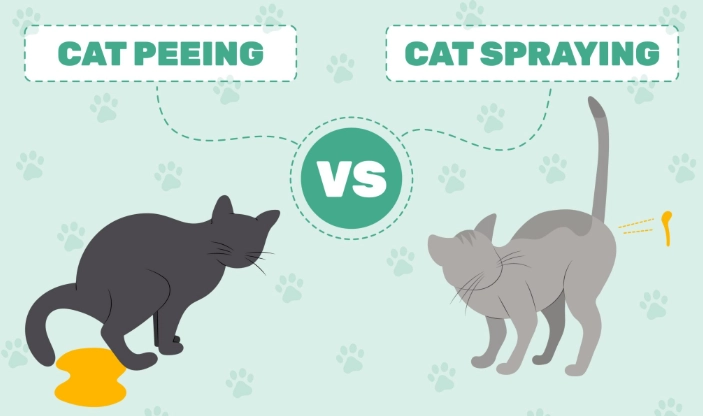
Spraying vs. Peeing: Knowing the Difference is Half the Battle
Before we dive into the "why," let's clear up a common confusion. When you ask, "Why did my cat just squirt on me?", you're likely describing spraying, not a regular bathroom accident.
Regular urination is when a cat squats to empty its bladder on a horizontal surface. It's a bathroom break. Spraying, or "squirting," is a communication tactic. The cat typically stands, backs up to a vertical (or sometimes horizontal) surface, raises its quivering tail, and ejects a small, pungent burst of urine backwards. The target isn't just the litter box; it's walls, furniture, curtains, and yes, sometimes you.
The urine used for spraying contains extra information—pheromones from special glands. It's a feline bulletin board post. So, when you're trying to figure out "why did my cat just squirt on me," you're essentially asking, "What message is my cat posting on me?"
8 Key Reasons Why Your Cat Might Be Squirting
Figuring out the "why" is a detective game. Here are the eight most common culprits, ranked from most urgent to most complex.
| Potential Reason | Key Clues & Context | Urgency Level |
|---|---|---|
| 1. Medical Issues | Sudden onset, any age, may accompany other symptoms like frequent trips to the box, straining, or blood in urine. | HIGH - See a vet immediately. |
| 2. Stress & Anxiety | Coincides with changes (new pet, move, schedule shift), cat seems jumpy or hides more. | Medium-High |
| 3. Multi-Cat Household Tension | Spraying occurs near windows, doors, or in common areas. Cats may not overtly fight but give each other the cold shoulder. | Medium-High |
| 4. Territorial Marking | Triggered by seeing outdoor cats, new animals in the home, or after a major change that disrupts their sense of security. | Medium |
| 5. Sexual Behavior (if not fixed) | Strong, pungent urine, loud vocalizing (yowling), restlessness. Applies to intact males AND females. | Medium (Fix ASAP) |
| 6. Litter Box Aversion | Spraying near but not in the box, using other surfaces for both spraying and regular peeing. Box may be dirty, wrong type, or in a bad location. | Medium |
| 7. Attention-Seeking (Rare) | Only happens when you're present and not engaging, may follow a pattern of the cat feeling ignored. | Low-Medium |
| 8. Cognitive Decline (Senior Cats) | Older cat seems disoriented, forgets box location, may vocalize at night. Spraying is part of general confusion. | Medium - Requires vet diagnosis. |
Let's break a few of these down because they're the usual suspects when someone frantically searches "why did my cat just squirt on me."
Medical Issues: The First and Most Critical Check
This cannot be overstated. Conditions like a Urinary Tract Infection (UTI), bladder stones, cystitis (bladder inflammation), or even kidney disease can cause pain and a constant, urgent feeling. Your cat associates the litter box with that pain, so they avoid it and may release small, painful spurts anywhere—including on you if you're nearby when the spasm hits. It's not malice; it's agony.
The Cornell Feline Health Center is a fantastic resource for understanding these medical conditions. They note that FLUTD (Feline Lower Urinary Tract Disease) is a common syndrome that can lead to inappropriate elimination. A vet visit will likely involve a urinalysis and possibly an ultrasound. Don't skip this step.
Stress & Anxiety: The Invisible Trigger
Cats are creatures of habit. A disruption in their universe can feel apocalyptic to them. Think about recent changes:
- Did you move furniture?
- Is there construction noise outside?
- Did your work schedule change, leaving them alone more?
- Did you get a new roommate or partner?
- Even a new laundry detergent smell can unsettle some cats.
Spraying becomes a way to surround themselves with their own familiar scent, creating a security blanket of smell. If they're on your lap or near you when anxiety peaks, you might become part of that security blanket project—hence, the unwanted gift. So, asking "why did my cat just squirt on me" might lead you to ask, "What's making my cat feel insecure right now?"
The Multi-Cat Dynamic: A Silent War of Scents
This is a huge one, even in homes where cats "get along." Cats in groups establish complex social hierarchies and territories that we often miss. Spraying is how they draw invisible boundary lines. You might have enough litter boxes and food bowls, but do you have enough vertical space? Enough separate, cozy hiding spots? Competition for prime sleeping spots or your attention can simmer under the surface.
Sometimes, the cat being bullied will spray to assert itself in safe zones, or the more dominant cat will spray to remind others who's boss. If the spraying is often on shared resources (like your bed or the couch where everyone cuddles), it could be a scent-mixing attempt to create a group smell. Unfortunately, you're often in the middle of this scent-based negotiation.
Okay, I Think I Know Why. How Do I Make It STOP?
Understanding is the first step. Action is the next. Here's a step-by-step plan. You'll likely need a combination of these.
Step 1: The Veterinary Foundation
I know I'm repeating myself, but it's that important. A clean bill of health is your starting line. Discuss the behavior in detail with your vet. They may recommend diagnostic tests or even discuss medications like anti-anxiety drugs (e.g., fluoxetine) or pheromone therapy as part of a broader plan for severe cases. The American Association of Feline Practitioners (AAFP) has guidelines on environmental needs that many vets use, which can be a great talking point.
Step 2: Become a Cleaning Ninja
If you don't completely remove the scent, your cat will be compelled to refresh the "message." Regular household cleaners won't cut it. You need enzymatic cleaners specifically designed for pet urine. These break down the uric acid crystals that hold the smell. Soak the area thoroughly, let it dry completely. For fabrics, washing may not be enough; use the enzymatic spray on the stain before washing.
Step 3: Optimize the Litter Box Situation
Even if the spraying isn't directly about the box, a perfect bathroom experience removes one major stressor.
- The 1+1 Rule: Have one more litter box than the number of cats. So, for two cats, have three boxes. Place them in different, quiet, low-traffic locations.
- Size Matters: Bigger is better. Get large, uncovered boxes (most cats dislike hoods).
- Scoop Daily, change litter weekly, and wash boxes with mild soap monthly.
- Litter Choice: Most cats prefer unscented, fine-grain clumping litter. If you've recently changed brands, consider switching back.
Step 4: Reduce Stress and Enrich the Environment
This is about addressing the core "why did my cat just squirt on me" question if it's anxiety-driven.
- Feliway or other pheromone diffusers: These synthetic "friendly" pheromones can calm cats. Plug them in near spray zones. The science is mixed, but many cat guardians (myself included) have seen positive results. It's worth a try.
- Create Vertical Territory: Cat trees, shelves, window perches. Height equals security and control.
- Predictable Routine: Feed, play, and interact at consistent times.
- Interactive Play: Dedicated play sessions with wand toys to burn off energy and simulate hunting. A tired cat is a happier, less anxious cat.
- Manage Outdoor Triggers: If outdoor cats are the issue, use opaque window film or close blinds on problem windows. You can also try motion-activated sprinkellers to deter visitor cats from your yard.
Step 5: Address Multi-Cat Issues Strategically
If tension is the root, you may need to temporarily separate the cats and re-introduce them slowly, as if they were strangers. Provide separate resources (food, water, boxes, beds) for each cat in their own space. Use positive reinforcement—treats, praise—when they are calm near each other. In some severe cases, working with a certified cat behavior consultant is a wise investment. The International Association of Animal Behavior Consultants (IAABC) has a directory of certified professionals.
Your Burning Questions Answered (FAQ)
Final Thoughts: Patience and Perspective
Figuring out "why did my cat just squirt on me" is a journey, not a quick fix. It requires patience, observation, and sometimes a bit of trial and error.
The most important shift is to stop seeing it as a personal insult and start seeing it as a data point. Your cat is giving you information about their internal state—their health, their stress levels, their sense of security. It's a problem to be solved, not a betrayal to be punished.
Start with the vet.
Become a master cleaner.
Audit your home from a cat's-eye view.
It can feel overwhelming when you're in the middle of it, cleaning yet another mess. But with a methodical approach, you can often identify the trigger and restore peace. And if you hit a wall, don't hesitate to call in a professional behaviorist. Investing in expert help can save months of frustration and salvage the loving bond you have with your cat.
Remember, your cat isn't giving you a hard time; they're having a hard time. Your job is to figure out why, and help them through it.


Leave a comment