Quick Guide
- The Canine Cooling System (And How It Fails)
- The Early Warning Signs: What to Watch For
- Dogs at Higher Risk: It's Not Fair, But It's True
- Immediate Action: What to Do If You See the Signs
- Prevention is Everything (And It's Not That Hard)
- Your Questions Answered (The Stuff You're Really Wondering)
- Wrapping It Up: Knowledge is Your Best Tool
Let's talk about something that scares me every single summer. You're out with your dog, maybe on a walk or just hanging in the backyard, and the sun is beating down. Everything seems fine until it's not. Heat exhaustion in dogs can sneak up fast, and knowing what are the first signs of heat exhaustion in dogs isn't just helpful information—it can literally save your dog's life. I learned this the hard way a few years back with my old Labrador, Sam. We were playing fetch, and I missed the early warnings. It was a terrifying trip to the emergency vet that I never want to repeat, and I don't want you to go through it either.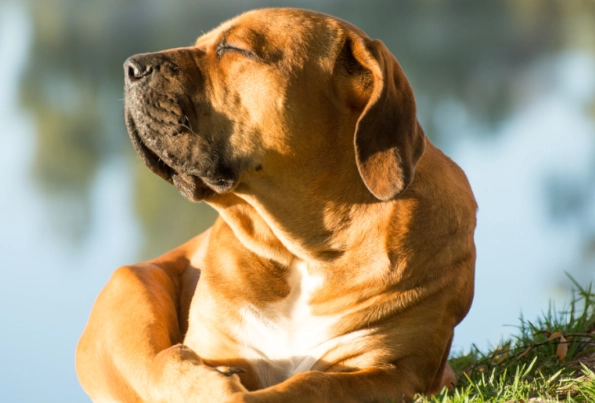
So, I'm not here to give you a dry, medical textbook list. I want to walk you through exactly what to look for, in plain English, based on vet advice and my own messy experience. We'll break down each subtle hint your dog gives you before a situation becomes critical.
The Canine Cooling System (And How It Fails)
First, understanding why dogs struggle with heat helps you spot the first signs of heat exhaustion in dogs. We humans sweat everywhere to cool down. Dogs? Not so much. They only have sweat glands in their paw pads, which doesn't do much. Their main cooling method is panting. When they pant, moisture evaporates from their tongue, nasal passages, and the lining of their lungs, which cools them down. It's a decent system, but it's horribly inefficient compared to sweating, especially in high humidity where evaporation slows to a crawl.
When the external heat and a dog's internal heat from exercise combine to overwhelm that panting mechanism, their core temperature starts to rise. The body goes into crisis mode, diverting blood flow to the skin to try and cool down, which can steal it from vital organs. That's when you start to see the signs. It's a cascade, and the early steps are your only chance to stop it.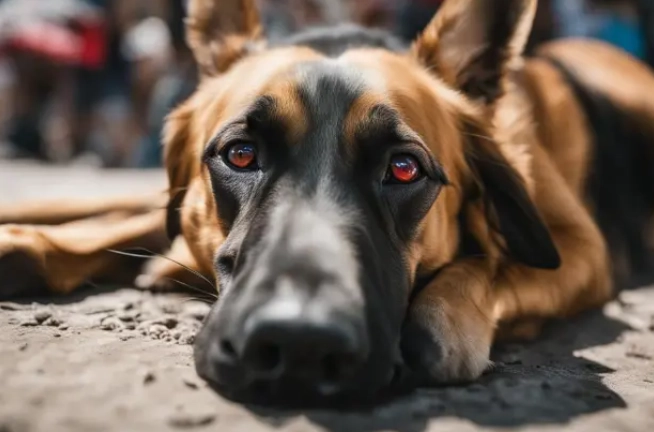
The Early Warning Signs: What to Watch For
These symptoms often appear in a cluster, not just one at a time. Your dog might show two or three together. The key is to notice a change from their normal behavior in warm conditions.
Excessive, Frantic Panting
This is usually the biggest and first red flag. We're not talking about normal panting after a ball chase. This is panting that seems louder, faster, and more forceful. The tongue might be hanging out much farther than usual, and the panting doesn't slow down quickly when they rest. It can sound almost panicked. With my dog Sam, his panting had a harsh, raspy quality to it that was different from his usual tired pant. It was the first thing that made me pause, though I stupidly didn't pause long enough.
Increased, Ropy Saliva
Look at the drool. Normal panting saliva is relatively thin. One of the first signs of heat exhaustion in dogs is saliva that becomes thick, sticky, and stringy. It might hang in long strands from their mouth. This happens because they're becoming dehydrated; their body is conserving fluid, so saliva production changes. It's a subtle sign but a telling one.
Bright Red or Pale Gums and Tongue
Lift your dog's lip. In a normal, hydrated dog, the gums should be a healthy bubblegum pink and slick to the touch. Early in heat stress, gums can become a very bright, brick red as blood vessels dilate to release heat. Conversely, in some dogs, they might turn pale. The key is a change in color. Also, do the capillary refill test: press your finger gently on the gum until it turns white, then release. The color should snap back in less than two seconds. If it takes longer, it indicates poor circulation, which is a bad sign.
Mild Lethargy or Appearing "Out of It"
Your normally energetic dog might suddenly seem disinterested in play. They might lag behind on a walk, lie down and refuse to get up, or seem dazed and less responsive to their name or commands. This isn't just normal tiredness. It's the body starting to shut down non-essential functions. I remember Sam just plopping down in the shade of a tree and giving me a look that said "I can't." At the time, I thought he was just being lazy. I was wrong.
Seeking Cool Surfaces and Shade
This is a behavioral sign. A dog starting to overheat will instinctively try to cool down. They might dig at dirt or grass to find cooler earth underneath, press their body against cool tile or concrete in the basement, or become obsessive about finding the deepest shade. If your dog is actively trying to escape the heat, listen to them. They're telling you something's wrong.
| Symptom | What It Looks/Sounds Like | Why It Happens |
|---|---|---|
| Excessive Panting | Loud, rapid, forceful breathing that doesn't ease with rest. Tongue elongated. | The primary cooling mechanism is working overtime, struggling to dissipate heat. |
| Thick, Ropy Saliva | Stringy, sticky drool hanging from the mouth. | Early dehydration; the body reduces watery saliva production to conserve fluids. |
| Gum Color Change | Gums turn bright red (common) or unusually pale. Slow capillary refill time (>2 secs). | Blood vessel dilation for cooling or poor circulation as the body struggles. |
| Lethargy/Disorientation | Unusual tiredness, lagging on walks, dazed expression, unresponsive. | The brain and body are being deprived of optimal blood flow and oxygen. |
| Seeking Cool Surfaces | Digging at ground, lying on cool tiles, constantly moving to shade. | Instinctive behavioral attempt to conduct heat away from the body. |
Dogs at Higher Risk: It's Not Fair, But It's True
All dogs can get heat exhaustion, but some are practically designed to struggle in the heat. If you own one of these, your vigilance needs to be ten times higher.
- Brachycephalic (Short-Nosed) Breeds: Pugs, French Bulldogs, Boston Terriers, English Bulldogs, Boxers. Let's be blunt—their anatomy is a disaster for breathing. Their shortened airways make panting, their only cooling tool, massively inefficient. They are in the highest risk category, no question. A short walk on a mild day can be dangerous.
- Thick-Coated or Double-Coated Breeds: Huskies, Malamutes, Newfoundlands, Bernese Mountain Dogs. That gorgeous coat is built for insulation, which works both ways—trapping heat in as well as out. Many owners shave them, which is actually a terrible idea as it can ruin their coat's ability to regulate temperature. Better to keep them brushed and indoors in AC.
- Overweight Dogs: The extra fat acts as insulation and puts more strain on the heart and lungs, making cooling harder.
- Very Young or Very Old Dogs: Puppies haven't fully developed their temperature regulation, and seniors often have underlying heart or respiratory issues.
- Dogs with Heart or Respiratory Disease: Any pre-existing condition that affects breathing or circulation compromises their main cooling system from the start.
My Sam was a Labrador, which put him in a moderate risk category, but he was also older and a bit chunky. A perfect storm I didn't fully appreciate.
Immediate Action: What to Do If You See the Signs
Okay, you've spotted what are the first signs of heat exhaustion in dogs in your own pup. Panic is the enemy. Calm, swift action is the game. Here's your step-by-step crisis plan.
- Stop All Activity Immediately. Get your dog to stop moving. Carry them if you have to. Exercise generates internal heat, which is the last thing they need.
- Move to a Cool Area. Get them into air conditioning immediately. If that's not possible, find the deepest, coolest shade available.
- Start Cooling, But Do It Gradually. This is crucial. Do NOT dunk them in ice water or cover them with ice packs. This can cause shock and constrict blood vessels, trapping heat inside. Use cool (not ice-cold) water. Soak towels in cool water and place them on their neck, armpits, and groin. You can also gently wet their ear flaps and paw pads. Let them drink small amounts of cool water if they are willing and not vomiting.
- Use Airflow. Turn on a fan and point it at the wet towels/your dog. The evaporation will enhance the cooling effect dramatically.
- Check Their Temperature. If you have a rectal thermometer (and you should in your pet first-aid kit), use it. A dog's normal temp is 101-102.5°F (38.3-39.2°C). Heat exhaustion typically starts at around 103°F (39.4°C). Heatstroke is 106°F (41.1°C) and above. Stop active cooling when their temp reaches about 103°F to prevent overcooling.
- Call Your Vet, No Matter What. Even if your dog seems to recover fully after your first aid, you need to call your veterinarian. Internal damage, like kidney issues or clotting problems, can happen hours later. They need to know and may want to examine your dog. For moderate to severe signs, go to the vet or emergency clinic immediately. Call them on the way so they're prepared.

Prevention is Everything (And It's Not That Hard)
Seriously, preventing this nightmare is way easier than treating it. Most cases of heatstroke are 100% preventable, which is the frustrating part.
- Walk and Play in the Cool Parts of the Day: Early morning and late evening. Test the pavement with the back of your hand—if it's too hot for you to hold for 7 seconds, it's too hot for their paws.
- Unlimited Access to Shade and Water: Always. And I mean always. Outdoor water bowls heat up and evaporate; check and refill them constantly.
- Never, Ever Leave a Dog in a Parked Car. Not even for "just a minute" with the windows cracked. On a 75°F (24°C) day, the inside of a car can reach 100°F (38°C) in under 10 minutes. It's a death trap. Many states have laws allowing people to break car windows to rescue pets, and they should.
- Adjust Exercise for the Individual Dog: That high-energy Border Collie might still need a job on a hot day. Provide mental stimulation indoors with puzzle toys or training games instead of a long run.
- Consider Cooling Aids: Cooling vests, mats, or bandanas can help, but don't rely on them as magic bullets. They are aids, not substitutes for common sense.
Your Questions Answered (The Stuff You're Really Wondering)
Wrapping It Up: Knowledge is Your Best Tool
Figuring out what are the first signs of heat exhaustion in dogs is one of the most important bits of knowledge you can have as a dog owner. It's about tuning in to the subtle shifts in their behavior and physiology before a bad situation becomes catastrophic. Trust your gut. If something seems off, it probably is. Act first, ask questions later. Your dog's cooling system is fragile, and it's our job to be their backup.
Stick to the prevention rules—cool walks, endless water, and never a hot car. And if the worst happens and you see those early signs, you now have a clear, calm plan. Get them cool, get them to the vet. That's it. Share this info with other dog owners you know. The more people who can spot the first signs of heat exhaustion in dogs, the fewer heartbreaking stories there will be every summer.

Leave a comment