Navigate This Guide
- Why Bother With a Cat Weight Chart? It's Not About Vanity
- The Hands-On Test: Body Condition Score (BCS) Beats the Scale
- The Cat Body Weight Chart by Age: From Kitten to Senior
- What If My Cat Is Overweight? A Practical Action Plan
- What If My Cat Is Underweight?
- Your Burning Questions, Answered (The FAQ)
- Putting It All Together: Your Cat's Lifelong Weight Wellness Plan
Let's be honest. Most of us have looked at our cat lounging in a sunbeam and wondered, "Is he... getting a bit round?" Or maybe you've picked up a skinny kitten and worried they're not growing right. It's a constant worry for pet parents. We love them, we feed them, but figuring out what a "healthy weight" actually looks like for a cat is surprisingly tricky. One cat's sturdy is another cat's stout. That's where having a reliable cat body weight chart by age becomes more than just a guide—it becomes a peace-of-mind tool.
I remember when my own cat, Jasper, hit middle age. He was always a big-boned Maine Coon mix, so I brushed off the extra heft as just "his frame." But then he started getting lazy, really lazy. The vet visit was a wake-up call. He was nearly 2 pounds over his ideal weight, and that "little" extra was already putting stress on his joints. That experience taught me that weight isn't just about looks; it's the single biggest factor we can control for our cat's long-term health. This guide is what I wish I'd had back then.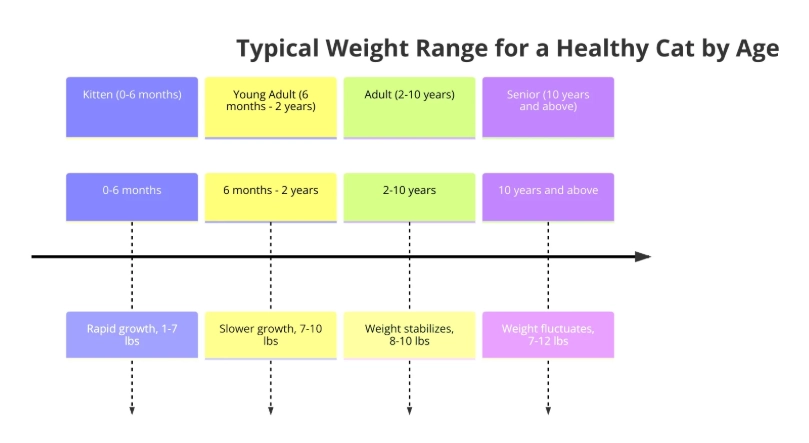
Why a Generic Number Fails: You can't just google "average cat weight" and call it a day. A healthy weight for a cat is a complex equation of age, breed, sex, and individual build. A cat weight chart by age gives you the starting framework, but your eyes and hands (and your vet's expertise) provide the real data.
Why Bother With a Cat Weight Chart? It's Not About Vanity
Thinking about your cat's weight isn't about putting them on a diet to look good for cat Instagram (though let's be real, a healthy cat is a photogenic cat). It's about preventing a cascade of health problems that can shorten their lives and drain your wallet. Carrying extra weight is like making your cat wear a heavy backpack every single day.
Here’s what that “backpack” can lead to:
- Diabetes: Fat cells interfere with insulin. Overweight cats are at a massively higher risk. It's expensive to manage and tough on them.
- Arthritis & Joint Pain: Those little joints aren't built to carry extra load. Pain leads to less movement, which leads to more weight gain. It's a vicious cycle.
- Urinary Tract Diseases: Including life-threatening blockages, especially in males.
- Liver Disease (Hepatic Lipidosis): A unique and serious risk for cats. If an overweight cat stops eating for even a few days, their body mobilizes fat too quickly, overwhelming the liver.
- Lower Life Expectancy: Studies are blunt about this. Keeping your cat at a lean, healthy body condition can add years to their life.
On the flip side, being underweight is just as big a red flag. It can signal underlying issues like hyperthyroidism (common in older cats), dental disease, kidney problems, or intestinal parasites.
So, using a cat body weight chart by age is the first step in proactive healthcare. It’s a baseline. But the chart is useless if you don't know how to read your cat's body, not just the scale.
The Hands-On Test: Body Condition Score (BCS) Beats the Scale
This is the most important part of the whole article. Forget the number for a second. Your cat's Body Condition Score (BCS) is a visual and tactile assessment from 1 (emaciated) to 9 (obese). An ideal cat is a 5. The American Animal Hospital Association (AAHA) has great resources on this, but I'll break down how you can do it at home right now.
Go find your cat. Seriously, go get them. I'll wait.
Got them? Good. Now, follow these steps:
- Look from above. Your cat should have a visible waist—an inward curve behind the ribs. No waist (straight or bulging sides) means overweight. A severe hourglass means underweight.
- Look from the side. The belly should tuck up from the ribs to the hips. A sagging, pendulous belly (even if the rest seems okay) is a sign of excess fat. This is called the "primordial pouch" in some cats, but a large, jiggly one often means weight gain.
- Feel the ribs. This is the gold standard. Run your hands along your cat's side. You should be able to easily feel individual ribs with a very thin layer of fat over them, like the back of your hand. If you have to press to feel ribs, that's fat. If ribs are visible from a distance, that's too thin.
The Cat Body Weight Chart by Age: From Kitten to Senior
Alright, now for the charts. Remember, these are ranges and averages. A Siamese will be at the lower end, a Maine Coon at the higher end. Males are typically heavier than females. Use this as a starting point for conversation with your vet.
Kitten Growth & Weight Chart (Birth to 12 Months)
Kittens grow at a mind-blowing rate. Their weight is a direct indicator of health and proper nutrition. Weigh them weekly if you can—a kitchen scale works great for little ones.
| Age | Average Weight Range | What's Happening & Key Notes |
|---|---|---|
| Newborn | 3 - 4 ounces (85 - 115g) | They should gain about ½ oz (14g) per day. Double their birth weight in the first week is a good sign. |
| 1 Week | 6 - 8 oz (170 - 225g) | Eyes start to open. Still completely dependent on mom. |
| 4 Weeks (1 Month) | 1 lb (450g) | Starting to wobble around, play, and wean onto wet food mush. Teeth coming in. |
| 8 Weeks (2 Months) | 2 lbs (900g) | Fully weaned, super playful. This is the typical adoption age. They should look rounded but not pot-bellied (worms can cause a pot belly). |
| 3-4 Months | 3 - 5 lbs (1.4 - 2.3 kg) | Rapid growth phase. They are eating machines! Feed high-quality kitten food ad lib (free-feed). |
| 6 Months | 5 - 7 lbs (2.3 - 3.2 kg) | Reaching adolescent size. Spay/neuter typically happens around this age. Growth starts to slow. |
| 9-12 Months | 7 - 10 lbs (3.2 - 4.5 kg) | Approaching adult size. Most cats are close to full-grown by 12 months, though large breeds keep growing until 18-24 months. Time to transition from kitten to adult food. |
If a kitten isn't gaining weight steadily, it's a veterinary emergency. They have zero energy reserves. Don't wait.
Adult & Senior Cat Weight Chart (1 Year and Older)
Once growth plates close, the goal is weight maintenance. The biggest mistake people make is continuing to feed the same amount of food as their cat had during its teenage growth spurt. Metabolism slows down, but appetite often doesn't.
| Life Stage | Typical Weight Range* | Health Focus & Weight Trends |
|---|---|---|
| Adult (1 - 7 years) | 8 - 12 lbs (3.6 - 5.4 kg) | Maintenance is key. This is the prime of life. Activity may slowly decrease. Weigh monthly to catch creeping weight gain early. A gain of even 1 lb is significant for a cat. |
| Mature (7 - 10 years) | Varies by individual | Metabolism slows further. Muscle mass may begin to naturally decrease (sarcopenia), so focus on maintaining lean muscle with quality protein. Weight loss in this stage is a major red flag—see a vet. |
| Senior (10+ years) | Varies by individual | Weight can go either way. Unintentional weight loss is a classic sign of illness (kidney disease, hyperthyroidism, cancer). Conversely, arthritis pain can lead to inactivity and weight gain. Veterinary check-ups every 6 months are crucial. |
*This is a general range for a domestic shorthair. Small breeds (e.g., Singapura) may be 5-8 lbs. Large breeds (e.g., Maine Coon, Norwegian Forest Cat) can be a healthy 12-18 lbs or more.
Watch Out for the "Middle-Age Spread": The period between ages 2 and 6 is when most cats quietly become overweight. They've stopped growing, their routine becomes sedentary, but the food bowl stays full. This is where referencing a cat body weight chart by age monthly can save you (and them) a lot of future trouble.
What If My Cat Is Overweight? A Practical Action Plan
So you've done the BCS test, checked the cat weight chart by age, and... yeah, your cat is carrying some extra. First, don't panic and don't suddenly starve them. Crash diets are dangerous for cats (remember hepatic lipidosis?).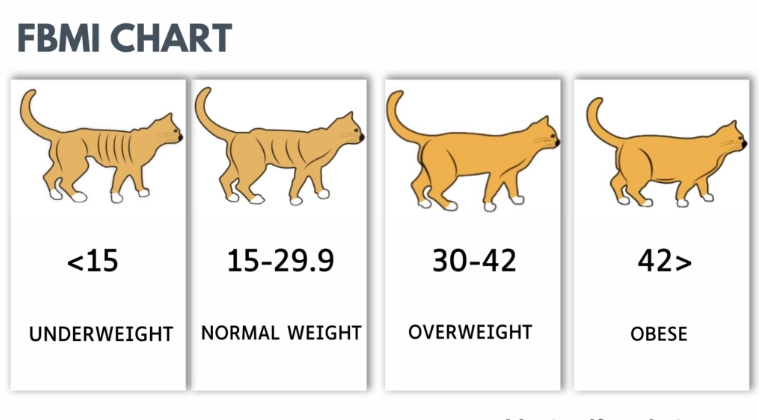
- Vet Check First. Always. Rule out medical causes like hypothyroidism (rare in cats) and get a specific target weight from your vet. They can recommend a daily calorie goal.
- Measure Food Precisely. Stop free-feeding kibble. Use a measuring cup, or better yet, a kitchen scale for absolute accuracy. “A scoop” is not a measurement. Follow the feeding guide on your food bag, but use it as a starting point—your vet's recommendation overrides it.
- Consider a Diet Food. Your vet may suggest a commercial weight management food. These are higher in fiber and protein to promote satiety with fewer calories. I'm not a huge fan of some of the fillers in cheaper “diet” foods, so do your research or ask for a veterinary therapeutic diet.
- Increase Protein, Control Carbs. Cats are obligate carnivores. Wet food is often higher in protein and moisture, lower in carbs than dry food, which can help with weight loss and feeling full. Some people have great success switching to a primarily wet-food diet.
- Move That Body. Two 10-15 minute play sessions a day. Laser pointers (always end with a physical toy they can “catch”), feather wands, crinkle balls. Get them climbing with cat trees. Every bit counts.
Safe weight loss for a cat is very slow—about 1-2% of their body weight per week. For a 15 lb cat, that's only about 0.15 – 0.3 lbs per week. Patience is non-negotiable.
What If My Cat Is Underweight?
This is often more medically urgent than overweight. Sudden weight loss in an adult or senior cat is a trip-to-the-vet-now sign. Assuming your vet has ruled out serious illness, here’s how to help them gain:
- High-Calorie, High-Palatable Food: Offer kitten food (more calorie-dense), or veterinary-prescribed recovery diets. Warming wet food can increase its smell and appeal.
- Frequent, Small Meals: Don't overwhelm them with a big bowl. Offer food 4-6 times a day.
- Appetite Stimulants: In some cases, your vet may prescribe medication to kickstart eating.
- Address Underlying Stress: A new pet, a move, or a noisy environment can cause a cat to stop eating. Create safe, quiet feeding stations.
Your Burning Questions, Answered (The FAQ)
Putting It All Together: Your Cat's Lifelong Weight Wellness Plan
A cat body weight chart by age isn't a one-time lookup. It's a companion throughout your cat's life. Print it out. Stick it on the fridge. Weigh your cat and jot down the date and weight every month. Plotting that simple line on a piece of paper is more powerful than you think—it turns a vague worry into manageable data.
The goal isn't perfection. It's awareness. It's noticing that slow creep from 10 to 11.5 pounds over a year and cutting back a few kibbles before it becomes 15 pounds and a diabetes diagnosis.
Final Thought: Your vet is your partner in this. Bring your weight log and your observations to every check-up. A good vet will celebrate you keeping your cat lean more than anything else. It’s the ultimate act of love—not with treats from the table, but with the gift of more healthy, playful years together. And honestly, watching your cat rediscover its energy and playfulness as they reach a healthy weight? That’s a better reward than any treat.
Now go give your cat a gentle rib check. You've got this.




Leave a comment