You look at your cat, Merlin, curled up in a perfect donut shape. He seems happy. He seems... substantial. The number on the vet's scale last year said 14 pounds. But is that good? Is that bad? The truth is, that number alone is almost useless. I've been working with cats for over a decade, and the single most common mistake I see is owners fixating on weight in pounds or kilograms while missing the real story written in their cat's shape. The real tool you need isn't a fancy scale; it's a cat fat chart, officially known as a Feline Body Condition Score (BCS). It translates that vague feeling of "he's getting a bit round" into a clear, actionable health assessment. Let's ditch the guesswork.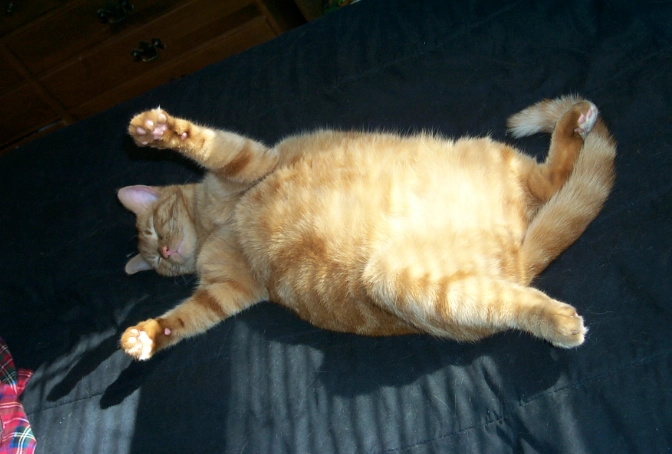
What's Inside: Your Quick Guide
Why Your Cat's Weight Number is Lying to You
Think about people. A 180-pound athlete and a 180-pound couch potato look completely different. It's the same for cats. Frame size varies massively—compare a dainty Siamese to a hulking Maine Coon. Muscle weighs more than fat. So a muscular, lean cat could weigh the same as a flabby, unfit one.
The cat fat chart cuts through this confusion. Developed by veterinary nutritionists, it's a standardized 9-point system that assesses body fat through visual checks and hands-on feel. It doesn't care about the breed standard weight from a book. It cares about what's actually on your cat's frame right now.
Here’s the silent crisis: The Association for Pet Obesity Prevention consistently finds nearly 60% of cats in the US are overweight or obese. Most owners of these cats don't realize it. We've normalized the "chonky" cat aesthetic. That extra fat isn't cute; it's inflammatory. It's a direct ticket to diabetes, arthritis, urinary disease, and a shorter lifespan. The cat fat chart is your early detection system.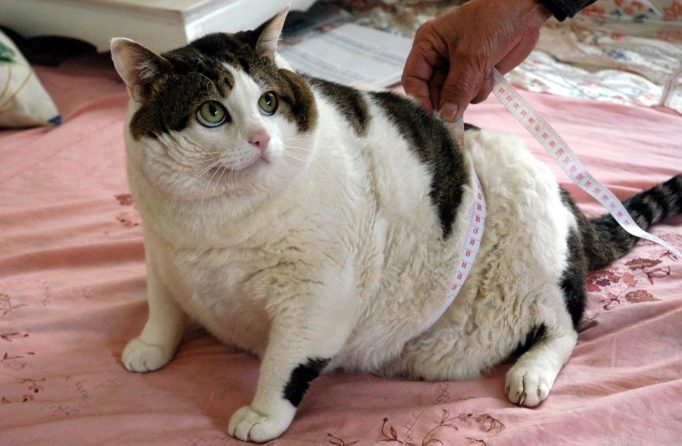
Decoding the 9-Point Cat Fat Chart: A Hands-On Guide
Let's get practical. You'll need your eyes and your hands. Do this when your cat is standing relaxed, not curled up.
The Two-Minute Assessment: Look and Feel
Step 1: The Bird's-Eye View (Looking from above). A cat at an ideal weight has a noticeable waist—an inward curve behind the ribs. No waist? That's a straight or bulging line, indicating excess fat.
Step 2: The Profile View (Looking from the side). The abdomen should tuck up from the ribcage to the hips. A sagging, rounded, or pendulous belly (that "primordial pouch" isn't just pouch if it's full of fat) is a sign of trouble.
Step 3: The Rib Test (Using your hands). This is crucial. Place your hands on the side of his chest, thumbs on the spine, fingers spread. You should be able to easily feel individual ribs with a slight fat covering, like the back of your hand. Can't feel them without pressing? Too fat. Do they feel like knuckles or a washboard? Too thin.
Combine these three findings with the table below. Don't just pick one; the chart is a consensus of all observations.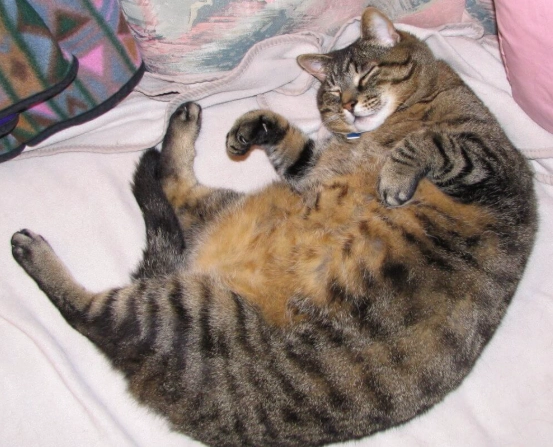
| Score (1-9) | Category | What You See & Feel | Health Implication |
|---|---|---|---|
| 1 (Emaciated) | Severely Underweight | Ribs, spine, hip bones starkly visible from a distance. No fat or muscle. Severe abdominal tuck. | Critical. Organ failure risk. Requires immediate vet intervention. |
| 2 (Very Thin) | Underweight | Ribs easily visible, little fat. Obvious waist and abdominal tuck. Minimal muscle mass. | Underlying illness likely (e.g., hyperthyroidism, kidney disease). Vet visit needed. |
| 3 (Thin) | Underweight | Ribs easily felt with minimal fat. Clear waist from above. Abdominal tuck present. | Below ideal. May need dietary adjustment or medical check-up. |
| 4 (Underweight) | Lean | Ribs felt with slight excess fat. Waist visible but not prominent. Slight abdominal tuck. | Acceptable for some lean breeds, but often the lower end of ideal. |
| 5 (Ideal) | Perfect | The Gold Standard. Ribs felt with a thin fat layer. Distinct waist behind ribs. Abdomen tucked up. Perfect balance of form and function. | Optimal health, mobility, and longevity. The goal for every cat. |
| 6 (Overweight) | Heavy | Ribs felt with slight difficulty; fat layer thickening. Waist discernible but not clear. Abdominal tuck slightly rounded. | Early warning. Increased disease risk. Time for a diet check. |
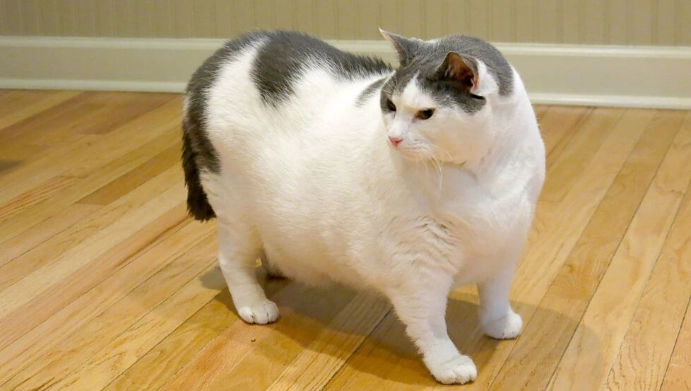
| 7 (Heavy) | Overweight | Ribs hard to feel under fat. No visible waist; back appears broad. Abdomen rounded with fat deposit. | Clinically overweight. Significant strain on joints and organs. Diet plan required. |
| 8 (Obese) | Obese | Ribs not felt under thick fat. No waist; belly rounded and distended. Fat pads on lower back/base of tail. | High risk for diabetes, arthritis, heart disease. Veterinary-guided weight loss essential. |
| 9 (Severely Obese) | Morbidly Obese | Massive fat deposits on chest, spine, base of tail. Abdomen grossly distended. No waist or bone definition. | Severe health crisis. Immobility, breathing difficulty. Urgent veterinary care. |
From Score to Action: Your Cat's Personalized Plan
Okay, you have a score. Now what? This is where the real work—and payoff—begins.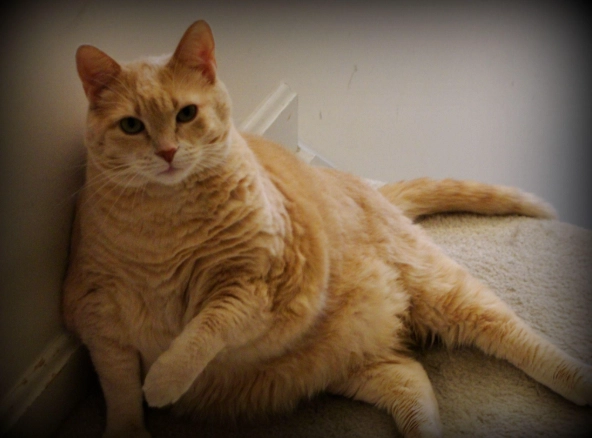
If Your Cat is Overweight (Score 6-9)
First, always talk to your vet. Rule out medical causes like hypothyroidism. Then, it's a math and patience game.
1. Find the Calorie Target. Don't guess. The standard formula for weight loss is to feed for the weight you want them to be. If your 16-pound cat (Score 7) should be 12 pounds (Score 5), you'd calculate the Resting Energy Requirement (RER) for 12 pounds.
Formula: RER (in kcal/day) = 30 x (Goal Weight in kg) + 70.
So for a 12 lb (5.44 kg) cat: (30 x 5.44) + 70 = ~233 calories per day.
2. Measure Everything. I mean everything. Use a digital kitchen scale for dry food (cups are inaccurate). Note the calories in treats—they add up fast. A single commercial cat treat can be 5-10 calories. Ten of those is a meal.
3. Switch to Scheduled Meals. Bowl of kibble available 24/7? That ends today. Feed 2-4 measured meals. This controls intake and aligns with their natural hunting cycle.
4. Incorporate Play. It's not just about diet. Five minutes of chasing a feather wand twice a day burns calories and builds muscle. Muscle burns more calories at rest.
If Your Cat is Underweight (Score 1-4)
Vet first, always. Weight loss is often intentional; weight loss or inability to gain is often a medical red flag.
Once cleared, the goal is calorie-dense, palatable food. Think:
- Kitten food: Higher in calories and protein.
- Wet food: Often more enticing and has more calories per gram than dry.
- Warming it up to enhance smell.
- More frequent, smaller meals (4-6 a day) to avoid overwhelming them.
Never just pour more food into a bowl and hope. Structured, high-value feeding is key.
A Real-Life Case: Whiskers' 6-Month Journey from Flab to Fit
I consulted on a case with a cat named Whiskers, a laid-back Domestic Shorthair. His owner was worried he was "slowing down." At assessment: Score 8, 18.2 pounds, no visible waist, couldn't feel ribs, belly swayed when he walked.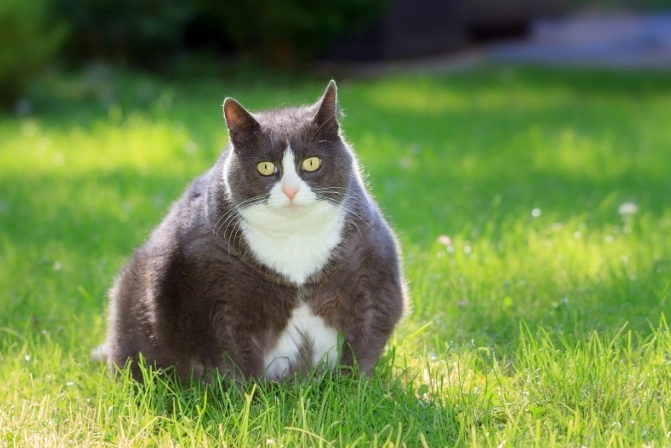
We didn't aim for rapid loss. We aimed for safe loss. His ideal weight was estimated at 13 pounds. We started him on 240 calories a day (RER for 13 lbs) of a high-protein, metabolic diet recommended by his vet. Dry food was measured on a scale. Treats were replaced with single pieces of his kibble from his daily allotment.
The owner's log showed the magic of the cat fat chart:
- Month 1: Weight: 17.8 lbs. Score still 8, but owner noted "belly seems slightly firmer, not as swaying."
- Month 3: Weight: 16.5 lbs. Big milestone: Ribs could be felt with firm pressure. Score now a 7. Waist still not visible.
- Month 5: Weight: 14.8 lbs. A faint waist appeared from above! Ribs easily felt with a moderate fat layer. Solid Score 6.
- Month 6: Weight: 13.9 lbs. Clear waist, ribs felt with a thin layer of fat, abdomen tucked. A textbook Score 5.
The owner's feedback was the best part: "He plays again. He jumps onto the windowsill he hadn't visited in years. He's like a different cat." The scale showed a 4.3-pound loss. The cat fat chart showed a transformation from immobility to vitality.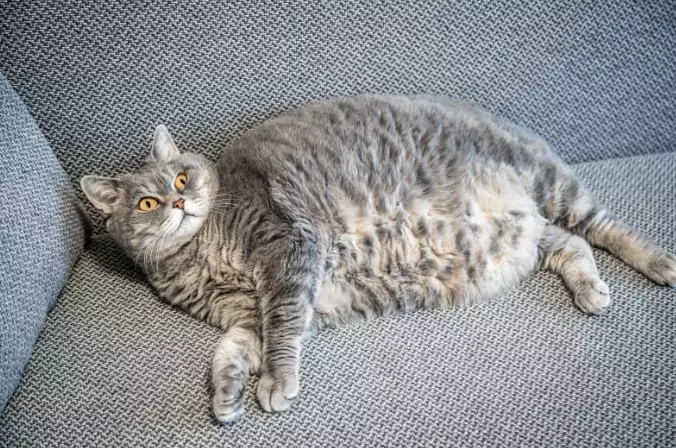
Your Top Cat Fat Chart Questions, Answered
My cat feels bony but the vet says he's a healthy weight. Is the cat fat chart wrong?
I can't feel my cat's ribs at all. She's a 7 on the chart. How fast should she lose weight?
My cat scores a 3 on the fat chart. She eats constantly but won't gain weight. What's the best high-calorie food?
Can I use a human BMI calculator or a regular weight chart for my cat?
 The cat fat chart isn't a one-time test. It's a lifelong monitoring tool, like checking your car's oil. Do it every month. Get your family involved. Catching a shift from a 5 to a 6 is easy to correct. Ignoring it until it's an 8 is a veterinary emergency in slow motion. Your cat's agility, playfulness, and longevity depend on what you can see and feel, not just what you read on a scale. Start looking today.


Leave a comment