Quick Guide
- Forget the Bag (Mostly): What REALLY Determines Your Cat's Portion?
- The Dry Cat Food Feeding Chart: A Starting Point, Not a Gospel
- Breaking It Down by Life Stage: Kitten, Adult, Senior
- The Calorie Math: For the Detail-Oriented Cat Parent
- Common Pitfalls & How to Avoid Them
- Mixing Wet and Dry Food: The How-To
- Answers to Your Burning Questions
- Putting It All Together: Your Action Plan
So you're standing there, kibble bag in one hand, your cat's bowl in the other, and that little voice in your head asks the million-dollar question: how much dry food per day is actually right for my cat? It feels like it should be simple, right? Just pour some in. But then you look at the back of the bag, and the suggested feeding guidelines seem... well, let's just say they often feel like a one-size-fits-nobody guess. I've been there. I've had cats that turned into little furry footballs because I followed the bag too closely, and I've had scrawny ones that needed way more. It's frustrating.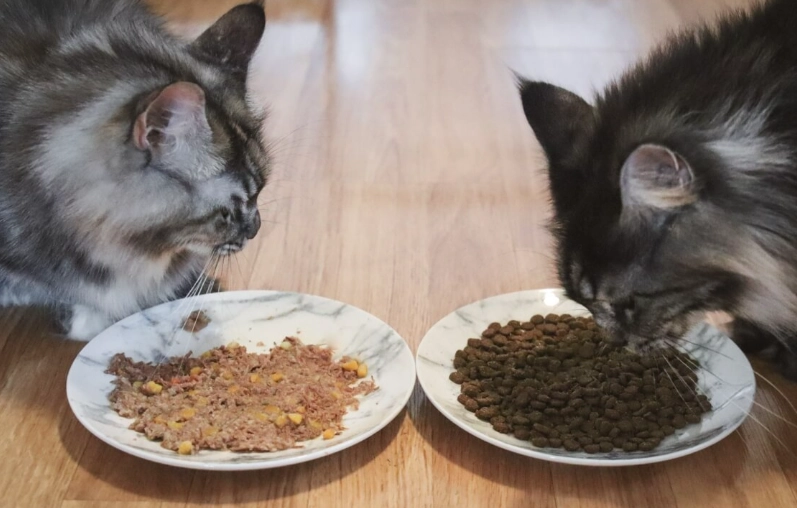
The truth is, figuring out the perfect daily portion of dry cat food isn't about finding a single magic number. It's a puzzle with pieces like your cat's age, their metabolism, whether they're a couch potato or a zoomie champion, and even the specific kibble you're using. This guide is here to help you solve that puzzle. We're going to move past the generic advice and get into the nitty-gritty of what your individual cat needs to thrive, not just survive.
Forget the Bag (Mostly): What REALLY Determines Your Cat's Portion?
Before we even look at a chart or a measuring cup, we need to understand the factors at play. The recommendations on your dry food bag are a starting point, but they're calculated for an "average" cat. When was the last time you met an average cat? Exactly.
Your Cat's Weight & Body Condition
This is your baseline. But it's not just about the number on the scale; it's about what that number represents. A muscular, large-framed 12-pound Maine Coon is completely different from a pudgy, small-framed 12-pound Domestic Shorthair. You need to assess their Body Condition Score (BCS). Can you easily feel their ribs with a slight fat covering? Does their waist tuck in behind the ribs when viewed from above? If you're unsure, your vet can show you. The goal is to feed to maintain an ideal body condition, not necessarily a specific weight.
Age & Life Stage
A kitten's needs are wildly different from a senior cat's. Kittens are growing machines and need more calories and nutrients per pound of body weight. Adults need maintenance calories. Seniors often need fewer calories but sometimes more specific nutrients. We'll break this down by life stage later.
Activity Level (The Couch Potato vs. the Parkour Expert)
This is a huge one that bags totally ignore. Does your cat spend 20 hours a day sleeping in a sunbeam? Or do they have scheduled 3 AM sprinting sessions around the house? An inactive indoor cat might need 20-30% fewer calories than the guidelines suggest. A highly active cat or one with access to a safe outdoor space might need more.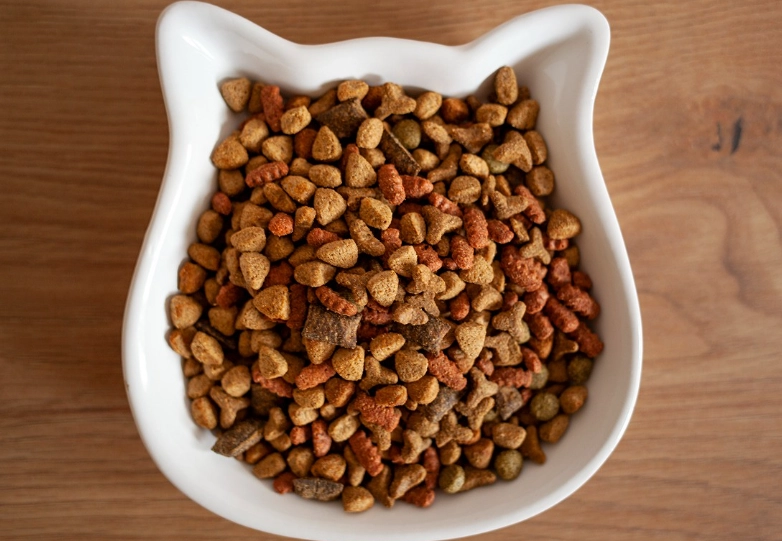
I had two cats from the same litter, raised the same way. One was a loaf. The other was perpetually in motion. Feeding them the same amount was a disaster—one got chunky, the other stayed lean. I had to learn to adjust.
The Food Itself: Not All Kibble is Created Equal
Calorie density varies massively between brands and formulas. A cup of a high-quality, dense, protein-rich kibble can have 100+ more calories than a cup of a cheaper, filler-heavy diet. This is why measuring by volume (cups) is risky and why knowing the caloric content per cup or per gram is crucial. You'll usually find this in the "Guaranteed Analysis" or nutritional info, sometimes listed as "kcal/cup" or "kcal/kg."
The Dry Cat Food Feeding Chart: A Starting Point, Not a Gospel
Okay, with all those caveats in mind, here's a practical table to give you a ballpark figure. Remember, this is for a typical adult, neutered, indoor cat of average activity.
We'll assume a calorie density of roughly 350-380 kcal per cup, which is common for many premium dry foods. (Always, always check your bag for the exact number!)
| Cat's Target Weight | Low Activity (Mostly Indoor) | Moderate Activity (Some Play) | High Activity (Very Playful/Outdoor Access) |
|---|---|---|---|
| 5 lbs (2.3 kg) | ~1/4 to 1/3 cup | ~1/3 cup | ~1/3 to 1/2 cup |
| 8 lbs (3.6 kg) | ~1/3 to 1/2 cup | ~1/2 cup | ~1/2 to 2/3 cup |
| 10 lbs (4.5 kg) | ~1/2 to 2/3 cup | ~2/3 cup | ~3/4 cup |
| 12 lbs (5.4 kg) | ~2/3 to 3/4 cup | ~3/4 cup | ~7/8 to 1 cup |
| 15 lbs (6.8 kg) | ~3/4 to 1 cup | ~1 cup | ~1 to 1 1/4 cups |
See how it's a range, not a single number? That's the key.
Start at the lower end of the range for your cat's weight and activity. Feed that amount consistently for two weeks. Then, do the hands-on test. Feel their ribs. Look at them from above. If they're losing weight or seem hungry all the time, nudge the amount up slightly. If they're gaining, nudge it down. It's a conversation with your cat's body.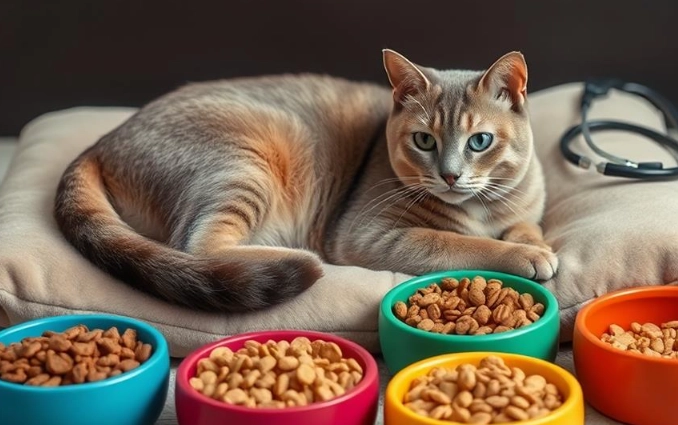
Breaking It Down by Life Stage: Kitten, Adult, Senior
Kittens (Up to 1 Year)
Forget strict portion control for healthy kittens. They need lots of energy for growth. From weaning to about 6 months, most experts recommend free-feeding high-quality kitten kibble. Let them eat as much as they want, whenever they want. Their tiny stomachs can't hold much, so they need to graze. After 6 months, you can start moving to scheduled meals (2-3 times a day) but still offer ample amounts. The question of dry cats how much food per day for a kitten is usually answered with "as much as they'll eat of a good quality kitten formula." Monitor their body condition, but don't restrict a growing kitten.
Adult Cats (1-7 Years)
This is where the chart above and careful measurement come in. Most adults do best on two measured meals per day. This helps prevent obesity, allows you to monitor appetite (a key health indicator), and fits most human schedules. Split their total daily dry food amount into two servings. If you must free-feed an adult, use a measured amount for the whole day in a puzzle feeder or timed dispenser to prevent mindless overeating.
Senior & Geriatric Cats (7+ Years)
Metabolism slows down, and activity often decreases. Many seniors need fewer calories to avoid weight gain. However, some older cats lose weight due to dental issues, reduced sense of smell, or underlying illness. You might need to switch to a senior-specific formula that's higher in protein but lower in calories. The portion might be smaller, but the nutritional density needs to be spot-on. Regular vet check-ups are non-negotiable here to tailor their diet.
The Calorie Math: For the Detail-Oriented Cat Parent
If you really want to get precise, you can calculate your cat's daily calorie needs. The resting energy requirement (RER) formula is a common starting point. It goes like this:
RER (in kcal/day) = 30 x (body weight in kilograms) + 70
First, convert your cat's weight in pounds to kilograms (divide pounds by 2.2). A 10 lb cat is about 4.5 kg.
So: 30 x 4.5 + 70 = 135 + 70 = 205 kcal/day at rest.
But that's just for basic bodily functions. To get the maintenance energy requirement (MER), you multiply the RER by a factor:
- Neutered Adult Indoor Cat: RER x 1.2
- Intact Adult: RER x 1.4
- Inactive/Prone to Obesity: RER x 1.0
- Weight Loss: RER x 0.8
- Kitten (4-6 months): RER x 2.5
For our 10 lb neutered indoor cat: 205 x 1.2 = 246 kcal per day.
Now, check your kibble bag. If it has 380 kcal per cup, then 246 / 380 = ~0.65 cups per day. That aligns perfectly with our chart for a 10 lb, low-activity cat. This math empowers you to adjust confidently when switching foods.
Common Pitfalls & How to Avoid Them
Let's talk about where people, including myself, go wrong. It's how we learn.
Guessing with the Scoop: Using a random cup or just pouring from the bag is a recipe for inconsistency. Get a proper measuring cup and use it every time.
Ignoring Treats & Scraps: Those little treats, the lick of yogurt, the piece of chicken—they all add up. They should make up no more than 10% of your cat's daily calories. If you give a lot of treats, you need to reduce the kibble accordingly. This was my biggest early mistake.
Following the Bag Blindly: As mentioned, those guidelines are often for unneutered, active cats. For the average indoor neutered cat, the high end of the bag's range can lead to obesity. The American Animal Hospital Association (AAHA) has great resources on pet obesity and why it's so critical to avoid.
Not Adjusting for Change: Did your cat just get neutered? Their calorie needs just dropped. Did winter come and their activity plummet? Time to reduce the portion. It's a dynamic process.
Mixing Wet and Dry Food: The How-To
Many vets recommend incorporating wet food for its moisture content. If you do this, you must reduce the dry food amount. It's all about calorie substitution.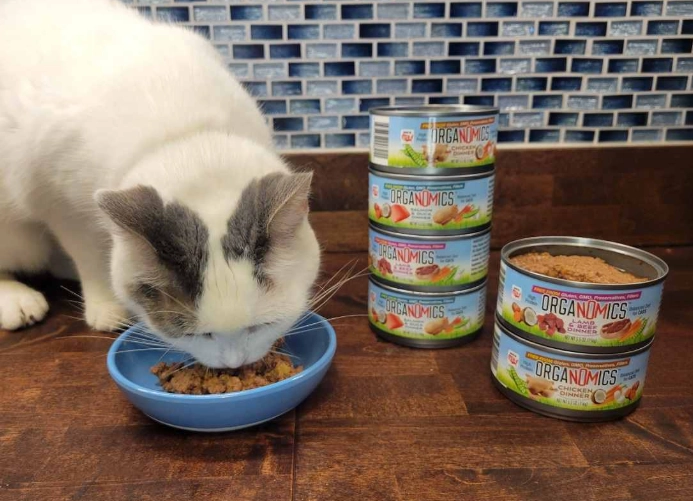
Let's say your 10 lb cat needs 250 kcal daily. You decide to give half a 3oz can of wet food that's 80 kcal per can. That's 40 kcal from wet food. So, you now need 210 kcal from dry food. If your dry food is 380 kcal/cup, that's 210 / 380 = ~0.55 cups of dry food for the day, split between meals alongside the wet food.
It takes a bit of math, but it's worth it for their urinary and overall health. The World Small Animal Veterinary Association (WSAVA) provides global guidelines that often emphasize the benefits of dietary moisture.
Answers to Your Burning Questions
Putting It All Together: Your Action Plan
Let's stop the confusion. Here's your step-by-step plan to finally answer dry cats how much food per day for YOUR cat.
- Assess: Determine your cat's ideal weight and body condition score. Be honest.
- Investigate: Find the caloric content (kcal/cup or kcal/kg) of your specific dry food. It's on the bag.
- Calculate: Use the chart as a starting point, or do the calorie math for a more precise target.
- Measure: Get a proper measuring cup or, better yet, a kitchen scale. Portion out the TOTAL for the day.
- Schedule: Split that total into at least two meals. I do morning and evening.
- Monitor: For the next 2-4 weeks, watch their weight and body shape. Feel their ribs weekly.
- Adjust: Not losing/gaining as needed? Adjust the daily amount by 10% (a small handful) and reassess in another two weeks.
- Review with Pros: Discuss your cat's diet and weight at their annual vet check-up. They are your best ally.
It's not a set-it-and-forget-it thing. It's ongoing care.
Look, I know it seems like a lot. When I first started, I just poured food. But seeing the difference a measured, tailored diet made for my cats' energy, coat, and overall health was undeniable. The chunky one slimmed down and played more. The skinny one filled out nicely. It's one of the most direct ways we can care for them.
So grab that bag, find the calories, and get your measuring cup. You've got this. Your cat is counting on you to figure out their perfect daily amount of dry food, and now you have the map to do it.



Leave a comment