You're not alone if you've typed "why di female dogs hump" into Google. That common typo reveals a widespread puzzle. We picture male dogs doing it, but when your female Lab starts going to town on a stuffed toy or your visiting friend's leg, it throws you. Is she broken? Dominant? The answer is almost never that simple. After years working with dogs, I've seen owners make one big mistake: they fixate on the action (humping) and not the emotion driving it. Let's cut through the noise and look at the five real reasons this happens.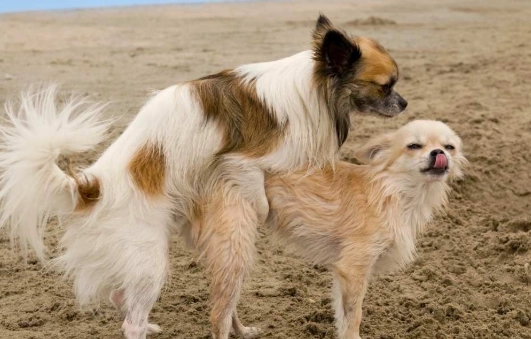
What's Inside?
It's Just Play, Really
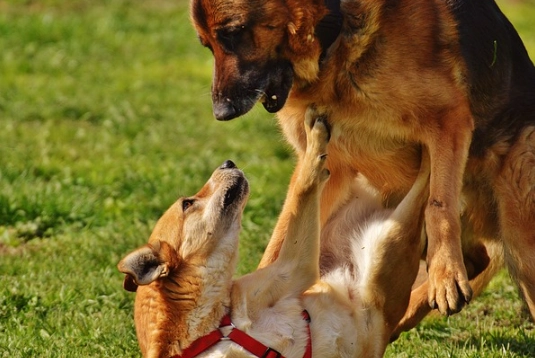
This is the most innocent and common reason, especially in younger dogs. Think of it like a toddler getting overexcited and jumping on the couch. Mounting during play is often a sign of high arousal. The dog is so amped up she doesn't know what to do with all that energy.
I watched a puppy class where a female Border Collie would initiate play, chase, and then hump her playmate as a climax to the fun. It wasn't sexual or aggressive. It was her version of "WHEEE!" The other puppy usually just walked away, unbothered.
How to spot it: Loose, wiggly body language before and after. Play bows, bouncy movements. It happens in the middle of a romp, not out of the blue. If the other dog walks off or corrects her gently and she stops, it's likely just clumsy play.
Anxiety, Excitement, and That Overused 'D' Word
Here's where it gets nuanced. Humping can be a displacement behavior—a way to cope with big, confusing feelings. The dog feels internal pressure and releases it through a familiar, rhythmic action.
Anxiety-Driven Humping
A client's rescue dog would hump a specific cushion every time the doorbell rang. Not play. Anxiety. The sudden noise stressed her, and the cushion was a safe, predictable outlet. It's a self-soothing mechanism, like nail-biting.
Excitement/Over-Arousal
You come home from work. Your dog is ecstatic. She might jump, spin, and then grab a toy to hump. The stimulus (you) is positive, but her nervous system is overloaded. The humping helps regulate that surge of emotion.
The Dominance Myth
Let's be clear: labeling a female dog's humping as pure "dominance" is outdated and often wrong. The American Veterinary Society of Animal Behavior (AVSAB) has clear position statements against explaining most behaviors through a simplistic dominance lens. While mounting can be a display of social confidence or control in a specific conflict, it's rarely the primary driver. Calling it dominance often leads owners to use confrontational methods that increase a dog's underlying anxiety.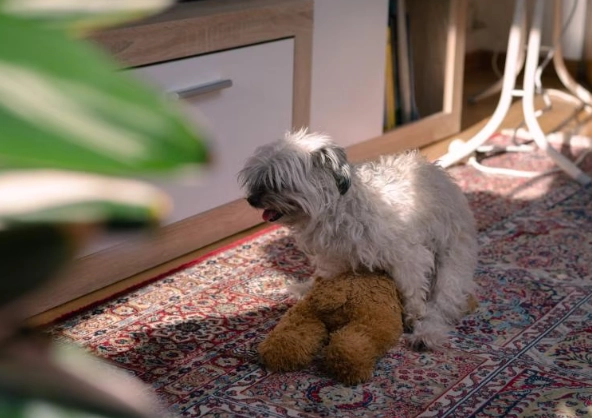
The Heat Cycle: A Brief Hormonal Window
Yes, hormones can play a role. An intact female in estrus (heat) may mount other dogs—male or female—as part of her courtship behavior. She might also be mounted by other dogs. This is one of the few times the behavior is directly linked to reproduction.
The crucial point? This is temporary, tied to her cycle. If the humping is constant and your dog is intact, it's probably not just the heat cycle. Other factors are likely at play, and spaying may reduce but not eliminate the habit if it's become learned.
The Vet Visit You Might Be Putting Off
This is the non-negotiable reason. Physical discomfort can manifest as humping. It's a way to scratch an itch or relieve pressure.
Common culprits include: Urinary Tract Infections (UTIs) – The irritation can cause licking and mounting. Skin Allergies or Dermatitis – Especially around the groin or hindquarters. Impacted or Infected Anal Glands – A hugely common and uncomfortable issue. Orthopedic Pain – Back or hip pain might lead a dog to seek pressure in odd ways. Neurological Issues – Rare, but possible.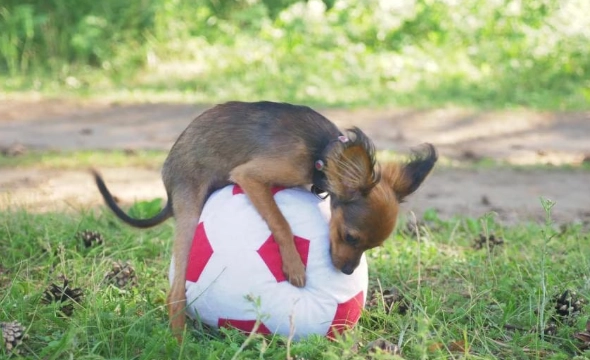
A sudden onset of humping in an otherwise non-humping dog, especially if she seems obsessive about it or is licking a lot, is a straight ticket to the vet. Rule out the physical first. Always.
The Attention Loop (You're Probably Reinforcing It)
Behavior that gets rewarded gets repeated. The reward isn't always a treat.
Picture this: Dog humps visitor's leg. Visitor gasps, "Oh! Bad dog!" and pushes her off while everyone looks. From the dog's perspective: "Amazing! I got a huge, dramatic reaction from the whole room!" Negative attention is still attention. The behavior just got stronger.
Or maybe you laugh nervously and try to distract her with a pet. Still attention. The dog learns humping is a reliable way to get you to engage.
So, What Should You Actually Do?
Your response depends entirely on the why. Here's a quick-action guide:
| Likely Reason | Immediate Action | Long-Term Strategy |
|---|---|---|
| Play/Arousal | If playmate is annoyed, calmly interrupt with a time-out. No drama. | Teach an "off-switch" like "settle" on a mat. Provide more structured play (fetch) to burn energy. |
| Anxiety/Stress | Identify and remove the trigger if possible. Don't punish. | Counter-condition the trigger (e.g., doorbell = treats). Increase overall mental enrichment (puzzle feeders, sniffy walks). |
| Seeking Attention | Be utterly, boringly neutral. No eye contact, no talking, no touch. Step away or guide her to a time-out space. | Reward calm, polite behavior lavishly. Teach an incompatible behavior like "go get your toy" as a default when excited. |
| Medical Issue | Schedule a veterinary exam immediately. | Follow your vet's treatment plan. The behavior often resolves with treatment. |
| Hormonal (Intact) | Manage her environment during heat cycles to prevent rehearsal of the behavior. | Discuss the pros and cons of spaying with your vet, understanding it may not stop a learned habit. |
The universal rule? Manage the environment. If she humps guests, put her on a leash before answering the door. If she humps a specific toy, put that toy away for a while. Prevention is easier than correction.
Your Top Questions, Answered




Leave a comment