Quick Guide
- The Official Names: Breaking Down Canine Foot Anatomy
- More Than Just Cushions: The Incredible Functions of Paw Pads
- Common Paw Pad Problems Every Owner Should Know
- Your At-Home Paw Pad Care Routine
- Paw Pad Myths and Misconceptions Debunked
- Frequently Asked Questions (Beyond the Basic Name)
- Final Thoughts: Listen to the Paws
You're watching your dog trot across the kitchen floor, and you hear that familiar soft click-click-click. Or maybe you're massaging their feet after a walk and you're fascinated by the tough, leathery, yet somehow soft texture. It hits you – what exactly are these things? What are the pads on dogs' feet called? It's one of those questions that seems simple but opens up a whole world of canine biology. Most of us just call them "paws" or "foot pads," but there's more to it, a lot more.
I remember the first time my own dog, a spirited Border Collie mix, came back from a hike with a slight limp. I was checking his foot, worried he'd stepped on something, and I realized I didn't even know the proper names for the parts I was inspecting. Was the main pad hurt? The little toe pads? It made talking to the vet feel vague. That experience sent me down a rabbit hole of learning, and honestly, it's made me a much more attentive dog owner.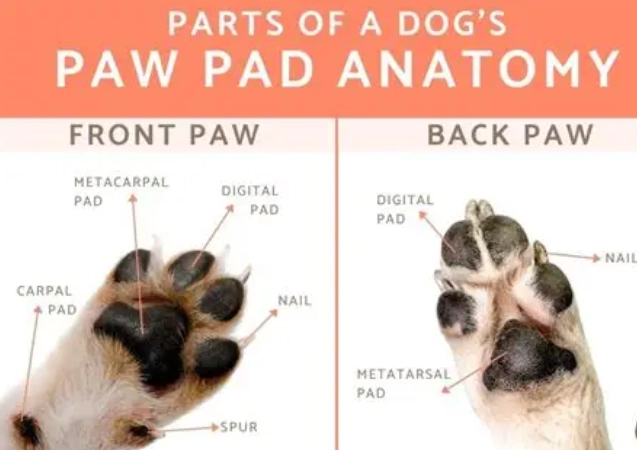
The Official Names: Breaking Down Canine Foot Anatomy
Alright, let's get into the nitty-gritty. A dog's foot isn't just one big pad. It's a sophisticated set of cushions, each with a designated title. If you've ever searched "what are the pads on dogs' feet called," you were probably looking for this list.
- The Metacarpal Pad (Front) / Metatarsal Pad (Rear): This is the big, central, heart-shaped pad. It's the main weight-bearer, the shock absorber for the entire leg. Think of it as the heel of their paw.
- The Digital Pads: These are the smaller, oval pads under each toe (four on most dogs). Each one corresponds to a toe claw. They provide traction and help with balance and pushing off when running.
- The Carpal Pad: This one is a bit of a mystery to many owners. It's that smaller, bean-shaped pad located higher up on the front leg, on the "wrist" area (the carpus). You don't see it touching the ground when your dog is just standing. Its main job? It acts like a brake or stabilizer when a dog is going downhill, running at high speed, or skidding to a stop. Pretty cool, right?
- The Dewclaw Pad: If your dog has dewclaws (those "thumbs" on the side of the leg), there's a small pad underneath them too. Not all dogs have functional dewclaws, but if they do, this pad is there.
So, the next time someone asks, "What are the pads on dogs' feet called?" you can impress them with the full breakdown. But names are just labels. The real magic is in what they do.
More Than Just Cushions: The Incredible Functions of Paw Pads
This is where it gets fascinating. Paw pads are a masterpiece of evolutionary engineering. They're not just passive cushions; they're active, multifunctional tools that let dogs conquer everything from hot asphalt to snowy trails. Let's break down their superpowers.
Shock Absorption and Weight Distribution
Imagine jumping off a couch without the cushioning in your heels. Ouch. A dog's skeleton takes a pounding, especially in larger, active breeds. The pads, particularly the large metacarpal/metatarsal pad, are made of a specialized fatty tissue covered by a thick layer of keratinized skin. This structure acts like a built-in gel insole, dissipating the impact force every time their foot hits the ground. The American College of Veterinary Surgeons notes that this shock-absorbing function is critical for preventing long-term joint stress, which can lead to conditions like arthritis. It's their first line of defense against the wear and tear of daily movement.
Traction and Grip
Ever seen a dog corner on a linoleum floor like it's on rails? Thank the digital pads and the unique texture of the pad surface. The pads have a rough, almost grooved surface that grips the ground. This provides incredible traction for running, turning, and stopping. It's why they can climb rocky slopes or sprint across a field without (usually) slipping. The carpal pad adds to this by giving extra grip during steep descents.
Insulation and Protection
This is a big one. Paw pads provide a protective barrier between your dog's body and the environment. That thick outer layer shields the sensitive inner tissues from extreme temperatures, sharp objects, and rough terrain. In winter, the pads help limit heat loss, and the blood vessels within them can constrict to keep core warmth. In summer, they provide a buffer against scorching surfaces, though this has limits—a point we'll get to later. They also protect against chemical irritants, though again, not perfectly.
Sensory Input
Here's something that blew my mind. Paw pads are packed with nerve endings. They're incredibly sensitive to pressure, texture, temperature, and vibration. This sensory feedback is vital for a dog's balance, coordination, and spatial awareness. It tells them how hard to press, what kind of surface they're on, and helps them navigate in the dark. It's a direct communication line from the ground to their brain.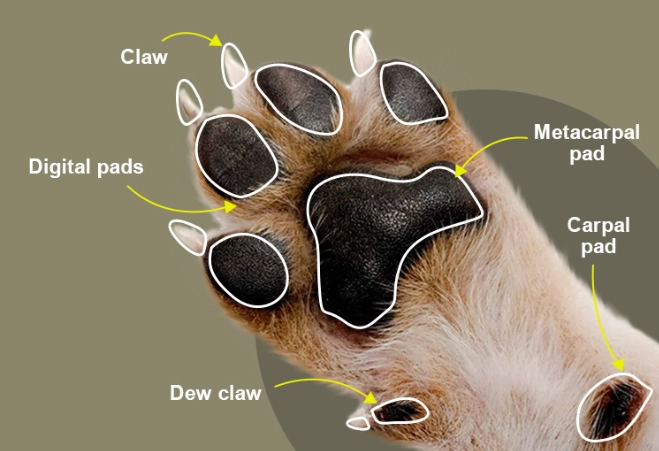
| Paw Pad Function | How It Works | Why It Matters for Your Dog |
|---|---|---|
| Shock Absorption | Fatty tissue & keratinized skin compress to absorb impact. | Protects joints (hips, knees, shoulders) from stress & potential arthritis. |
| Traction | Rough, textured surface grips the ground; carpal pad acts as a brake. | Enables safe running, turning, climbing, and stopping without slipping. |
| Insulation | Thick outer layer acts as a thermal and physical barrier. | Protects against hot pavement, cold snow, sharp rocks, and rough surfaces. |
| Sensation | Dense network of nerves detects pressure, texture, and vibration. | Provides critical feedback for balance, coordination, and navigating the world. |
When you understand all this, it changes how you view a simple walk. Those pads are working overtime.
Common Paw Pad Problems Every Owner Should Know
Paw pads are tough, but they're not invincible. Knowing what can go wrong is half the battle in prevention. After all, if you're looking up "what are the pads on dogs' feet called," you're probably also concerned about keeping them healthy. Here are the usual suspects.
Cuts, Abrasions, and Punctures
Broken glass, sharp rocks, metal edges, even crusty ice can slice or puncture a pad. These injuries can bleed a lot because the pads are very vascular. They're also prone to infection if not cleaned properly. I once had to carefully extract a tiny, almost invisible shard of glass from my dog's digital pad after a walk in an urban area. It wasn't a deep cut, but he was definitely favoring that foot.
Burns and Blisters
This is a major summer hazard. Asphalt and sand can reach skin-melting temperatures on a sunny day. A good rule of thumb (or paw?): if you can't comfortably hold the back of your hand to the pavement for seven seconds, it's too hot for your dog's paws. Burns can cause severe blistering, peeling, and pain. The pads might look darkened, raw, or have actual blisters.
Dry, Cracked Pads
Just like our skin, paw pads can get dry and cracked, especially in winter with cold, dry air and exposure to de-icing salts. Cracked pads are painful and can become deep fissures that are gateways for infection. They often look rough, flaky, and may have visible red lines or cracks.
Foreign Objects
Foxtails, burrs, small pebbles, and even clumps of snow or ice can get lodged between the pads or toes. These cause immediate lameness and irritation as they press and rub with every step. Dogs will often lick obsessively at the spot.
Allergies and Pododermatitis
Some dogs suffer from environmental or food allergies that manifest in their paws. This leads to a condition called pododermatitis – inflammation of the skin on the feet. Symptoms include redness, swelling, itching, licking, and sometimes dark staining from saliva. It can be a frustrating cycle of itch and infection.
Your At-Home Paw Pad Care Routine
Prevention is always better than cure. Incorporating a simple paw check into your routine can save you and your dog a lot of trouble. Here's what I do, and it takes just a few minutes.
- The Post-Walk Check: Make it a habit. After every walk, especially in rough terrain or urban areas, have your dog sit and gently go through each foot. Spread the toes. Look between the digital pads. Feel for any heat, swelling, or foreign objects. This is also the perfect time to answer the "what are the pads on dogs' feet called" question for yourself—you'll learn to identify each part.
- Regular Cleaning: A simple wipe with a damp cloth or a pet-safe wipe removes dirt, pollen, and harmful chemicals like road salt or lawn pesticides. Dry them thoroughly, especially between the toes where moisture can lead to irritation.
- Moisturizing (The Right Way): If pads are looking dry or rough, use a pet-specific paw balm or wax. Do not use human lotions, which can soften the pads too much or contain harmful ingredients if licked. Look for natural ingredients like beeswax, shea butter, and coconut oil. Apply a thin layer and massage it in. My dog used to hate this, but now he sees the tin and plops down, ready for his paw massage.
- Hair Trimming: For long-haired breeds, keep the hair between the pads trimmed short. Mats and long hair can trap moisture, debris, and ice balls, leading to discomfort and skin issues.
It sounds like a lot, but once it's routine, it's as simple as taking off your own shoes after being outside.
Paw Pad Myths and Misconceptions Debunked
There's a lot of advice floating around about dog paws. Let's clear the air on a few common ones.
Myth: Dog pads are so tough they don't need protection. This is dangerously false. While they are resilient, they have limits. Hot pavement, sharp ice, and harsh chemicals will damage them. Thinking they're "all-terrain tires" is how injuries happen.
Myth: You should toughen up your puppy's pads by walking them on rough surfaces. Please don't do this. Puppy pads are soft and sensitive. They naturally toughen as the dog grows and explores the world at a normal pace. Forcing them onto abrasive surfaces can cause micro-tears and pain. Let them develop naturally.
Myth: Licking paws is always a sign of anxiety. While it can be a stress-related behavior, it's more often a sign of a physical problem—an itch, a pain, a foreign object, or an allergy. Always check the paws first before assuming it's behavioral.
Myth: If a pad is black, it's tougher than a pink pad. Pad color is simply pigmentation, like skin color in humans. It has no bearing on toughness or durability. A black pad can burn or crack just as easily as a pink one.
Frequently Asked Questions (Beyond the Basic Name)
Okay, so now you know what the pads on dogs' feet are called. But your curiosity probably doesn't stop there. Here are answers to the next logical questions people have.
Why do dogs' paw pads sometimes smell like corn chips?
Ah, the classic "Frito feet" phenomenon. It's usually harmless! The smell is caused by natural bacteria (like Proteus or Pseudomonas) and yeast that live on the skin of the paw. When your dog's paws get slightly sweaty (yes, dogs sweat minimally through their pads), it creates a warm, moist environment where these microbes thrive, producing a yeasty, corn chip-like odor. It becomes a concern only if the smell is extremely strong, foul, or accompanied by licking, redness, or swelling, which could indicate an infection.
How can I tell if my dog's paw pads are healthy?
Healthy paw pads should be smooth to slightly rough in texture, supple (not brittle), and free of deep cracks, cuts, or redness. They shouldn't feel excessively hot or swollen. The skin between the pads should be clean and intact. A quick monthly "paw review" where you consciously feel and look at each pad will help you establish what's normal for your dog.
My dog is licking his paws constantly. What should I do?
First, do a thorough inspection. Look for cuts, splinters, burrs, swelling, or redness between the toes and pads. Clean the paw with mild soap and water, dry thoroughly, and see if the licking stops. If it persists for more than a day with no visible cause, it's time for a vet visit. Chronic licking is often linked to allergies (environmental or food), pain (like arthritis making them focus on their feet), or bacterial/yeast infections. The folks at the Cummings School of Veterinary Medicine at Tufts University have excellent resources on diagnosing and managing allergic skin disease in dogs, which often starts with paw licking.
Are there breed differences in paw pads?
Absolutely! Breeds developed for cold climates, like Siberian Huskies or Newfoundlands, often have thicker, more heavily furred paws with thicker pads for insulation. Breeds bred for speed and agility on rough terrain, like many sight hounds, tend to have tough, compact paws. Some giant breeds have larger, more spread-out paws to distribute their weight. It's a fascinating aspect of how form follows function in dog breeding.
Can I use human antibiotic ointment on a cut pad?
This is tricky. While a plain antibiotic ointment like bacitracin can be used in a pinch for a minor, clean cut, many human ointments contain additional ingredients like pain relievers (e.g., pramoxine) that can be toxic if licked and ingested in large amounts. It's always safer to use a pet-specific antiseptic or wound spray. For anything more than a tiny superficial scrape, consult your vet. They might prescribe a safe, lick-resistant product.
See? The simple question, "What are the pads on dogs' feet called?" leads you down a path to being a more informed and proactive pet parent.
Final Thoughts: Listen to the Paws
Our dogs' paws are their connection to the world. They walk, run, dig, and play with them. Those pads are a masterpiece of design—shock absorbers, sensors, brakes, and insulators all in one. Knowing their names and their functions isn't just academic; it's a practical tool for ensuring your dog's comfort, health, and longevity.
So the next time you're rubbing those feet, you'll know you're massaging the metacarpal pad, the digital pads, and maybe even the carpal pad. You'll know what to look for, how to care for them, and when to worry. That knowledge turns a routine cuddle into an act of informed care. And honestly, isn't that what being a great dog owner is all about? Paying attention to the details, even the ones that go click-click-click across the floor.
They walk their whole journey on those four paws. The least we can do is understand them.


Leave a comment