Explore the Feline Anatomy
You watch your cat stretch in that impossibly graceful arc, leap to the top of the fridge without a sound, or contort themselves into a box half their size, and you have to wonder: how does that body even work? It's easy to just see the fur and the purr, but underneath is one of nature's most finely-tuned pieces of evolutionary engineering. Understanding cat anatomy isn't just for vets or biology nerds. It's the key to understanding your cat's behavior, spotting potential health issues early, and truly appreciating the little predator living on your sofa.
I remember the first time I felt my cat's shoulder blades move under my hand as he walked. It was so different from a dog or a human. That was my first real clue that there was a whole hidden world under that fluffy exterior. This guide is my attempt to map out that world for you. We're going to move past the cute nose and whiskers (though we'll get to those too) and dive into the bones, muscles, and systems that make a cat a cat.
The Framework: A Cat's Skeletal System
Everything starts with the bones. The feline skeleton is a masterpiece of lightweight, flexible strength, built for explosive power and silent movement. It's the chassis of our agile little friend.
Spine and Vertebrae: The Ultimate Spring
A cat's spine is ridiculously flexible, and that's thanks to the individual bones that make it up. They have around 30 vertebrae in their backbone (humans have 33, but ours are more rigid). The real magic is in the connections between them. The discs are extra squishy, and the joints have a wider range of motion. This is why they can twist mid-air to land on their feet—a trick called the "righting reflex" that relies entirely on a flexible spine and a functioning vestibular system (the inner ear balance organ).
Let's talk about the famous "cat righting reflex" for a second. It's not magic, it's physics and biology. They use their eyes and inner ear to figure out which way is up, then they arch their back to create two rotating halves of their body. The flexible spine acts like a torsion spring. It's incredible to watch, but it's not foolproof. Falls from very short distances (like from your arms) don't give them enough time to rotate. And falls from great heights, while they might land feet-first, often result in severe injuries like broken jaws or limbs. The whole "cats always land on their feet" thing is a dangerous myth.
Limbs and Paws: Silent Weapons
A cat walks on its toes. This "digitigrade" stance is a hallmark of speedsters and sprinters in the animal kingdom (cheetahs, dogs, birds). It lengthens the limb effectively, giving more leverage and stride length for those sudden bursts. Their front legs are fascinating. They don't have a collarbone (clavicle) that's connected to other bones like ours. It's a small, floating bone buried in muscle. This is the single biggest anatomical feature that lets them squeeze through any space their head fits through. Go ahead, feel your cat's shoulders. You won't find a prominent collarbone joint like on yourself.
The paws are engineering marvels. Five toes in the front, four in the back (usually). Each toe is tipped with a retractable claw. I used to think the claws just slid in and out of the toe. The mechanism is cooler. The claw is attached to the last bone of the toe by a ligament. When the cat relaxes its foot muscles, that ligament pulls the claw up and back into a sheath, protected and kept sharp. When they need to climb, hunt, or get a good grip on your favorite sweater, they contract a specific tendon to extend the claw forward. It's a passive retraction system—energy efficient and brilliant.
The Skull and Teeth: Built for the Kill
A cat's skull is short and rounded, with huge eye sockets and a powerful jaw hinge. Their teeth tell the story of their diet. They are obligate carnivores. They don't need flat molars for grinding plants. Instead, they have specialized teeth:
- Incisors: The tiny front teeth. Used for nibbling, grooming, and gripping prey.
- Canines: The long, pointed fangs. These are for delivering the killing bite, puncturing the spinal cord or neck of prey. They are precision instruments.
- Premolars & Molars: Called carnassial teeth. They are sharp and scissor-like, designed to shear flesh and crush bone. They work like paired blades to slice meat into swallowable chunks.
This dental setup means cats cannot chew side-to-side. They only chop up and down. It's also why dental health is so critical. Any misalignment or disease in these specialized tools makes eating painful. A deep dive into cat anatomy always circles back to their nature as hunters.
The Engine Room: Muscles and Movement
Bones are just levers. The muscles are what pull them. Feline muscle anatomy is all about power-to-weight ratio. They have a higher proportion of fast-twitch muscle fibers compared to humans. These fibers contract quickly and powerfully but fatigue fast. That's why cats are champions of the sprint and the pounce, not the marathon.
The major muscle groups are concentrated for explosive action. Their powerful hind leg muscles (like the massive gastrocnemius and quadriceps) are for jumping. Their back and shoulder muscles (latissimus dorsi, trapezius) provide the strength for climbing and the initial lunge of a pounce. Their abdominal muscles are incredibly strong, acting as a corset to stabilize that flexible spine during high-speed maneuvers.
| Major Muscle Group | Primary Function | What It Enables |
|---|---|---|
| Hind Limb Muscles (e.g., Gastrocnemius) | Powerful extension of the leg | High jumps, sprinting acceleration, standing up on hind legs |
| Back & Shoulder Muscles (e.g., Latissimus Dorsi) | Pulling and climbing power | Scaling trees, pulling down prey, the initial pounce |
| Abdominal Muscles | Core stabilization and flexion | Spine stability during running, the "righting reflex" twist, compressing the body |
| Neck & Jaw Muscles | Head movement and biting force | Precise control during the kill bite, carrying prey, grooming |
Watching a cat move is seeing these muscles work in perfect, fluid sequence. The crouch, the coil, the silent stalk—it's all a complex ballet of muscular contraction and release. When they "make biscuits" on a soft blanket, they're using the same pushing motion with their front legs that kittens use to stimulate milk flow from their mother. It's a comforting, instinctual behavior rooted in their earliest muscle anatomy memories.
Specialized Systems: More Than Just Cute Features
The Sensory Suite: Seeing, Hearing, and Feeling the World
Cats perceive the world differently. Their eyes have a reflective layer behind the retina called the tapetum lucidum. It acts like a mirror, bouncing light back through the retina a second time to maximize vision in low light. That's the source of the eerie eye shine. They see better in the dark than we do, but their color vision is limited compared to ours—they see blues and yellows best, but reds and greens likely appear as shades of gray or brown. Their field of view is wider (about 200 degrees vs. our 180), perfect for detecting peripheral movement of prey or threats.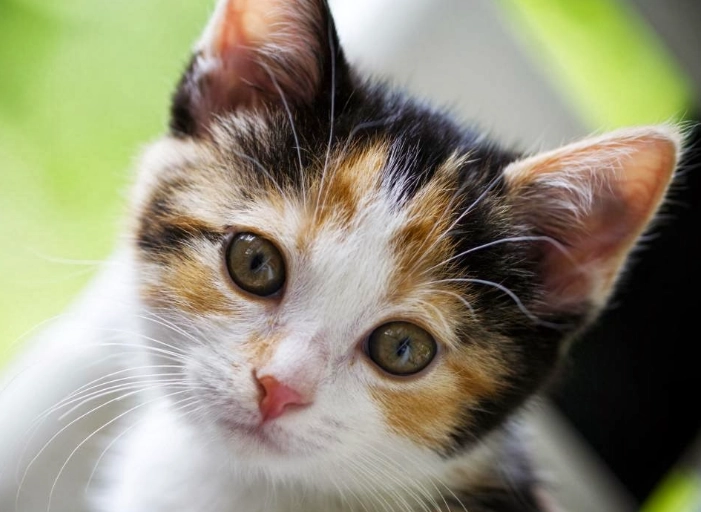
Their ears can rotate independently like satellite dishes, funneling sound with those expressive outer flaps (pinnae). They hear higher frequencies than both dogs and humans, crucial for detecting the high-pitched squeaks of rodents. Ever see your cat's ear twitch at a sound you can't hear? That's their superior hardware at work.
Then there are the whiskers (vibrissae). These aren't just long hairs. They're deeply rooted in follicle beds packed with nerves and blood vessels. They're exquisitely sensitive touch receptors. Cats use them to gauge the width of openings, detect air currents, and sense objects in near-total darkness. Never, ever cut a cat's whiskers. It's disorienting and stressful for them, like blindfolding a person.
The Digestive Tract: Processing a Meat Diet
As obligate carnivores, a cat's digestive system is short and simple compared to an omnivore's. It's designed to process high-protein, high-fat meat meals quickly, not to ferment fibrous plant material. The journey is fast—from mouth to litter box can be under 24 hours.
It starts in the mouth with those slicing teeth and saliva that begins digestion. Then food moves quickly down a relatively short esophagus to the stomach. The feline stomach is highly acidic, necessary for breaking down raw meat and killing bacteria. From there, it passes into the small intestine, where most nutrient absorption happens. The pancreas and liver provide enzymes and bile to break down fats and proteins. The large intestine (colon) is short, primarily for absorbing water and forming feces.
The liver is a powerhouse in feline digestive system health. It processes toxins, stores vitamins, and helps metabolize proteins and fats. It's also why things like certain medications, lilies, and fatty foods can be so dangerous—they can overwhelm the liver, leading to a life-threatening condition called hepatic lipidosis, especially in overweight cats who stop eating suddenly.
Internal Systems: The Unseen Workhorses
Cardiovascular and Respiratory Systems
A cat's heart is a efficient, four-chambered pump just like ours, but it beats much faster—anywhere from 140 to 220 beats per minute at rest. That fast pace supports their high metabolism and readiness for action. Their lungs are relatively small but efficient, filling that flexible ribcage. You'll notice their breathing rate is also quicker than a human's. Panting is not normal for cats like it is for dogs. If your cat is panting, it's often a sign of extreme stress, overheating, or a serious medical problem like heart disease or asthma, and warrants a vet visit.
The Urinary System
This is a big one for cat owners. Cats have evolved from desert ancestors and are superb at conserving water. Their kidneys are extremely efficient at concentrating urine. That's why cat pee smells so strong. This efficiency is a double-edged sword. It makes them prone to urinary crystals and stones, especially if they don't drink enough water. The typical dry food only, low-water-intake lifestyle of many indoor cats is a recipe for urinary tract issues. Encouraging water intake through wet food and water fountains is one of the best things you can do for their urinary health.
Male cats are particularly at risk for urinary blockages because their urethra is longer and narrower. A complete blockage is a life-threatening emergency. Knowing the signs—straining in the litter box, crying, frequent trips with little output, licking the genital area—can save your cat's life.
Common Cat Anatomy Questions Answered
Why does my cat have a primordial pouch?
That saggy belly flap! It's not just fat (though it can get fatty). It's a layer of skin and fat called the primordial pouch. Theories abound: extra protection for the belly in a fight, allowing for greater expansion when running or after a big meal, or just an evolutionary leftover. It's perfectly normal and wiggles charmingly when they run.
How many bones are in a cat's body?
A cat has about 230-250 bones (the number can vary slightly due to tail length and the presence of small sesamoid bones). Humans have 206. The extra bones are largely in the spine and tail, contributing to that famous flexibility.
Why do cats purr?
The exact mechanism isn't 100% agreed upon, but it's believed to involve rapid, rhythmic contractions of the laryngeal muscles and the diaphragm, causing vibrations in the vocal cords. It's not just for happiness—cats also purr when in pain, stressed, or dying, suggesting it may be a self-soothing mechanism or even a way to promote bone and tissue healing through vibrational frequencies.
Can cats really taste sweetness?
No, they can't. Due to a genetic mutation, cats lack the functional taste receptors for sweetness. That ice cream they seem to love? They're after the fat, not the sugar. Their taste buds are tuned to detect amino acids in meat.
Why This Knowledge Matters for You and Your Cat
So, we've taken this grand tour of feline cat anatomy. But why should you, as a cat owner, care about the details of their skeletal system or how their digestive tract works?
It changes how you see them. That crazy middle-of-the-night "zoomies" session isn't just random insanity; it's the expression of a body built for explosive bursts of energy. The desire to climb to the highest point in the room is hardwired into their limb structure and balance systems. The picky eating isn't (always) them being difficult; it's a digestive system that craves specific nutrients from meat.
More practically, it helps you be a better guardian. Knowing the signs of a urinary blockage because you understand their urinary system anatomy can mean the difference between a quick vet trip and a tragedy. Recognizing that panting is abnormal can lead to earlier diagnosis of heart issues. Understanding their need for animal-based protein helps you choose better food. Appreciating the stress of a broken whisker or the discomfort of overgrown claws (which can grow into the pad) guides gentler grooming.
For authoritative information on specific health conditions related to anatomy, I always recommend checking resources from established veterinary institutions. The Cornell Feline Health Center is an unparalleled resource for cat owners, providing science-backed guides on everything from urinary health to nutrition. For a deep dive into clinical veterinary details of feline anatomy, resources like those provided by the Merck Veterinary Manual are invaluable, though more technical.
The next time your cat does something that seems bizarre or amazing, take a second to think about the machinery under the hood. That curiosity is the first step in a deeper, more rewarding relationship with the fascinating creature who has chosen to share your life. It’s not just pet ownership; it’s sharing your home with a living, breathing piece of natural art and engineering. And honestly, knowing how they work makes the whole experience of living with them even cooler.
Leave a comment