Quick Guide
- Why Bother With a Puppy Potty Training Routine?
- Building Your Personalized Potty Training Puppy Schedule
- Tailoring The Schedule: Life Gets in the Way
- The Execution: What to Actually Do Outside
- Handling the Inevitable Accidents
- Adjusting the Schedule as Your Puppy Grows
- Your Top Potty Training Schedule Questions, Answered
- The Final Word: Consistency Over Perfection
Let's be honest for a second. When you first bring that fluffy ball of energy home, the idea of potty training feels simple enough. Take them out often, praise them, done. Right? Then reality hits. You're scrubbing carpets at 2 AM, the puppy is looking at you like you're the one who messed up, and you're scouring the internet for a magic solution. I've been there. The single biggest game-changer wasn't a special spray or a fancy gadget – it was committing to a solid, realistic potty training schedule for puppies.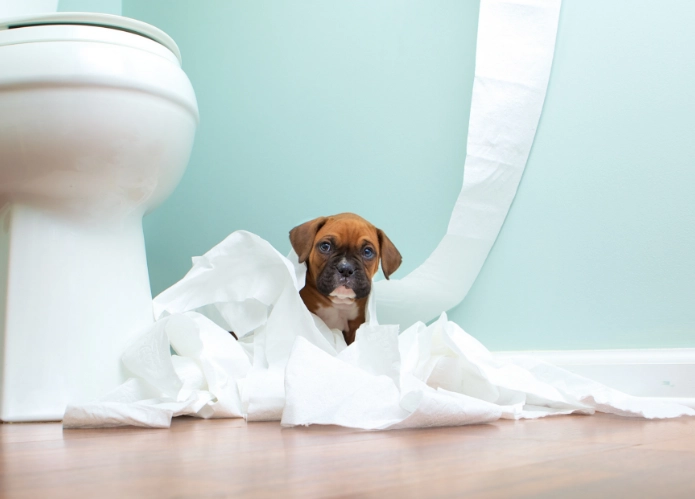
Without a schedule, you're just guessing. With one, you're teaching. This guide isn't about a rigid military drill that's impossible to follow if you have a job, kids, or a life. It's about building a flexible framework that creates predictability for your puppy and sanity for you. We'll dive into the why behind the timing, how to tailor it to your specific pup, and what to do when (not if) things go sideways.
Why Bother With a Puppy Potty Training Routine?
You might think you can just wing it. I thought so too with my first dog. Big mistake. The chaos of inconsistent timing confused him and stretched the training process out for months. A routine isn't about control; it's about communication.
It teaches your puppy where and when it's appropriate to relieve themselves. It builds a reliable biological clock. Most importantly, it drastically reduces the number of accidents in the house, which is the fastest way to build your confidence as a new owner and your puppy's understanding of the rules. The American Kennel Club (AKC) emphasizes that consistency is the cornerstone of house training, and a schedule is the tool that delivers that consistency. You can read more about the foundational principles on their official puppy potty training guide.
The Biological Facts You're Working With
Puppies physically can't "hold it" for long. A common rule of thumb is they can hold their bladder for about one hour per month of age, up to about 8 hours for an adult dog. So, an 8-week-old (2-month) puppy has a bladder capacity of roughly 2 hours. That's maximum, under perfect, calm conditions.
Excitement, play, drinking water – all of these fill that tiny tank much faster. This is why the first few months require such frequent trips outside. It's not stubbornness; it's simple anatomy. The Humane Society of the United States (HSUS) provides excellent resources on understanding these physiological limits as part of responsible pet ownership, which you can find in their house training overview.
Building Your Personalized Potty Training Puppy Schedule
Here's where we get practical. The following table is a sample puppy potty training schedule for an 8-12 week old puppy. Think of it as a template, not a prison sentence. You'll adjust the exact times based on when you wake up and go to bed.
| Time | Action | Why It's Important |
|---|---|---|
| 6:30 AM | Immediate potty break. Carry puppy outside if possible. | Bladder is full from overnight. This is non-negotiable. |
| 6:45 AM | Short playtime, then water/food. | Food/water intake will trigger another need to go soon. |
| 7:15 AM | Second potty break. | About 30 minutes after eating/drinking. |
| 8:00 AM | Supervised play or training session. | Mental/physical stimulation. |
| 8:20 AM | Potty break after play. | Excitement and activity stimulate bowel/bladder. |
| 8:30 AM | Crate/contained rest time. | Puppies need 18-20 hours of sleep. Prevents accidents. |
| 10:30 AM | Potty break, then short awake period. | Break after ~2 hours of rest. |
| 11:00 AM | Back to crate for nap. | Maintains the rest cycle. |
| 1:00 PM | Potty break, lunch, potty break again 30 min later. | Repeat the morning feeding/potty sequence. |
| 1:45 PM - 4:45 PM | Cycle of: 1 hr awake/play, potty break, 2 hr crate nap. | The core daytime rhythm. |
| 5:00 PM | Dinner time. | Control feeding times to predict potty times. |
| 5:30 PM | Mandatory post-dinner potty break. | Critical to prevent evening accidents. |
| 6:00 - 9:00 PM | Evening family time, calm play. Water removed by 8 PM. | Socialization time. Limiting water helps with overnight. |
| 9:00 PM | Final, thorough pre-bed potty break. | Empty the tank completely. Be patient. |
| 9:30 PM | Into crate for the night. | Last chance to settle before sleep. |
| Overnight | One break likely for young pups (e.g., 2 AM). | Set an alarm. It's temporary as bladder grows. |
Looks intense, right? It is, for the first few weeks. But this frequency is what prevents the habits you don't want. The crate is your best friend here – not as punishment, but as a cozy den where puppies are naturally reluctant to soil. It makes the schedule possible when you can't have eyes on them every second.
Key Triggers You Must Watch For
The schedule is your proactive plan. But you also need to react to your puppy's signals. These moments demand an immediate trip outside, schedule be damned:
- Waking up from a nap: Even a 20-minute snooze. First stop is always outside.
- Finishing a meal or a big drink of water: The 15-30 minute window is prime time.
- After a vigorous play session: All that bouncing gets things moving.
- Sniffing the ground in a circle: The classic "I'm about to go" signal.
- Whining or pacing suddenly: Especially if they've been quiet and contained.
Tailoring The Schedule: Life Gets in the Way
Not everyone works from home. Maybe you have kids' schedules to manage. The sample puppy potty training routine above needs to bend, not break.
For the Working Owner
This is the toughest scenario, but far from impossible. It requires help and planning.
Morning: Follow the early schedule tightly (6:30 AM potty, feed, 7:15 AM potty). Before you leave, one last potty break at 8 AM. Puppy goes into a safe, puppy-proofed space (like an exercise pen attached to a crate) with a pee pad in one far corner. The goal isn't to teach pad use forever, but to provide an acceptable emergency option.
Midday: This is non-negotiable. You must have a dog walker, neighbor, or come home yourself for a midday potty break and short interaction. A pup left alone from 8 AM to 6 PM will physically fail and learn to go inside.
Evening: The moment you get home, it's straight outside. Then you pick up the evening portion of the schedule. It's a harder road, but with a reliable midday break, it's absolutely doable.
For the At-Home Owner
You have the advantage of flexibility, but the danger of forgetting. Set alarms on your phone for the first week. It's easy to get distracted by a work call and miss the 2-hour mark. The structure is still your friend, even if you can adjust the clock faces.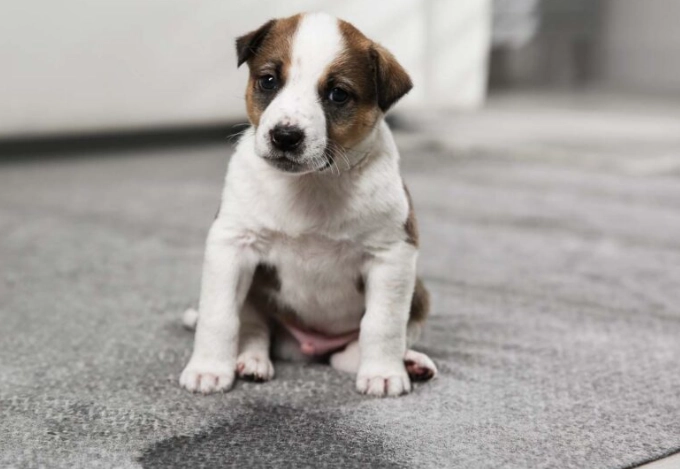
The Execution: What to Actually Do Outside
This part is just as important as the timing. A chaotic, distracted potty break teaches nothing.
- Leash Up: Even in a fenced yard, use a leash for the first few weeks. It keeps them in the designated "potty spot" and prevents them from wandering off to play.
- Be Boring: Stand in one spot. Don't talk, don't play. Be a potty statue. This communicates the trip's purpose.
- Use a Cue Word: As they start to go, say a quiet, consistent phrase like "Go potty" or "Do your business." They'll eventually associate the phrase with the action.
- Instant, Over-the-Top Praise: The *second* they finish, erupt in happy praise and give a high-value treat right there on the spot. The treat must follow within 2 seconds. This is the golden moment that builds the association: "Outside elimination = the best thing ever!"
- Then, Play: After the treat, you can release for a few minutes of play or exploration. This makes the whole outside experience positive.
What if nothing happens?
If after 5 minutes of calm waiting, nothing happens, go back inside. But watch them like a hawk or put them in their crate for 10-15 minutes, then try again. They likely just got distracted.
Handling the Inevitable Accidents
You will have them. I've had them with every single dog. How you handle it makes all the difference.
If you catch them in the act: Make a quick, sharp noise (like "Oops!") to interrupt, then immediately scoop them up and rush outside. If they finish outside, praise and treat. The goal is to connect the act with the outdoors, not to scare them.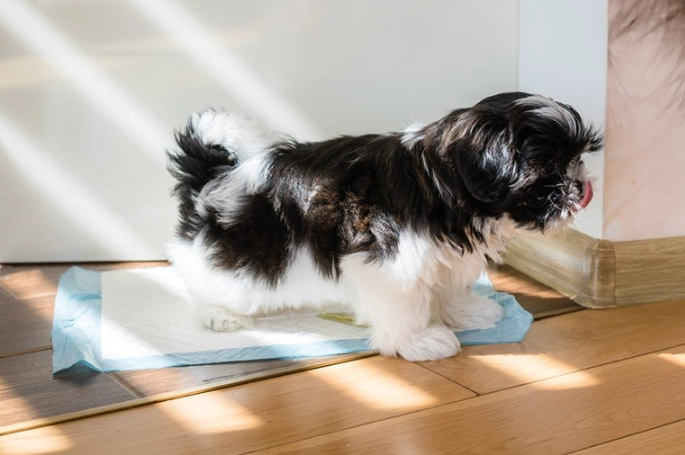
If you find a puddle after the fact: This is the hardest part. You must swallow your frustration. Never rub their nose in it, yell, or punish. The puppy cannot connect your anger with an action that happened minutes or hours ago. They will only learn to be afraid of you or to hide when they go. It's pointless and damaging.
Clean it up thoroughly with an enzymatic cleaner designed for pet urine (like Nature's Miracle or Simple Solution). Regular cleaners leave a scent trace that says "bathroom here" to your puppy. The enzymatic ones break down the proteins in the urine, removing the odor completely. This step is critical.
Adjusting the Schedule as Your Puppy Grows
The beautiful thing about a good potty training schedule for puppies is that it's temporary. As your pup's bladder capacity increases, you can stretch the intervals.
- 3-4 Months Old: You might drop the midnight potty break. Daytime breaks can stretch to every 2.5-3 hours.
- 5-6 Months Old: A reliable pup can often manage 3-4 hours during the day. Most can sleep 7-8 hours solid at night.
- 6+ Months: You're transitioning to an adult schedule: first thing in the morning, midday, after work, after dinner, before bed. The puppy potty training routine has now become a familiar, lifelong habit.
Remember, smaller breeds often take longer than larger breeds to develop full bladder control. Patience isn't just a virtue here; it's a requirement.
Your Top Potty Training Schedule Questions, Answered
The Final Word: Consistency Over Perfection
You won't follow the perfect puppy potty training schedule every single day. You'll oversleep. You'll get stuck on a work call. The puppy will have an off day. That's okay. The goal isn't perfection; it's consistent effort.
The more days you stick close to the plan, the faster the lightbulb will go on for your pup. They crave routine. They want to understand the rules. By providing a clear, predictable potty training schedule for puppies, you're giving them the blueprint for success. You're not just teaching them where to go; you're building a language of trust and communication that will last their whole life.
So take a deep breath. Print out that sample schedule. Circle the three most important trips for you to hit (first thing AM, after meals, last thing PM). Start there. Build out as you get the hang of it. You and your puppy will get there, one successful (and occasionally messy) step at a time.



Leave a comment