Your Quick Guide
- Why Even Bother? The Real Benefits of Leash Walking Your Cat
- The Gear: Your Harness and Leash Are Everything (Get This Wrong and You're Done)
- The Training: A Step-by-Step Guide That Actually Respects Your Cat's Pace
- Taking the Plunge: Your First Outdoor Adventure
- The Dark Side: Risks, Dangers, and When to Say No
- Your Burning Questions, Answered (The FAQ Nobody Puts in Guides)
- Final Thoughts: Is This Journey Right for You and Your Cat?
So you're thinking about walking your cat on a leash. I get it. You've seen those Instagram videos—the majestic Maine Coon strutting through a park, the curious Siamese sniffing flowers—and thought, "My cat would love that." Or maybe you're just worried about your indoor cat getting bored, staring out the window all day, and you want to give them a taste of the outside world safely. Let's be real, though. The idea of a cat on a leash is a bit strange to most people. Dogs? Sure. Cats? That's a whole different ball game.
I tried it with my own cat, Mochi, a few years back. It was... a disaster at first. The harness was on backwards, he flopped over like a dramatic fish, and the first time we made it to the porch, a loud truck sent us scrambling back inside. But we stuck with it. Slowly, patiently. And now? He gets excited when he sees his harness. We have little adventures in the backyard. It's not about taking him for a "walk" like a dog; it's about letting him explore on his own terms, with me as his safety anchor.
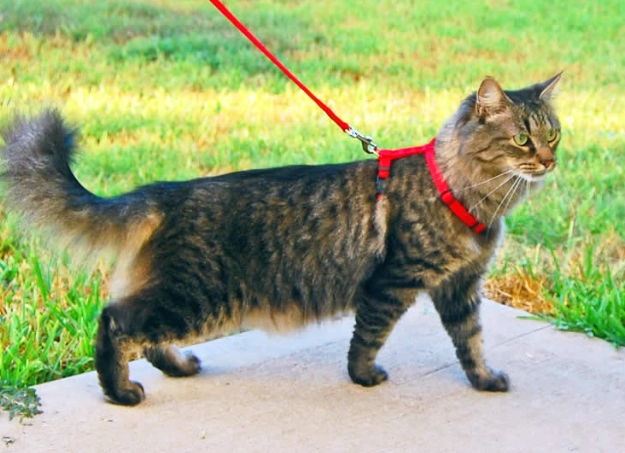 But is it right for every cat? Absolutely not.
This guide isn't about forcing your cat into a weird trend. It's a deep, practical look at the reality of leash training a cat. We'll cover the good, the bad, the frustrating, and the genuinely wonderful. We'll talk gear, training steps that actually work, safety risks most guides gloss over, and answer the questions you're probably too embarrassed to ask. By the end, you'll know if trying a cat leash and harness is a brilliant idea for your feline friend or a recipe for stress.
Why Even Bother? The Real Benefits of Leash Walking Your Cat
Forget the cute pics for a second. What's the actual point? For many indoor cats, their world is limited to the same few rooms. This can lead to boredom, which in turn can cause obesity, anxiety, depression, or destructive behaviors like scratching furniture. Environmental enrichment is a huge deal in modern cat care.
Controlled outdoor access on a leash provides mental stimulation that's off the charts. New smells, textures, sounds, and sights. It's like turning on a 4D movie for their senses. It can also help with weight management through gentle exploration and build confidence in shy cats. For people living in apartments without a catio, it might be the only safe way to give their cat a taste of nature.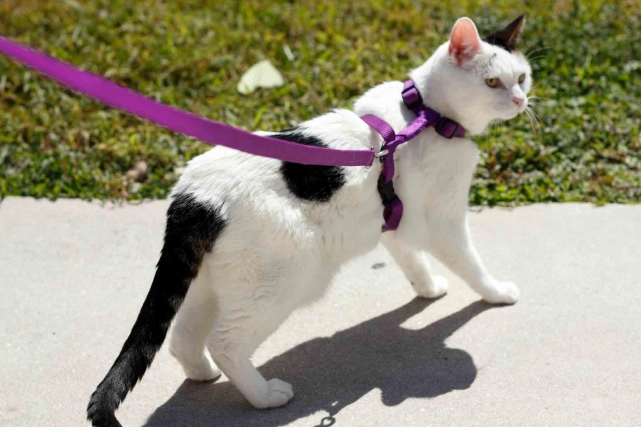
I've found it also strengthens our bond. Mochi looks to me for reassurance when he's unsure. It's a shared activity that's built on trust. But—and this is a big but—these benefits only come if the experience is positive for the cat. A terrified cat dragged outside on a leash is worse off than a slightly bored cat safely inside.
The Gear: Your Harness and Leash Are Everything (Get This Wrong and You're Done)
This is where most first attempts fail. You cannot, I repeat, cannot use a dog harness or a collar. Cats are contortionists and escape artists. A simple collar is dangerous (they can hang themselves) and ineffective. A dog's step-in harness is an escape hatch for a determined cat.
You need a properly designed, secure cat harness. There are two main types that actually work:
H-Style Harnesses
These look like a little vest with straps that form an "H" on the cat's back. They typically have two neck straps and two torso straps. They distribute pressure well and are generally very secure. The downside? They can be a bit more fiddly to put on a wiggly cat.
Vest-Style Harnesses
These are more like a little jacket that clips around the neck and belly. They're often easier to put on (some are even step-in) and can feel more secure to the cat because of the broader contact area. The crucial thing is to check that the neck opening is snug enough to prevent escape but not tight. Some cats dislike the feeling of fabric around their shoulders.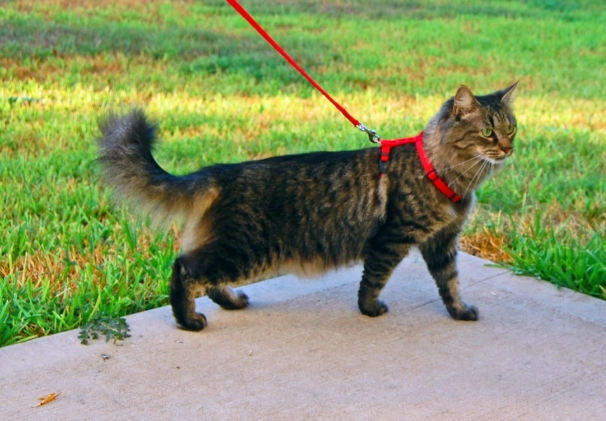
Here’s a quick comparison to help you choose:
| Harness Type | Best For | Security Level | Ease of Put-On | Potential Drawback |
|---|---|---|---|---|
| H-Style | Strong pullers, escape artists, larger cats | High (adjustable at 4 points) | Medium (multiple buckles) | Can be bulky, some cats dislike neck straps |
| Vest-Style | Beginner cats, sensitive cats, smaller builds | Medium-High (depends on fit) | High (often 1-2 buckles) | Can be warm, may restrict shoulder movement if poorly fitted |
My personal journey? I started with a cheap H-harness from a pet store. Mochi hated the feel of the skinny straps. We switched to a padded vest-style harness (the Kitty Holster is a popular brand), and he was immediately more comfortable. The fit is king. You should be able to fit two fingers snugly under any strap. Do the "squirm test" indoors first—if they can back out of it, it's not safe for walking a cat on a leash outside.
The Training: A Step-by-Step Guide That Actually Respects Your Cat's Pace
This isn't a weekend project. Rushing is the number one cause of failure. You're building positive associations, not issuing commands. Plan for this to take weeks, not days.
- Stage 1: Harness = Treats. Leave the harness near their food bowl or bed for a few days. Let them sniff it. Then, start holding it out and giving a high-value treat (like chicken or tuna) when they approach it. No trying to put it on yet.
- Stage 2: The Touch. Gently drape the harness over their back for one second, then treat. Repeat. Gradually increase the time. If they panic, go back a step. This stage is about patience.
- Stage 3: The First Wear. Clip the harness on loosely. IMMEDIATELY distract with play or treats. Leave it on for only 1-2 minutes at first. Don't let them wander off and get tangled. The goal is for them to forget it's even on. Increase the duration over several sessions.
- Stage 4: Add the Leash. Attach the leash indoors and let them drag it around (supervised, so it doesn't catch on things). They need to get used to the weight and feel. You can occasionally pick up the end and follow them gently, applying zero pressure.
- Stage 5: Leading & Following. Hold the leash and encourage them to move a few steps toward you with a treat. Never pull. If they plant themselves, you wait. This teaches them that leash pressure isn't a threat.
- Stage 6: The Great Indoors "Walk." Practice walking with them on leash through your home. Navigate furniture. This is where you practice your skills: staying calm, reading their body language.
Only after all these steps are second nature—your cat is walking confidently indoors on the leash—do you even think about going outside.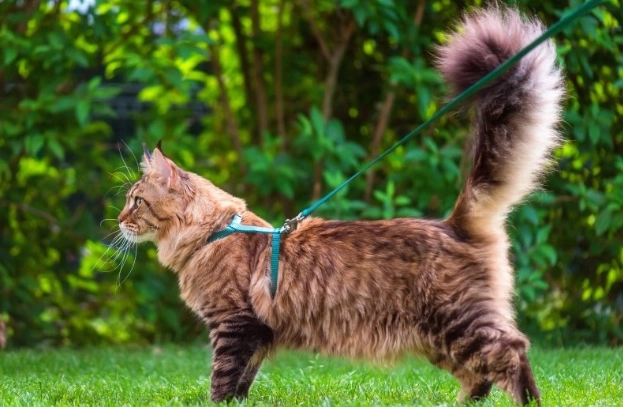
Taking the Plunge: Your First Outdoor Adventure
Start in the most boring, quiet, safe place you can imagine. Your backyard at a quiet time of day. A silent patio. Not a park, not a trail. Just a dull, safe patch of grass.
Carry your cat outside in your arms (don't let them walk out the door on leash, it can create door-dashing habits). Sit down on the ground. Let them hide between your legs if they want. Let them observe. The first 5-10 trips outside might involve zero walking. You just sit there, being calm, maybe reading a book, letting them process the overwhelming sensory input.
Watch their body language like a hawk:
- Good signs: Ears forward, tail up with a slight curve, slow blinking, curious sniffing.
- Warning signs: Ears flattened sideways or back, tail low or puffed, crouched body, dilated pupils, freezing in place. These mean they are scared or overstimulated.
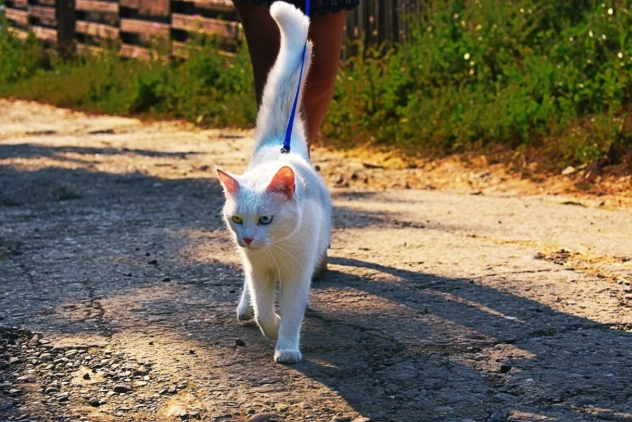 If you see warning signs, the session is over. Immediately and calmly pick them up and go inside.
Ending on a positive note is more important than achieving distance. A 30-second successful sniff of grass is a win. Gradually, they may venture a foot or two from you. Let them lead. Your job is to be a safe, calm base camp. This is the core philosophy of successful cat on a leash training.
The Dark Side: Risks, Dangers, and When to Say No
Nobody talks enough about this. Leash walking a cat isn't all sunshine and butterflies. It comes with real risks that you must mitigate.
- Other Animals: Off-leash dogs are your biggest threat. Always be scanning. Be prepared to pick your cat up. A cat on a leash cannot escape a dog, and the leash can prevent their natural defensive climbing escape.
- Toxins & Hazards: They will try to nibble grass. You must know what plants are in your area. Avoid lawns that may have been treated with pesticides or herbicides. Watch for antifreeze puddles, which are sweet and lethal.
- Overstimulation & Stress: For some cats, the outside world is just too much. It's not enriching; it's terrifying. Pushing a cat like this is cruel. Know when to quit.
- Escape Risk: A poorly fitted harness or a moment of panic can lead to an escape. This is why the indoor training is non-negotiable. The ASPCA has great resources on general cat safety that underline why controlled environments are key.
Frankly, some cats are just not candidates. Highly anxious cats, cats with medical conditions, or elderly cats set in their ways might be happier with indoor enrichment like puzzle feeders, cat trees, and window perches. The International Cat Care website has fantastic, science-backed ideas for indoor enrichment that might be a better fit.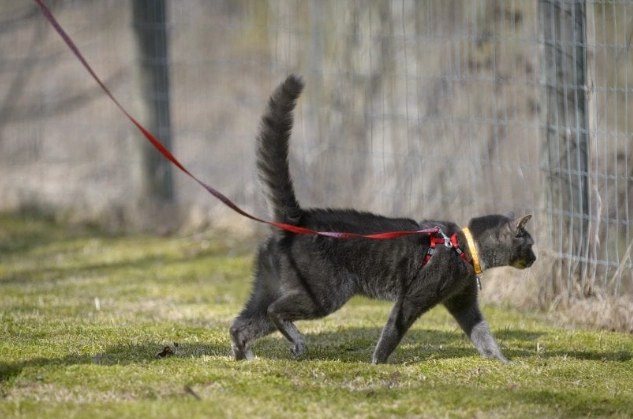
Your Burning Questions, Answered (The FAQ Nobody Puts in Guides)
Final Thoughts: Is This Journey Right for You and Your Cat?
Walking a cat on a leash isn't for everyone. It requires immense patience, a willingness to move at a snail's pace, and the humility to accept that your cat might just say "no." It's not a marker of being a better cat owner. The best cat owners are the ones who read their cat's signals and respect their boundaries.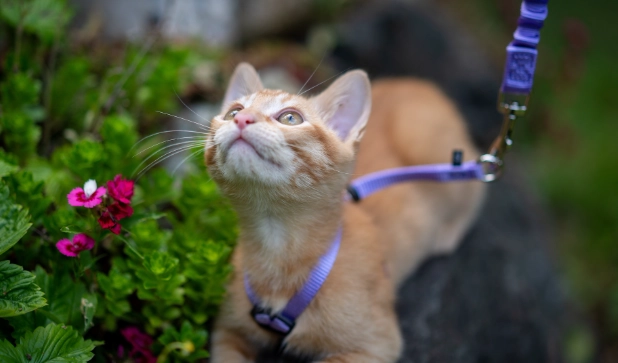
If your cat is curious, confident, and food-motivated, and you're committed to the slow, positive-reinforcement method, then it can be an incredibly rewarding experience. It opens up a new world for them under the umbrella of safety you provide. That first time your cat confidently trots a few steps on the grass, tail held high, checking back to make sure you're there—it's a pretty special feeling.
But if your cat is a nervous wreck after two weeks of harness training, for the love of catnip, stop. There are a million ways to enrich your cat's life indoors. The goal is a happy cat, not a photo-op of a cat on a leash. Listen to them. They'll tell you what they need.
Good luck out there. Take it slow. And maybe keep some extra treats in your pocket.




Leave a comment