Quick Navigation
- Why Is Cat Urine So Hard to Remove? (The Science of the Stink)
- The Golden Rule: Act Fast, But Be Smart
- Your Arsenal: Choosing the Right Cleaner for the Job
- The Step-by-Step Battle Plan: How to Get Rid of Cat Urine on Any Surface
- What About Blacklights and Finding Hidden Stains?
- Prevention is Cheaper Than Cure: Stopping the Behavior
- Common Questions (And Straight Answers)
- Final Thoughts: Winning the War on Cat Urine
Let's be real. Few things in life are as stubborn and downright offensive as the smell of cat urine. It has this unique ability to punch you in the nose the moment you walk into a room, and it seems to linger forever, no matter how much you scrub. If you're here, you're probably at your wit's end, holding a bottle of generic cleaner that's doing absolutely nothing. I've been there. I once had a cat who decided my brand-new sofa was his personal latrine, and the struggle was... profound.
The good news? It's not a hopeless fight. Learning how to get rid of cat urine effectively isn't about magic potions; it's about understanding what you're up against and using the right science-backed tactics. Most people fail because they treat it like any other spill, and that's a huge mistake. This guide is going to walk you through everything, from why the smell is so tenacious to the step-by-step cleanup for every surface, and crucially, how to stop it from happening again. Forget the myths and old wives' tales. We're going for solutions that work.
Why Is Cat Urine So Hard to Remove? (The Science of the Stink)
Before you pour anything on that stain, you need to know your enemy. Cat urine isn't just dirty water; it's a complex chemical cocktail designed to send powerful messages (in the cat world, anyway). The main offenders are:
- Urea: This breaks down over time into ammonia. That's the initial eye-watering, pungent smell you get from a fresh puddle.
- Urochrome: The pigment that gives urine its yellow color and can cause staining.
- Uric Acid (& its salts - urates): This is the real nightmare. Uric acid doesn't dissolve in water easily. It forms microscopic crystals that bond tightly to fibers, carpets, and even concrete. These crystals are hygroscopic, meaning they pull moisture from the air. Every time the humidity rises, those crystals rehydrate and release odor all over again. This is why a stain you thought was gone can come back with a vengeance on a humid day.
Think of uric acid crystals like tiny, odor-filled time capsules glued to your carpet. Water-based cleaners just wash around them. Vinegar might neutralize some ammonia, but it leaves the crystals intact. That's the core reason most DIY methods fail.
So, when you're figuring out how to get rid of cat pee smell, your primary target must be breaking down and removing these uric acid crystals. If you don't, you're just masking the problem temporarily.
The Golden Rule: Act Fast, But Be Smart
The sooner you tackle a mess, the easier it will be. Fresh urine hasn't fully broken down into ammonia and the crystals haven't had time to set up shop. But here's the first critical mistake people make: reaching for ammonia-based cleaners. Big mistake. To a cat, ammonia smells like... more cat urine. Using it can actually encourage them to re-soil the same spot. Always check your cleaner labels.
Your Arsenal: Choosing the Right Cleaner for the Job
This is the most important decision you'll make. Throwing the wrong product at the problem is a waste of time and money. Here’s a breakdown of the common types, from worst to best.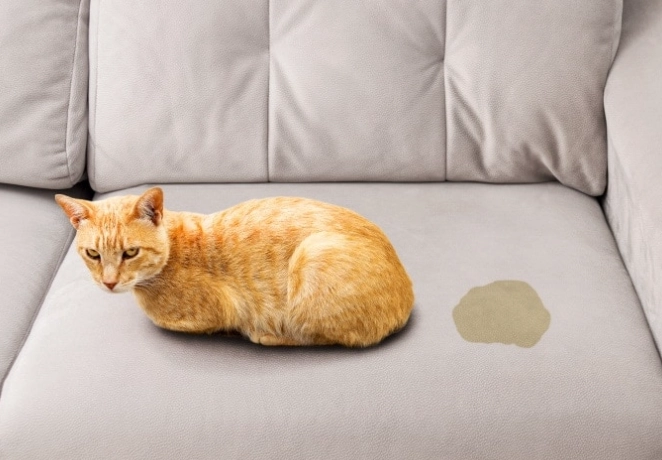
| Cleaner Type | How It Works | Pros | Cons | Verdict |
|---|---|---|---|---|
| Conventional & Disinfectant Cleaners (Bleach, All-purpose sprays) | Kills surface bacteria, masks odor with strong perfume. | Cheap, readily available. | Does not break down uric acid. Perfume + urine = worse smell. Bleach can react with ammonia to create toxic gas. | Avoid. Makes the problem worse in the long run. |
| Home Remedies (Vinegar, Baking Soda, Hydrogen Peroxide mixes) | Vinegar neutralizes ammonia. Baking soda absorbs odor. Peroxide can bleach. | Non-toxic, cheap, good for mild/fresh smells. | Vinegar alone doesn't break down uric acid. Baking soda just sits on top. Peroxide can damage colors/fibers. | Limited use. Can be a first step for fresh messes, but not a complete solution for old stains. |
| Enzymatic Cleaners (The pros use these) | Live bacteria/enzymes actively seek out, digest, and break down the urine molecules (urea, uric acid) into harmless gases. | Eliminates the source, not the symptom. Prevents re-soiling. No harsh chemicals. | Require proper application (saturation, time). Can be more expensive. Enzymes can be killed by other cleaners. | The Gold Standard. The only reliable method for permanent removal of odor and stain. |
My personal go-to? A good enzymatic cleaner. Yes, they cost more than a gallon of vinegar, but they actually solve the problem. I learned this after wasting money on three other "pet odor" sprays that were basically just fancy perfumes. The difference when I finally used an enzymatic one was night and day.
The Step-by-Step Battle Plan: How to Get Rid of Cat Urine on Any Surface
Okay, theory's over. Let's get to the action. Here’s your universal process, adapted for different materials.
Step 1: Blot, Don't Rub (The Initial Attack)
For a fresh puddle, grab a stack of paper towels or clean, absorbent cloths. Place them over the stain and press down firmly with your foot or hand. Apply as much pressure as you can to suck the liquid up and out of the fibers. Change towels until they come away mostly dry. Rubbing will only push the urine deeper into the padding or fabric, making your job ten times harder.
Step 2: The Rinse (For Washable Fabrics)
If the item is machine-washable (clothes, removable cushion covers, some rugs), rinse the affected area under cool running water from the backside to push the stain out, not in. Then, wash it alone (don't mix with other laundry!) on the coldest setting with a small amount of enzyme cleaner or fragrance-free detergent. Avoid laundry soap or softeners at this stage—they can coat the fibers and block enzyme action.
Step 3: Apply Your Enzymatic Cleaner (The Main Event)
This is the crucial step. Follow the instructions on your chosen enzymatic product to the letter. Most require you to:
- Saturate the area thoroughly. You need to get the solution deep into the padding or base where the urine has traveled. A light mist won't cut it.
- Let it dwell. This is not a wipe-and-go cleaner. The enzymes need time—often several hours or even overnight—to work. Cover the area with plastic wrap to keep it wet if needed.
- Let it air dry completely. Do not use heat. The drying process is part of the chemical reaction. Patience is key.
Step 4: The Final Check & Repeat if Necessary
Once the area is bone dry, do the smell test. Get down on your hands and knees—seriously, the nose knows best at ground level. If you detect even a faint whiff, you need to repeat the enzymatic treatment. For old, set-in stains, one application might not be enough. Don't get discouraged; just reapply.
Surface-Specific Tweaks
For Carpets & Rugs: After blotting, use a wet vacuum if you have one to extract as much as possible. Then saturate with enzyme cleaner, ensuring it soaks through to the backing and pad below. If the pad is soaked, you may need to lift the carpet to treat it or, in severe cases, replace it.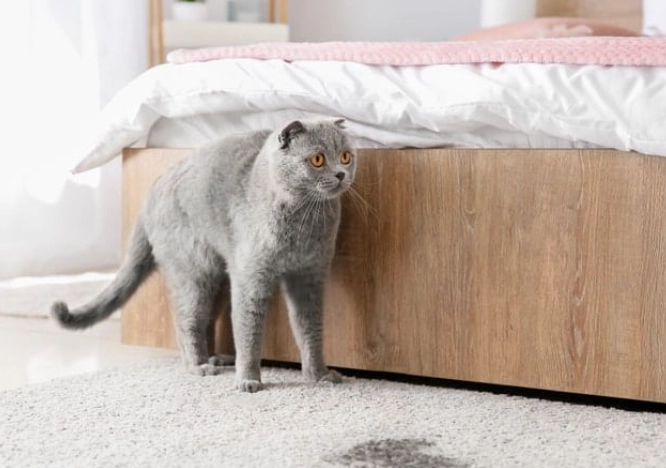
For Hardwood & Laminate Floors: Speed is critical here to prevent seeping and warping. Blot immediately. Wipe with a damp cloth, then apply enzyme cleaner. For gaps between floorboards, you might need to use a syringe to inject the cleaner. Be mindful of the finish; test in an inconspicuous area first.
For Mattresses & Upholstery: Blot like crazy. A wet vacuum is a lifesaver here. Then, saturate the area with enzyme cleaner. To help it dry and prevent mold, place a thick layer of towels over the spot, weigh it down with books, and change the towels every few hours. You can also use fans to circulate air. This process taught me a lot about how to get rid of cat urine smell from a mattress—it's a marathon, not a sprint.
For Concrete (Basements, Garages): Concrete is porous and sucks up urine. After blotting up any liquid, scrub the area with an enzymatic cleaner and a stiff brush. You may need to let a poultice of enzyme cleaner and baking soda sit on the stain for 24+ hours, covered with plastic, to draw the crystals out.
What About Blacklights and Finding Hidden Stains?
If you smell it but can't find it, or if you're moving into a new place, a UV blacklight flashlight is your best friend. In a dark room, dried cat urine will typically glow a pale yellow or greenish color. It's a bit eerie, but incredibly useful. Mark the spots with chalk or tape. Just know that other things (like some plastics, detergents, and bodily fluids) can also glow, so it's not 100% foolproof, but it's a great investigative tool.
Prevention is Cheaper Than Cure: Stopping the Behavior
Cleaning is only half the battle. If you don't figure out why your cat is peeing outside the box, you'll be stuck in a never-ending cycle. This is where you need to put on your detective hat. The American Society for the Prevention of Cruelty to Animals (ASPCA) has excellent resources on cat behavior. Common reasons include:
- Medical Issues: Rule this out FIRST. A urinary tract infection, kidney disease, diabetes, or arthritis can cause litter box avoidance. A vet visit is non-negotiable.
- Litter Box Problems: Too dirty? Too small? Wrong type of litter? Covered box that traps smell? The Humane Society recommends scooping at least once a day and having one more box than the number of cats (so 2 cats = 3 boxes).
- Stress & Anxiety: New pet, new baby, construction noise, stray cats outside the window. Cats are creatures of habit and stress can trigger marking.
- Territorial Marking: This is often vertical spraying (on walls, furniture sides), but can also be on horizontal surfaces. Unneutered males are most prone, but fixed cats of both sexes can do it.
Common Questions (And Straight Answers)
Final Thoughts: Winning the War on Cat Urine
Learning how to get rid of cat urine smell permanently boils down to a simple formula: Understanding the enemy (uric acid) + Using the right weapon (enzymatic cleaner) + Addressing the root cause (cat's behavior). Skip any part of that formula, and you'll be fighting a losing battle.
It can feel overwhelming, especially when you're dealing with an old, set-in stain. I remember the despair looking at my sofa. But breaking the process down into these steps—blotting, soaking with the right stuff, waiting, drying, checking—makes it manageable. And addressing the "why" with a vet visit and some litter box detective work brings peace back to your home.
Don't waste your time or money on quick fixes. Arm yourself with knowledge, the right tools, and a bit of patience. You can reclaim your home from that stubborn odor. Really, you can.




Leave a comment