You've got the crate, the food, the adorable little collar. You're ready for your puppy. But is your house ready? Most new owners think about the fun stuff—toys, beds, cute photos. They don't think about the silent, hidden dangers waiting in every room. I learned this the hard way when my first Labrador, Max, as a 10-week-old ball of chaos, somehow opened a lower kitchen cabinet and pulled out a trash bag. It wasn't pretty. Puppy proofing isn't just advice; it's a non-negotiable survival strategy for your belongings and your puppy's life.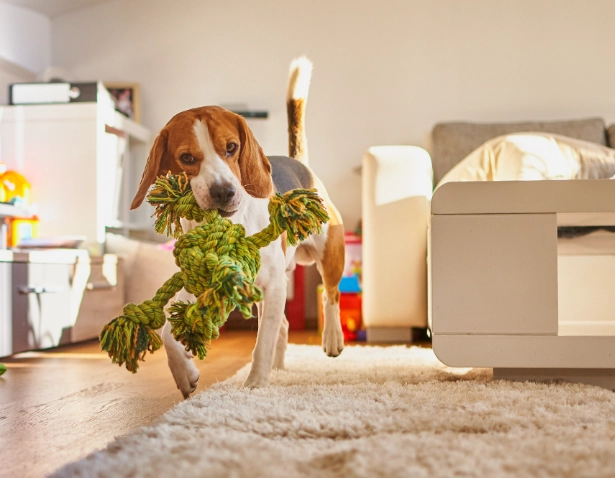
It goes way beyond putting away shoes. It's about seeing your home through the lens of a curious, mouthy, low-to-the-ground explorer with zero sense of self-preservation. This guide isn't a generic list. It's the room-by-room, nitty-gritty breakdown I wish I'd had, compiled from mistakes, vet warnings, and a decade of fostering rambunctious pups.
What's Inside This Guide
Why Puppy Proofing is Non-Negotiable
Let's be blunt. A non-proofed home is an emergency room visit waiting to happen. The ASPCA Animal Poison Control Center gets hundreds of calls daily for ingestion of human medications, toxic foods, and household chemicals. Puppies are programmed to investigate everything with their mouths. That electrical cord isn't a danger to them; it's a fascinating chew toy. That bottle of ibuprofen on the nightstand isn't medicine; it's a rattly prize.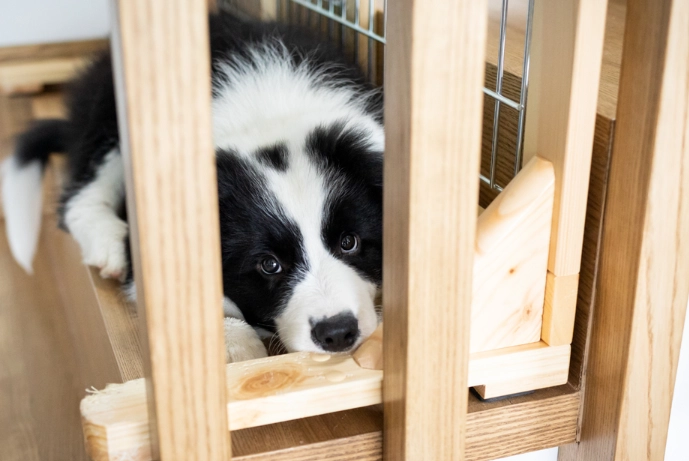
Proofing creates a safe "yes" environment. It reduces your stress because you're not constantly yelling "NO!" and grabbing things from their mouth. It protects your puppy from harm and your wallet from massive vet bills. More importantly, it sets the stage for successful training by minimizing opportunities for bad habits to form.
The Puppy-Proofing Mindset: Get on Their Level
This is the single most effective thing you can do. Don't just walk around your house looking at eye level. Get down on your hands and knees. Crawl. What do you see?
You see the loose power strip under the desk. You see the dusty forgotten chocolate wrapper behind the couch. You see the tempting fringe on the living room rug. You see the gap behind the refrigerator they could squeeze into. This perspective shift is humbling and absolutely essential. Do this in every single room before your puppy arrives.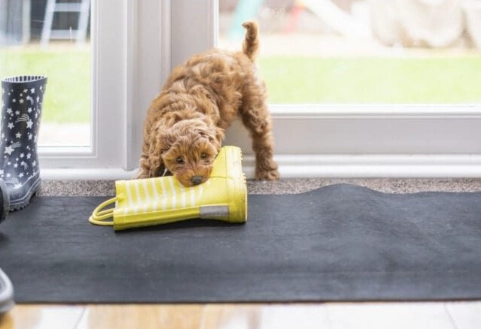
The Room-by-Room Puppy Proofing Guide
Generic lists fail because every home is different. Here’s how to tackle each zone.
Kitchen & Dining Area: Ground Zero for Trouble
The kitchen is a treasure trove of hazards. Start with the trash. A simple step-can won't cut it. You need a can with a locking lid or one stored securely inside a latched cabinet. Under the sink is a nightmare—cleaning supplies, dishwasher pods, garbage bags. Install childproof latches on every low cabinet door. Not just the one you think they'll get into. All of them.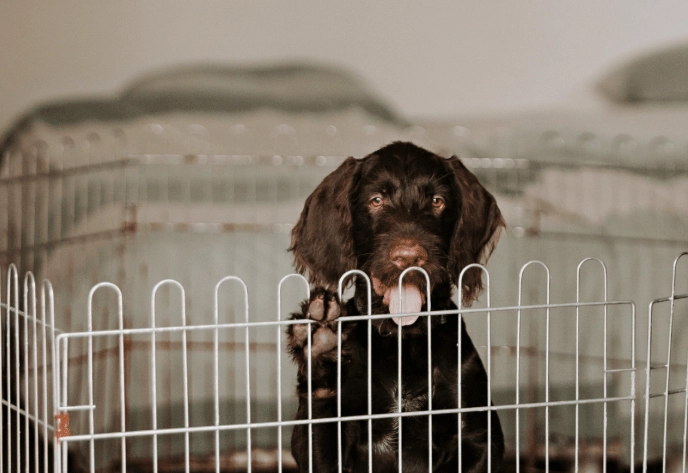
Counter surfing starts young. Get into the habit now of never leaving food unattended on the countertop. Not even for 30 seconds while you answer the door. Onions, garlic, a half-eaten sandwich with avocado—it's all a target. Move fruit bowls to the center of the table or up high.
Living Room & Family Areas
This is where you relax, so it needs to be a fortress. Electrical cords are public enemy number one. Use heavy-duty cord concealers (the plastic tubing you can thread cords through) or simply run cords behind heavy furniture. For floor lamps or chargers, consider a cord shortener or a bitter spray deterrent.
Houseplants are a silent threat. Many common ones are toxic. Lilies, sago palms, philodendron, pothos—the list is long. Check the ASPCA's toxic plant list and either move them completely out of reach (high hanging baskets) or rehome them. Coffee tables hold remote controls (batteries!), books, and coasters—all chewable. Adopt a "nothing on lower surfaces" policy.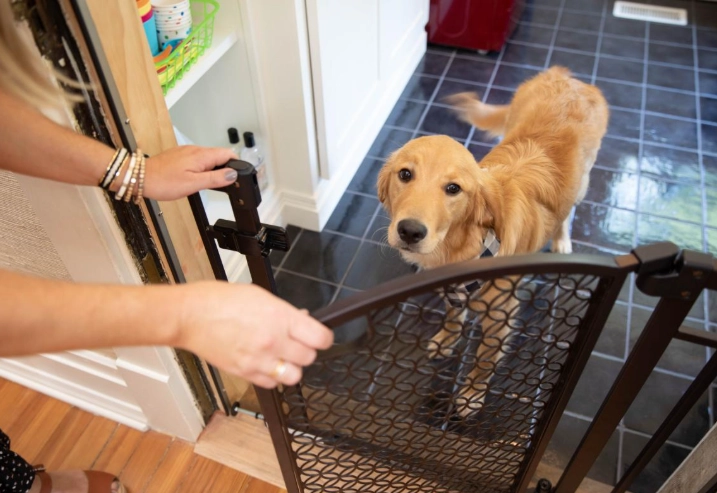
| Common Toxic Item | Why It's Dangerous | Safe Alternative/Storage |
|---|---|---|
| Lilies (any type) | Extremely toxic to cats, can cause kidney failure. Pollen alone is dangerous. | Use artificial silk plants or pet-safe options like spider plants, African violets. |
| Xylitol (in gum, mints, peanut butter) | Causes rapid insulin release, leading to hypoglycemia (low blood sugar) and liver failure. | Check all product labels. Use only xylitol-free peanut butter for Kongs. Keep purses/bags off the floor. |
| Batteries (button/remote) | If punctured, can cause chemical burns and heavy metal poisoning. | Store spare batteries in a high drawer. Secure remotes in a basket on a high shelf. |
| String/Yarn/Ribbon | "Linear foreign body" risk. Can cause severe intestinal damage as it "saws" through the gut. | Keep sewing kits, gift wrap supplies, and cat toys locked away. Supervise any play with stringy toys. |
Bedrooms & Home Offices
These rooms are full of personal items. Laundry hampers are a goldmine of socks and underwear, which can cause serious blockages. Get a hamper with a secure lid. Nightstands hold medications, earrings, and chapstick. All of it needs to be in a drawer, not on top.
In the home office, cable management is critical. Those bundles of wires behind your desk are a puppy magnet. Use cable sleeves or zip ties to bundle them tightly and secure them out of reach. Keep paper shredders unplugged and closed.
Bathrooms
Toilet bowls can be a drowning risk for tiny pups, and the cleaning chemicals in the water are toxic. Keep the lid closed and the door shut. Medications, both prescription and over-the-counter, must be in a high cabinet, not on the counter. Toilet paper is an irresistible shredding toy—consider a covered holder or storing it under the sink (behind a latch).
Garage & Yard
Antifreeze is sweet-tasting and lethal. Store all automotive chemicals, fertilizers, pesticides, and paints on high, locked shelves. In the yard, check your fencing for gaps or holes. Even a small one can be an escape route for a determined puppy. Remove any mushrooms, and be cautious with mulch—some types, like cocoa bean mulch, are toxic.
Essential Puppy Proofing Supplies (Beyond Toys)
- Baby Gates/Exercise Pens: Not optional. They create safe zones and block off entire rooms (like the kitchen or office). Get sturdy ones.
- Cabinet & Drawer Latches: The kind used for toddlers. Install them before the puppy comes home.
- Cord Protectors & Concealers: Heavy-duty plastic tubing or raceways to cover wires.
- Bitter Apple Spray or Similar Deterrent: Test on an inconspicuous area first, then apply to furniture legs, baseboards, or cords.
- Trash Can with a Secure, Locking Lid: This is a must-have investment.
- Storage Bins with Lids: For remotes, shoes, kids' toys—anything you need to keep off the floor.
Proofing is Useless Without This Training Component
Here's the expert secret nobody talks about enough: Puppy proofing is a management tool, not a training solution. If you only block access, the moment a gate is left open or a cabinet latch fails, your puppy will dive right into the forbidden behavior because you've never taught them an alternative.
The critical pairing is management + redirection.
You use gates to keep them out of the kitchen (management). But you also must actively teach them what to do instead. When they chew the leg of your coffee table, you say "Oops!" calmly, take away the table leg (impossible, I know—hence the bitter spray), and immediately hand them a frozen Kong stuffed with their dinner. You praise them wildly when they chew the Kong. You're not just protecting the table; you're programming their brain: "Chew this, not that."
This is the long-term game. The goal isn't to have a puppy-proofed house forever. The goal is to raise a dog who, when faced with a stray sock or an open cabinet, makes the right choice because you've built that foundation.
Your Top Puppy Proofing Questions Answered
What is the most commonly overlooked area when puppy proofing a house?
How do I puppy proof electrical cords and outlets without constant supervision?
My puppy keeps chewing the furniture legs. Is proofing just about removing access?
Are there any human foods that are safe but often left in puppy-accessible places?
The work you do in these first few weeks and months sets the tone for your entire life with your dog. A well-proofed home is a calm home. It's a place where your puppy can learn, explore safely, and build confidence. It's where you can breathe easier, knowing you've done everything possible to prevent a tragedy. It's not about creating a sterile prison; it's about creating a secure launchpad for a wonderful, well-behaved companion. Now, go get on your knees and start crawling.


Leave a comment