Quick Navigation
- Why Getting the Amount Right is a Big Deal (It's Not Just About Weight)
- The Core Factors That Change the “How Much” Equation
- The Ultimate Cat Daily Feeding Chart (A Starting Point)
- The Wet Food vs. Dry Food Dilemma: It Changes the Math
- How to Use (and Not Trust) the Food Bag Chart
- Your Cat's Personal Feedback System: Is It Working?
- Answering Your Top Cat Feeding Questions
- Special Situations & When to Throw the Chart Out the Window
- Putting It All Together: Your Action Plan
Let's be honest. Figuring out how much to feed a cat can feel like solving a mystery where the clues keep changing. One day your cat is meowing at the empty bowl an hour after dinner, the next day they're leaving half their food untouched. You pick up a bag of cat food, and the feeding guide on the back seems... vague at best. Sound familiar?
I've been there. I used to just fill the bowl and let my cat, Whiskers, graze. Big mistake. He ballooned up before I knew it, and the vet gave me a gentle but firm lecture. That's when I dove deep into the world of feline nutrition, and let me tell you, a simple cats how much food per day chart is just the starting point. The real answer is a blend of science, observation, and knowing your own furry friend.
This guide is what I wish I had back then. We'll cut through the confusion, look at actual charts, and talk about the stuff the bag doesn't tell you.
Why Getting the Amount Right is a Big Deal (It's Not Just About Weight)
Overfeeding and underfeeding are both easy to do, and the consequences sneak up on you.
Overfeeding is the silent culprit behind a huge health problem: feline obesity. The Cornell Feline Health Center is blunt about it—obesity is the most common preventable disease in cats. It's not just about them looking a bit chonky. It sets the stage for diabetes, arthritis, urinary tract diseases, and can even shorten their lifespan. I learned this the hard way with Whiskers.
On the flip side, underfeeding, especially in kittens, active cats, or seniors, can lead to nutrient deficiencies, loss of muscle mass, and a weak immune system. A hungry cat is also a creative and often destructive cat—think counter-surfing and midnight yowling concerts.
So, using a reliable cat feeding chart by age and weight isn't about being restrictive; it's about giving your cat the fuel they need to thrive, without the hidden baggage.
The Core Factors That Change the “How Much” Equation
Before we look at any numbers, you need to size up your cat. Think of these as the dials you adjust on the basic feeding chart.
1. Life Stage: Kitten, Adult, or Senior?
This is the biggest dial.
Kittens (Under 1 year): They're growing machines! They need almost double the calories per pound than an adult cat. They also have tiny stomachs, so they need to eat multiple small meals throughout the day—three to four times minimum. Free-feeding dry food is often recommended for kittens to support this constant need, but you still need to monitor total intake. The chart for a kitten looks very different.
Adults (1-7 years): This is the maintenance phase. The goal is to provide enough energy for their daily activities without extra calories being stored as fat. This is where most standard cats how much food per day chart references are aimed.
Seniors (7+ years): Metabolism slows down, and activity usually decreases. They often need fewer calories to avoid weight gain. However, some older cats struggle to absorb nutrients or have dental issues, so they might need a more palatable or specialized diet. It's a delicate balance.
2. Weight & Body Condition: The Scale and The Eye Test
Your cat's current weight is the primary number you plug into a chart. But their ideal weight is what you're aiming for. You need to know both.
Get a cheap baby scale or weigh yourself holding your cat, then subtract your own weight. Do this monthly.
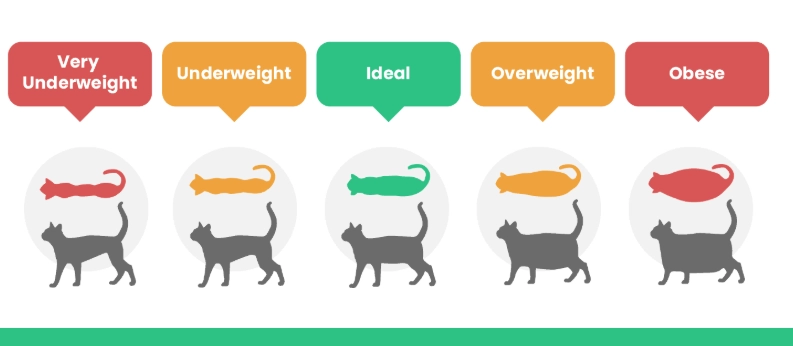
More important than the scale is their Body Condition Score (BCS). You should be able to easily feel (but not see) their ribs with a slight fat covering. They should have a visible waist when viewed from above and a tucked-up abdomen from the side. If you're pressing through a padding of fat to find ribs, they're likely overweight. The American Animal Hospital Association (AAHA) provides excellent BCS charts that are worth bookmarking.
3. Activity Level: Couch Potato vs. Zoomie Champion
A cat who spends 18 hours a day napping in a sunbeam has vastly different caloric needs than one who races up and down cat trees and “hunts” toys all evening. An indoor-only cat typically needs about 20% fewer calories than an indoor-outdoor cat. You have to be the judge here.
My other cat, Luna, is a whirlwind. She burns through calories so fast that if I fed her according to the standard chart for her weight, she'd be skin and bones. She gets a solid 15-20% more than the chart suggests, and she maintains a perfect weight.
4. Neutered/Spayed Status
This is a non-negotiable factor. After being spayed or neutered, a cat's metabolism can drop by up to 30%. Their energy requirements decrease, but their appetite often doesn't. Feeding them the same amount as before the surgery is a direct path to weight gain. Always use a feeding guide for “neutered adult” cats if available.
The Ultimate Cat Daily Feeding Chart (A Starting Point)
Okay, here's the practical part. The table below is a consolidated guide based on general veterinary recommendations and major pet food brand guidelines. It assumes you are feeding a standard, good-quality commercial cat food to a neutered, indoor, moderately active adult cat.
Remember: This is your baseline. The cats how much food per day chart you see here needs your personal adjustments.
| Cat's Weight (lbs) | Cat's Weight (kg) | Daily Dry Food (approx. cups)* | Daily Wet Food (approx. 5.5oz cans)* | Key Notes & Adjustments |
|---|---|---|---|---|
| 5 lbs | 2.3 kg | 1/4 - 1/3 cup | ~3/4 can | For very small or inactive cats. Monitor weight closely. |
| 8 lbs | 3.6 kg | 1/3 - 1/2 cup | ~1 can | The weight of an average domestic shorthair. A very common starting point. |
| 10 lbs | 4.5 kg | 1/2 - 5/8 cup | ~1 1/4 cans | Another very common weight bracket. Start at the lower end and adjust. |
| 12 lbs | 5.4 kg | 5/8 - 3/4 cup | ~1.5 cans | If your cat is already 12lbs and not overweight, they may need this amount. If they are overweight, feed for their *target* weight (e.g., 10lbs). |
| 15 lbs | 6.8 kg | 3/4 - 1 cup | ~2 cans | This is a large or overweight cat. First, confirm with your vet that 15lbs is a healthy target for their frame. |
*A “cup” is a standard 8-oz measuring cup, leveled off. Not a mug, not a scoop from the bin. Be precise.
The Wet Food vs. Dry Food Dilemma: It Changes the Math
This is where people get really tripped up. You can't swap wet and dry food volume-for-volume.
Dry Food (Kibble): It's calorie-dense. A little volume packs a big caloric punch. It's also easy to over-pour. That “just a little extra” scoop can add 50+ unnecessary calories a day. That's why measuring is non-negotiable with dry food.
Wet Food (Cans, Pouches): It's about 70-80% water. It's much less calorie-dense by volume. A cat often needs to eat a larger volume of wet food to get the same calories as from dry food. This is a good thing! The high moisture content is fantastic for hydration (crucial for urinary tract health), and the larger volume can help cats feel fuller.
So, when you look at a cats how much food per day chart, you'll see two separate columns. If you feed a mix, you need to do some math. For example, if the chart says your 10lb cat needs 250 calories, and you give half a cup of dry food (200 kcal) in the morning, you only have 50 calories left for wet food at night. That might be just a couple of tablespoons, not a whole can.
Personally, I'm team wet food for the main meal. The hydration benefit is a huge win, especially for male cats. But I get it—dry food is convenient. A mix is a great compromise for many households.
How to Use (and Not Trust) the Food Bag Chart
The feeding guide on your cat's food bag is the most important chart, but it's also designed to be a one-size-fits-all for a wide range of cats. Here's how to use it smartly:
- Find the kcal/cup or kcal/can. This is your golden number. It's usually in small print on the back or side.
- Look at the weight range. Find your cat's current weight or target weight if they need to lose.
- Start at the LOW END of the range. Pet food companies often recommend more food than necessary. Starting low is safer.
- Adjust based on your cat's factors. Indoor? Neutered? A couch potato? Reduce by 10-20%. Young, active, or underweight? You might need the high end or even a bit more.
Your Cat's Personal Feedback System: Is It Working?
The chart gives you a number. Your cat tells you if it's right. You need to become a detective.
Signs You Might Be Overfeeding:
- Steady weight gain over weeks/months (weigh monthly!).
- Can't feel ribs easily; no visible waist.
- Leaving food in the bowl (sometimes—but not always).
- Lethargy, sleeping more.
Signs You Might Be Underfeeding:
- Steady weight loss (if not on a vet-supervised diet).
- Ribs and spine are very prominent.
- Constant begging, scavenging, food aggression.
- Dull coat, low energy.
The goal is a stable, ideal weight, a healthy coat, good energy levels, and consistent litter box habits. It's a process. Adjust food amounts in small increments—like 1/8 of a cup or a few grams of wet food—and give it two weeks before assessing again.
Answering Your Top Cat Feeding Questions
Special Situations & When to Throw the Chart Out the Window
Some cats defy all charts.
Pregnant/Nursing Queens: They need a massive amount of high-quality, calorie-dense food—often 1.5 to 2 times their normal intake. Free-choice feeding of kitten food is usually recommended. This is a job for your vet.
Cats with Medical Conditions: Diabetes, kidney disease, hyperthyroidism—all of these completely change nutritional needs. The amount and type of food become part of the medical treatment plan. Any cats how much food per day chart is irrelevant here. Follow your veterinarian's prescription to the letter.
The “Hard Keeper”: The skinny cat who eats like a horse but never gains. First, a vet check to rule out parasites or illness. If they're healthy, they may just have a turbocharged metabolism. They might need 20-40% more than the chart suggests. Feed them a higher-calorie food (like kitten or “performance” formulas) and let them eat more frequent meals.
Putting It All Together: Your Action Plan
- Weigh your cat and assess their Body Condition Score.
- Find the calories in their specific food (kcal/cup or can).
- Use a reputable cats how much food per day chart as a baseline, but cross-reference with your food bag's guide.
- Start at the lower end of the recommended range.
- Adjust for your cat's personal factors (indoor/outdoor, neutered, activity).
- Measure every meal precisely. No eyeballing.
- Establish a meal schedule (2-3 times daily).
- Monitor weight monthly and body condition weekly.
- Adjust in tiny increments based on results, not hunger cries.
- When in doubt, call your vet. They can help you calculate exact caloric needs.
It seems like a lot at first, but it becomes second nature.
Finding the perfect amount to feed your cat isn't about strict deprivation. It's the opposite. It's about providing the precise fuel for a long, playful, and healthy life. A good cat daily feeding chart is your map, but you're the one driving, watching the road, and making the small turns based on the passenger you have. Ditch the guesswork, grab a measuring cup, and start observing. Your cat's health and energy will thank you for it.
And Whiskers? He's down to a sleek 11 pounds now, has more energy for his favorite pastime (bird-watching from the windowsill), and while he still tries the occasional dramatic meow for extra food, the routine keeps us both on track. Most of the time, anyway.




Leave a comment