Quick Guide
- Why Your Cat's Weight is the North Star for Feeding
- The Core Formula: From Pounds to Calories
- The Big Variables: It's Not *Just* Weight
- The Wet Food vs. Dry Food Calorie Puzzle
- How to Actually Put This Into Practice
- Common Pitfalls and Mistakes (I've Made Some)
- Answering Your Burning Questions
- Wrapping It Up: Your Cat's Personalized Plan
Let's be honest, one of the most common questions that pops into a cat owner's head is, "Am I feeding this little predator enough? Or maybe... too much?" You stare at the food bowl, you stare at your cat, who is probably staring back with that classic look of either profound hunger or profound disdain. It's confusing. The bag has guidelines, but they often seem like a massive range. My own cat, a hefty 13-pound tabby named Gus, had me scratching my head for months. Was he getting the right amount? Turns out, the single most reliable starting point isn't the bag—it's your cat's weight. So let's ditch the guesswork and really dig into how much food per day by weight your cat actually needs.
It feels like it should be simple, right? But cats are sneaky. They conserve energy like champions, and their needs change silently. Getting the portion right is the cornerstone of keeping them healthy, energetic, and at a good weight. An overweight cat isn't just a chonky meme; it's a cat at risk for diabetes, arthritis, and a shorter life. Underfeeding has its own set of problems. So this isn't just about filling the bowl; it's about precision.
Why Your Cat's Weight is the North Star for Feeding
Think of weight as the main dial on the feeding control panel. Everything else fine-tunes it. A cat's body needs a certain number of calories just to exist—to breathe, pump blood, keep organs ticking over. This is called the Resting Energy Requirement (RER). From there, we multiply it based on whether they're a lazy lap-cat or a zoomie-fueled maniac. But it all starts with the number on the scale. Knowing your cat's actual, current weight is non-negotiable. Guessing doesn't cut it. A pound or two makes a big difference in their daily calorie needs.
I made the mistake of eyeballing Gus's weight for too long. I thought, "He's a big-boned guy, maybe 11 pounds?" A vet visit revealed the truth: a solid 13.2 pounds. That extra two pounds meant I was likely overfeeding by a not-insignificant amount. That's the thing—small daily overages add up fast.
The Core Formula: From Pounds to Calories
Okay, here's the math. Don't worry, it's simple. First, you need your cat's weight in kilograms (kg). Just take their weight in pounds and divide by 2.2. So my 13-pound Gus is about 5.9 kg.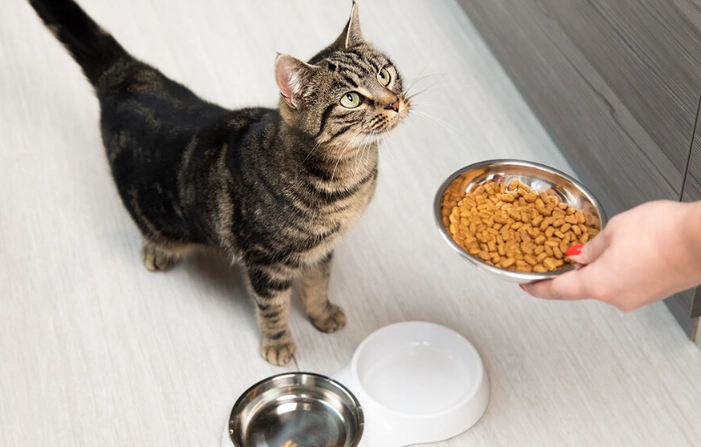
The basic formula for the Resting Energy Requirement (RER) is: RER (in calories/day) = (Cat's weight in kg ^ 0.75) * 70. For a 5.9 kg cat, that's roughly (5.9^0.75)*70 ≈ 280 calories. That's what he'd need if he were in a coma.
But Gus is not in a coma (though some afternoons he convincingly acts like it). He's a neutered, indoor adult with moderate activity. For him, we use a multiplier of about 1.2. So his Daily Calorie Needs = 280 * 1.2 = ~336 calories.
See? Now we have a real, personalized number. 336 calories. That's our target. This is the fundamental answer to cats how much food per day by weight. Everything from here is about what food delivers those calories.
Quick-Reference Feeding Chart by Weight & Lifestyle
Not everyone wants to do the math every time. This table gives you a ballpark based on an average adult, neutered, indoor cat. Remember, it's a starting guide! A very active cat or a senior will need adjustments.
| Cat Weight (lbs) | Cat Weight (kg) | Estimated Daily Calories (Low Activity) | Estimated Daily Calories (Moderate Activity) | Rough Dry Food Equivalent* | Rough Wet Food Equivalent* |
|---|---|---|---|---|---|
| 5 lbs | 2.3 kg | 150-170 kcal | 180-200 kcal | 1/3 - 1/2 cup | ~5.5 oz can |
| 8 lbs | 3.6 kg | 200-220 kcal | 240-260 kcal | 1/2 - 2/3 cup | ~7.5 oz can |
| 10 lbs | 4.5 kg | 230-250 kcal | 270-300 kcal | 2/3 - 3/4 cup | ~9 oz can |
| 12 lbs | 5.4 kg | 260-280 kcal | 310-340 kcal | 3/4 - 7/8 cup | ~10.5 oz can |
| 15 lbs | 6.8 kg | 300-330 kcal | 360-400 kcal | 7/8 - 1 cup | ~13 oz can |
*Based on average dry food (~350 kcal/cup) and average wet food (~30 kcal/oz). CHECK YOUR FOOD'S SPECIFIC CALORIE CONTENT on the label. This is the most critical step everyone misses.
The Big Variables: It's Not *Just* Weight
If weight is the main dial, these are the other knobs and switches you need to adjust. Ignoring them is why a simple chart sometimes fails.
Life Stage: Kitten vs. Adult vs. Senior
This is huge. A growing kitten is a calorie-burning machine. They often need nearly double the calories per pound of body weight compared to an adult. They're building a whole body! You generally free-feed high-quality kitten food or follow a frequent, portioned schedule. There's no such thing as an overweight kitten in active growth, within reason.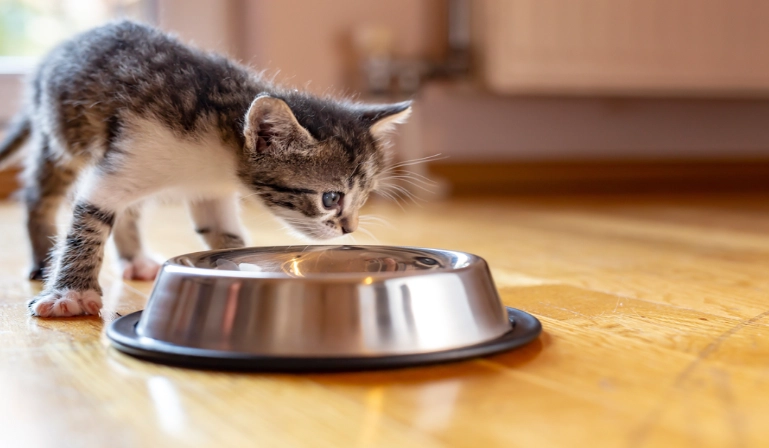
Seniors are the opposite. Their metabolism slows, and they often become less active. That multiplier drops, sometimes below 1.0. You might need to feed a senior-specific formula that's nutrient-dense but lower in calories to maintain muscle without gaining fat. My last cat, in her older years, needed about 20% less food than she did in her prime, even at the same weight.
Activity Level: Couch Potato vs. Parkour Expert
An indoor-only cat who sleeps 20 hours a day has wildly different needs from a cat with access to a catio or one who constantly races around the house. The multiplier changes. That's why the "indoor" formulas exist—they're often lower in calories. But you still have to measure. A lazy 12-pounder might need only a 1.0 multiplier, while an active one might need 1.4. You have to be the judge.
Neutered/Spayed Status
This one's important. Fixing a cat reduces their energy requirements by about 20-30%. It's a hormonal shift that encourages weight gain if you don't adjust food. So after the surgery, you should proactively recalculate their daily food by weight using a lower multiplier (like 1.2 instead of 1.4-1.6 for an intact adult).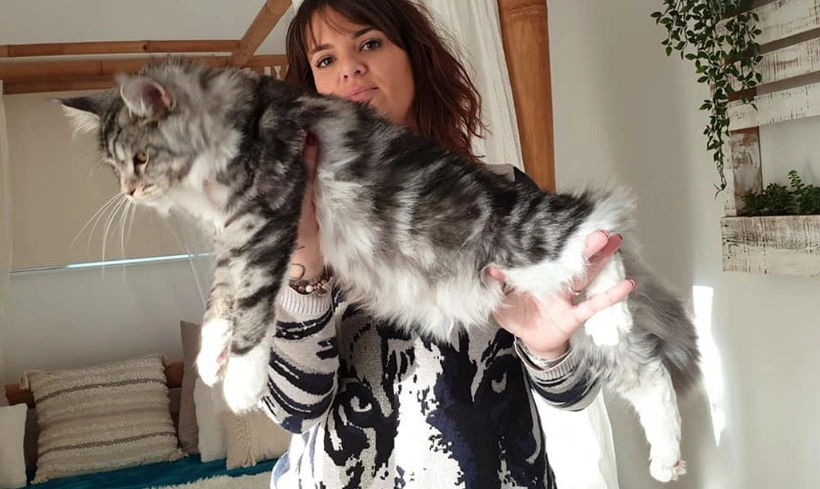
Health Conditions
This is where a vet's guidance is essential. A hyperthyroid cat may need more food because they're burning calories like crazy. A diabetic cat needs a strict, timed diet, often high in protein. Cats with kidney disease need controlled phosphorus and protein. You cannot figure this out from a chart. If your cat has a health issue, the question of how much food per day by weight becomes a medical one.
The Wet Food vs. Dry Food Calorie Puzzle
This is where people get tripped up. You cannot measure wet and dry food by volume (like a cup) and expect the same calories. Not even close.
- Dry Food (Kibble): Typically ranges from 350 to 450 calories per cup. It's calorie-dense. A little goes a long way.
- Wet Food (Canned/Pouched): Typically ranges from 25 to 35 calories per ounce. A 5.5oz can might have only 150-200 calories total.
Let's use Gus's 336-calorie target. If he ate only dry food at 380 kcal/cup, he'd get about 0.88 cups per day. If he ate only a certain wet food at 30 kcal/oz, he'd need 11.2 ounces per day (that's over two large cans!).
See the massive difference? This is why switching from dry to wet without recalculating can lead to underfeeding. And vice versa, switching from wet to dry can quickly cause overfeeding. You must look at the kilocalorie (kcal) statement on the can or bag. It's law for it to be there.
Personally, I'm a fan of feeding a combination. Gus gets a portion of wet food in the morning (for hydration and satisfaction) and a measured amount of dry food for the evening. It lets me hit his calorie target while giving him variety. But it requires me to do the math for both foods and add them up.
How to Actually Put This Into Practice
Knowledge is useless without action. Here's your step-by-step game plan.
- Weigh Your Cat. Use a bathroom scale (weigh yourself, then weigh yourself holding the cat, and subtract). Or get a pet scale. Do this monthly.
- Find the Calorie Info. Locate the "kcal/kg" or "kcal/cup" or "kcal/can" on your specific food's packaging or website.
- Do the Math or Use the Chart. Calculate your cat's daily calorie needs using the formula or the chart above as a sanity check.
- Measure Religiously. Use a proper measuring cup for dry food. For wet food, know the calories in the can. No eyeballing, no "scoops."
- Divide into Meals. Most cats do better with 2-4 small meals a day. It mimics their natural grazing, prevents boredom, and can help with issues like vomiting from eating too fast.
- Monitor and Adjust. Weigh your cat again in a month. Is the trend going up, down, or stable? Adjust the daily portion by 5-10% accordingly. It's a marathon, not a sprint.
Common Pitfalls and Mistakes (I've Made Some)
Let's talk about where things go wrong, so you can avoid them.
- Trusting the Bag Blindly: The bag is designed for a vast population. It's a suggestion, not a prescription. Your cat is an individual.
- Forgetting Treats: Those little treats add up! A few 2-calorie treats a day is fine, but a handful can be 10% of their daily intake. Deduct treat calories from the daily total. I made Gus's treats part of his training and hide them in puzzle toys, so they serve a dual purpose.
- "My Cat Is Always Hungry!" This is the toughest one. Cats are programmed to seek food. A meow doesn't always mean hunger; it can mean boredom, habit, or a desire for attention. Increasing playtime can be more effective than increasing food. Switching to a higher protein or fiber food can also increase satiety.
- Mixing Foods Incorrectly: As we covered, swapping wet for dry without calorie math is a recipe for trouble.
- Not Accounting for Multi-Cat Homes: If you have cats with different needs, you must feed them separately. One will become obese, the other underweight. It's a hassle, but it's necessary. I use microchip-activated feeders for friends who have this issue, and it's a game-changer.
Answering Your Burning Questions

Wrapping It Up: Your Cat's Personalized Plan
Figuring out how much food per day by weight for your cat isn't a one-time task. It's an ongoing conversation you have with your cat's body, habits, and the scale. Start with the weight-based math. Find the calorie content of your food. Measure precisely. Then, observe and tweak.
The goal isn't perfection; it's awareness and a consistent, thoughtful approach. You're not just a food dispenser; you're a nutrition manager for a small, furry family member. When you get it right, you'll see it in their energy, their sleek coat, and their overall vitality. And honestly, it feels pretty good to know you're giving them exactly what they need, not just what the bag suggests.
Gus is now holding steady at a much healthier 11.5 pounds. It took months of small adjustments, but seeing him more playful and agile was worth every bit of the extra effort. Grab that measuring cup, find the kcal info, and start today. Your cat will thank you for it, in their own quiet, judging, wonderful way.





Leave a comment