In This Guide
- Why Getting the Portion Right is a Big Deal (It's Not Just About Weight)
- The Core Formula: How a Vet Would Calculate Your Cat's Needs
- The Biggest Variable That Breaks Calculators: Wet Food vs. Dry Food
- Beyond the Math: The 5 Factors Your Calculator Can't See
- Putting It All Together: A Practical Feeding Plan
- Common Questions (The Stuff You Actually Google)
- When to Throw the Calculator Out the Window and Call the Vet
- You're the Best Calculator Your Cat Has.
Let's be honest. Staring at that bag of cat food, measuring cup in hand, is one of the most common moments of doubt for a cat owner. Is this enough? Is it too much? That little chart on the back feels more like a vague suggestion than a reliable guide. I've been there. I used to just pour a "pile" into the bowl and hope for the best, which, unsurprisingly, led to a slightly chunky cat and a lot of guilt.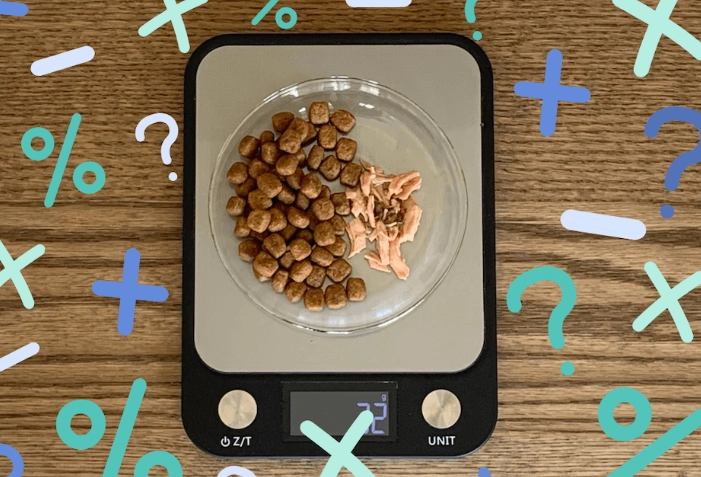
That's why the idea of a cats how much food per day calculator is so appealing. It promises to take the guesswork out. But here's the thing most articles don't tell you: there is no single, universal magic number. A calculator is a fantastic starting point, but it's just that—a starting point. The real answer is a blend of basic math, keen observation, and understanding your unique feline.
This guide is going to break it all down. We'll look at the simple formulas vets use (the real cat feeding calculator logic), all the factors that change the equation, and how to read your cat's own body signals better than any app could. Forget the one-size-fits-all approach. Let's build a feeding plan that actually fits *your* cat.
Why Getting the Portion Right is a Big Deal (It's Not Just About Weight)
It's easy to think of food as just fuel. But for cats, the quantity is directly tied to their long-term health. Underfeeding seems like the obvious worry—you don't want a hungry cat. But overfeeding is the silent, more pervasive issue.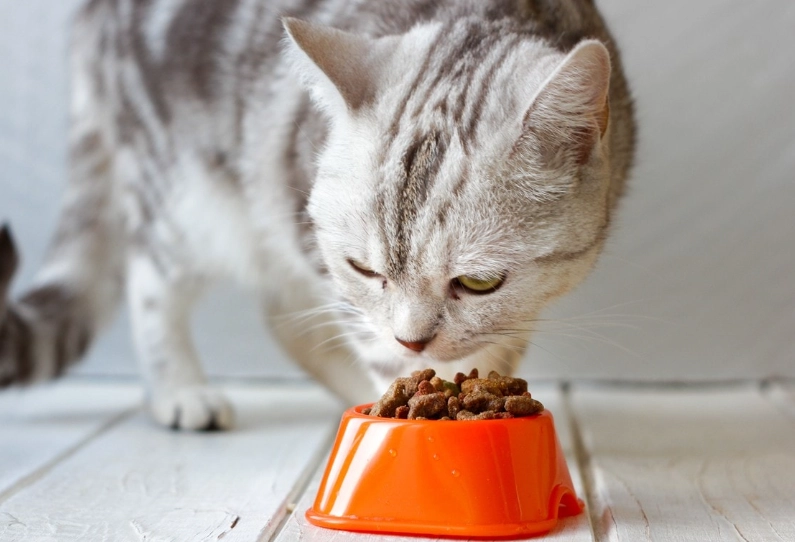
I learned this the hard way with my first cat, Milo. He was a master manipulator, convincing me he was perpetually starving. A few extra kibbles here and there didn't seem like a crime. Fast forward a year, and the vet was gently pointing out he was crossing from "cuddly" into "clinically overweight." The risks she explained weren't trivial:
- Diabetes: Overweight cats have a massively increased risk. It's expensive to manage and tough on them.
- Arthritis: All that extra weight puts brutal strain on their joints. You might mistake their lethargy for laziness when it's actually pain.
- Urinary and Liver Diseases: Obesity is a key player in these complex, often deadly conditions.
- Shorter Lifespan: Study after study shows lean cats live longer, healthier lives. It's the single most impactful thing you can control.
On the flip side, underfeeding a growing kitten, a nursing queen, or a highly active cat can stunt growth, cause muscle loss, and lead to a dull coat and low energy. The goal is the "Goldilocks zone"—not too much, not too little, but just right. And that's where understanding the principles behind a cats how much food per day calculator becomes your superpower.
The Core Formula: How a Vet Would Calculate Your Cat's Needs
Let's strip it down to the basics. The foundation of every professional cat daily food intake estimate is something called the Resting Energy Requirement (RER). This is the calories your cat would need if they did nothing but sleep all day. Then, we multiply that by a factor based on their life stage and lifestyle to get their Maintenance Energy Requirement (MER)—the calories they actually need.
RER (in calories/day) = (Your cat's weight in kg ^ 0.75) * 70
Or, for those of us who think in pounds: RER = (Your cat's weight in lbs / 2.2) ^ 0.75 * 70
Looks a bit scary, but don't worry. The ^0.75 part is the "metabolic body size" exponent. You can use a calculator for that bit. Let's do a real example.
Say you have a perfectly average, healthy, 10-pound (4.5 kg) neutered adult cat with a typical indoor activity level.
- Convert weight to kg: 10 lbs / 2.2 = ~4.5 kg.
- Calculate metabolic body size: 4.5 ^ 0.75. (Punch this into a calculator: it's about 3.37).
- Multiply by 70: 3.37 * 70 = ~236 calories.
So, this cat's RER is about 236 calories. Now, for a neutered adult with normal activity, the multiplier is usually between 1.2 and 1.4. Let's pick 1.3.
236 calories * 1.3 = ~307 calories per day.
That 307 calories is your theoretical starting point from a cat food calculator perspective. Now, here's where the art meets the science. That multiplier isn't fixed. It's a sliding scale.
The Multiplier Game: It's Not Just "Adult Cat"
This is the part generic calculators often mess up. They give you one box for "adult cat." But is your adult cat a couch potato or a parkour artist at 3 AM? Here’s a much better breakdown of those lifestyle multipliers:
| Life Stage & Lifestyle | Typical Multiplier (x RER) | Notes & Real-World Adjustments |
|---|---|---|
| Kitten (up to 6 months) | 2.5 - 3.0 | They're growing machines! Feed nutrient-dense food, often multiple meals. Free-feeding is sometimes okay here. |
| Junior (6-12 months) | 2.0 - 2.5 | Growth slows, but energy is still high. Start transitioning to scheduled meals. |
| Neutered Adult (typical indoor) | 1.2 - 1.4 | This is the default for most. Start at 1.2 for lazier cats, 1.4 for more active ones. |
| Intact Adult / Very Active | 1.4 - 1.6 | Unneutered cats or those with constant access to outdoor exploration need more fuel. |
| Prone to Weight Gain | 1.0 - 1.2 | If your cat gains weight easily, you might need to feed at or barely above their RER. Talk to your vet. |
| Senior (11+ years) | 1.0 - 1.2 | Metabolism slows, muscle mass may decrease. Focus on quality protein, not quantity of calories. |
| Pregnant / Nursing Queen | 2.0 - 4.0+ | Demands skyrocket, especially during peak lactation. They often need free access to high-quality food. |
See? That "adult cat" setting just got a whole lot more nuanced. A proper cats how much food per day calculator should ask you about these nuances. If it doesn't, its answer is probably off.
The Biggest Variable That Breaks Calculators: Wet Food vs. Dry Food
This is the grand canyon of cat feeding. You cannot use a cat feeding calculator accurately without knowing this. The difference isn't just about moisture.
Dry Food (Kibble): It's calorie-dense. Typically, it packs anywhere from 350 to 450+ calories per cup. It's easy to overfeed because a little volume contains a lot of energy.
Wet Food (Cans, Pouches): It's calorie-light but volume-heavy. A typical 5.5oz can might only have 150-200 calories, but it looks like a lot of food. It's high in moisture (great for hydration) and usually higher in protein.
This is why just following a chart in "cups" is dangerous. You must find the calorie content (kcal/kg or kcal/cup/can) on your specific food's packaging or website. This information is non-negotiable. The Association of American Feed Control Officials (AAFCO) requires it. If you can't find it, that's a red flag about the brand.
Let's go back to our 10-pound cat needing ~307 calories.
- If feeding a dry food at 400 kcal/cup: 307 / 400 = 0.77 cups per day.
- If feeding a wet food at 180 kcal per 5.5oz can: 307 / 180 = ~1.7 cans per day.
That's a massive difference in how full the bowl looks! Many people switching from dry to wet panic, thinking they're not feeding enough because the can seems small. But they're likely hitting the calorie target perfectly.
Beyond the Math: The 5 Factors Your Calculator Can't See
Okay, so you've got your calorie number from your makeshift cats how much food per day calculator work. But we're not done. The math gives you a target. Your eyes and hands will tell you if you need to adjust. Here’s what to watch for, in order of importance: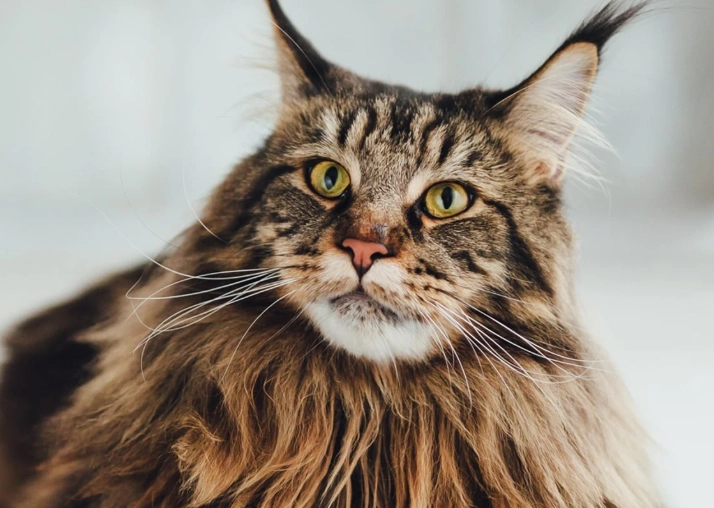
1. The Body Condition Score (BCS): Your Hands-On Guide
Forget the scale alone. A cat can be a "normal" weight but still be flabby. The BCS is a 1-9 scale (where 5 is ideal) that you do by look and feel. I strongly recommend looking at the official World Small Animal Veterinary Association (WSAVA) Body Condition Score chart for cats. It's the global standard.
What you're checking for:
- Ribs: You should be able to easily feel them under a thin layer of fat, like the back of your hand. Not see them (too thin), and not have to dig for them (too heavy).
- Waist: Look from above. There should be a visible indentation behind the ribs—an hourglass shape.
- Abdominal Tuck: Look from the side. The belly should tuck up behind the rib cage, not hang down.
Check this monthly. If your cat is a BCS 6 or 7, reduce their daily calories by 10-20%. If they're a 3 or 4, increase by 10-20%. This feedback loop is more important than any static calculation.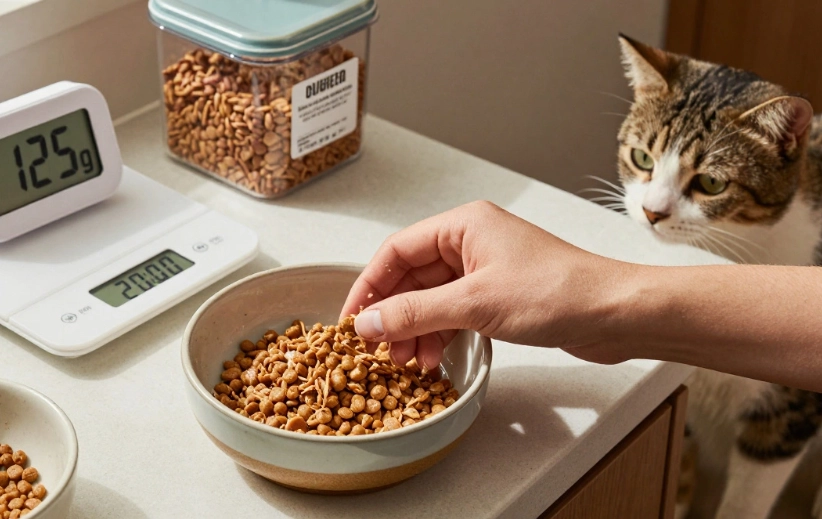
2. Activity Level (The Real One, Not the One You Hope For)
Does your cat spend 18 hours a day sleeping in a sunbeam? Or do they have regular, vigorous play sessions? Be brutally honest. A true cat daily food intake calculation accounts for real movement, not breed stereotypes.
3. Age & Metabolism
Kittens burn calories like furnaces. Seniors, not so much. Around age 7-8, start paying closer attention. They might need fewer calories even if their activity seems the same, because their lean muscle mass is decreasing.
4. Breed & Body Frame
A slender-framed Siamese and a stocky-framed British Shorthair at the same weight have different needs. The Siamese might need more calories to maintain weight because of a naturally higher metabolism. The BCS is your guide here, not the weight number in isolation.
5. Health Status
This is critical. Conditions like hyperthyroidism can cause ravenous hunger and weight loss despite high food intake. Diabetes, kidney disease, and others require specialized diets and portion control. Any major change in appetite or weight warrants a vet visit immediately. Never adjust food for a sick cat based on a cat feeding calculator alone.
Putting It All Together: A Practical Feeding Plan
Let's walk through the full process for a hypothetical cat, using everything we've learned.
Meet Oliver: A 12-pound (5.45 kg), 4-year-old, neutered domestic shorthair. He's indoor-only, plays actively for about 30 minutes a day, and sleeps the rest. He's currently eating a dry food that is 380 kcal per cup. You feel his ribs with a bit of difficulty and notice no obvious waist from above (you suspect he's a BCS 6/9).
- Calculate RER: Weight in kg = 5.45. 5.45 ^ 0.75 ≈ 3.99. 3.99 * 70 = ~279 calories (RER).
- Choose Multiplier: Neutered adult, moderately active? Let's start on the lower end due to suspected overweight: 1.2.
- Calculate Daily Calories (MER): 279 * 1.2 = ~335 calories.
- Convert to Food Amount: His food is 380 kcal/cup. 335 / 380 = 0.88 cups per day.
- Implement & Monitor: Start by measuring out 0.88 cups (better yet, 100 grams if you have the weight conversion) and split it into 2-3 meals. Weigh him in 2 weeks and do a BCS check.
- Adjust: If he hasn't lost any weight/condition, reduce the daily amount by 10% (to ~0.79 cups). If he's losing too fast or seems hungry and lethargic, consider a tiny increase or check with the vet.
This process—calculate, implement, monitor, adjust—is the real-world cats how much food per day calculator that never fails.
Common Questions (The Stuff You Actually Google)
"How many times a day should I feed my cat?"
Adult cats do best with at least two measured meals, 12 hours apart. This mimics natural hunting rhythms and prevents blood sugar dips. Kittens need 3-4 meals. I personally feed my adult cat twice a day, at 7 AM and 7 PM. It's routine, and she thrives on it.
"Should I free-feed my cat?"
I don't recommend it for most adults. It removes all portion control and is a primary cause of obesity. It also makes it impossible to monitor their appetite, which is a key early warning sign of illness. The only exception might be for some kittens, very skinny cats needing to gain, or nursing mothers.
"My cat is always begging for food! Does that mean he's hungry?"
Not necessarily. Cats are opportunistic eaters and brilliant beggars. It's often habit or boredom. Ensure you're feeding the right amount (check the math!), then stick to your schedule. Engage them with play instead of food. If begging is new or frantic, see a vet to rule out medical issues like parasites or diabetes.
"I have multiple cats with different needs. How do I handle that?"
This is tough. Separate them during meal times in different rooms. It's the only surefire way to control who eats what. Microchip-activated feeders (like SureFeed) are a game-changer but an investment. Don't just put down different bowls in the same room—the dominant cat will eat from both.
"Are automated feeders a good idea?"
For portion and schedule control, they're excellent. They remove the "human begging" factor. But you still need to program them with the correct daily total based on your cat daily food intake calculation. And you miss out on monitoring appetite firsthand.
When to Throw the Calculator Out the Window and Call the Vet
No online guide or cat food calculator replaces professional advice. You need a vet if:
- Sudden weight loss or gain, even if appetite seems normal.
- Ravenous hunger or complete loss of appetite for more than 24 hours.
- Your cat has a known medical condition (kidney disease, diabetes, etc.). Their diet is part of their treatment.
- You're making a major diet change (e.g., to a veterinary therapeutic diet).
- You're simply unsure or overwhelmed. A veterinary nutritionist (find one via the American College of Veterinary Nutrition (ACVN) directory) can create a customized plan.
You're the Best Calculator Your Cat Has.
At the end of the day, all the formulas and charts and multipliers are tools. The most sophisticated cats how much food per day calculator in the world is you, observing your cat day in and day out.
You'll learn the subtle signs. The perfect weight where they spring onto the counter with ease. The ideal portion that leaves them satisfied but still eager for their next scheduled meal. The shine in their coat and the energy in their play.
Start with the math. Be meticulous about measuring. Then, let your cat's own body be the ultimate guide. Adjust with patience, over weeks, not days. It's a continuous conversation, not a one-time calculation.
It might seem like a lot now, but it quickly becomes second nature. And the reward—a healthy, vibrant cat by your side for many years to come—is worth every single carefully measured gram.


Leave a comment