Quick Guide
- Why Even Bother? The Real Benefits of Leash Walking Your Cat
- The Cat vs. Dog Walking Mindset: This Is The Most Important Part
- Is Your Cat a Good Candidate? Personality Matters More Than Breed
- The Gear: Your Make-or-Break Equipment Choices
- The Step-by-Step Training Process: Go Slower Than You Think
- Common Problems (And How to Solve Them)
- Safety First: The Non-Negotiables
- Answering Your Burning Questions
So you're wondering, can cats be trained to walk on a leash? The short, honest answer is yes, absolutely. But here's the thing – it's nothing like walking a dog. If you're imagining your cat trotting obediently beside you for a mile-long stroll, you might be setting yourself up for disappointment. The real picture is more nuanced, more of a guided exploration than a structured walk. I learned this the hard way with my own cat, Mochi. Let's just say our first attempt involved a lot of flailing, a harness that somehow ended up around his middle, and zero forward movement. It was a disaster. But we got there, eventually. And that's what this guide is for: to give you a realistic, no-nonsense roadmap based on what actually works, not just fluffy theory.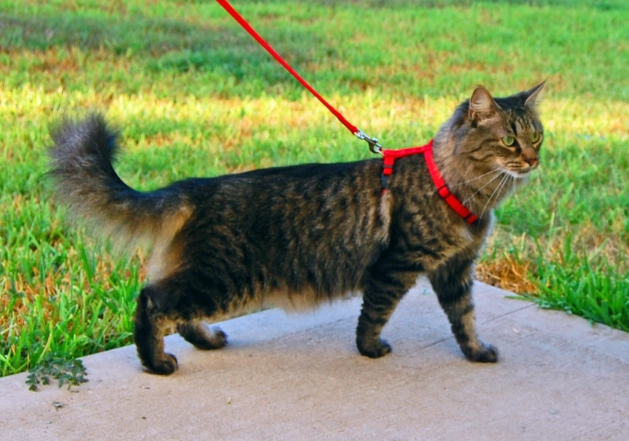
The idea of leash training a cat isn't some new-age fad. For many indoor cats, it's a fantastic form of environmental enrichment. It satisfies their curiosity about the great outdoors in a controlled, safe way. But is it for every cat? Definitely not. And that's the first crucial point we need to get straight.
Bottom Line Up Front: Yes, many cats can learn to walk on a leash (or more accurately, explore while attached to one), but success depends heavily on your cat's individual personality, your patience, and using the right, cat-specific methods. It's a marathon, not a sprint.
Why Even Bother? The Real Benefits of Leash Walking Your Cat
Before we dive into the how, let's talk about the why. Why go through all this trouble? For dog people, the answer seems obvious. For cat people, the benefits are more subtle but just as powerful.
First, it's about mental stimulation. Indoor cats, while safe from traffic and predators, can get bored. Boredom can lead to stress, over-grooming, or destructive behavior. A supervised outdoor session provides novel smells, sights, and sounds that TV for cats just can't match. The American Society for the Prevention of Cruelty to Animals (ASPCA) lists environmental enrichment as a key component of feline wellbeing, and safe outdoor access can be a part of that.
Second, it can help with weight management. Encouraging your cat to sniff, climb, and pounce on leaves is more exercise than most get from a laser pointer chase around the living room.
Third, it's a safer alternative to free roaming. Cats who roam freely have significantly shorter lifespans on average. A leash and harness system keeps them safe from cars, other animals, and getting lost, while still granting them some autonomy. It's a compromise that many cat guardians find gives them peace of mind.
But let's be real – it's also just plain fun. Seeing your cat's world open up, watching them cautiously investigate a blade of grass or follow a butterfly's path, creates a unique bond. It's shared adventure on their terms.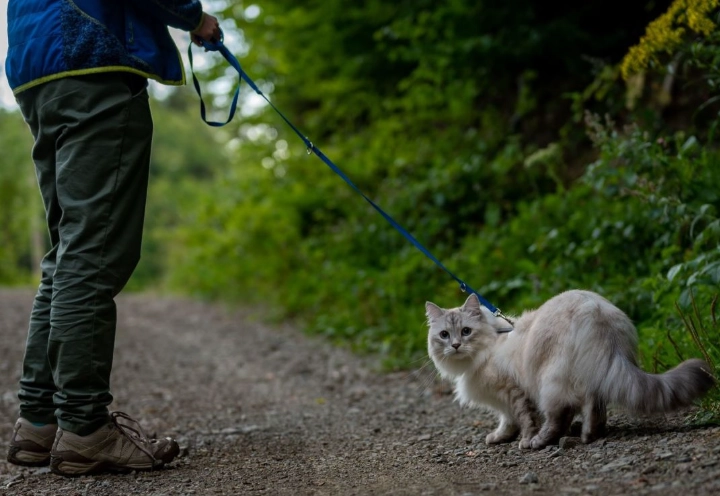
The Cat vs. Dog Walking Mindset: This Is The Most Important Part
This is where most people fail. They approach cat harness training with a dog-walking mindset. It will backfire. Every time.
You are not walking the cat. The cat is walking you. Your job is not to set the pace or the destination. Your job is to be a mobile, secure anchor point. You follow. You let them lead. You are there for safety and to untangle them from bushes. If you can't embrace this fundamental shift in perspective, leash training will be a constant battle of wills that you will likely lose.
Dogs are often bred for cooperation and following direction. Cats are… not. They are independent explorers. The leash is a safety tether, not a steering device. You might stand in one spot for 20 minutes while your cat watches a bird. That's a successful session. A "walk" might be 50 feet over the course of half an hour. Accept this, and you're halfway to success.
Is Your Cat a Good Candidate? Personality Matters More Than Breed
Not every cat will take to a leash. Trying to force a timid, easily startled cat can damage your relationship and cause significant stress. So, how do you know if your feline friend might be up for it?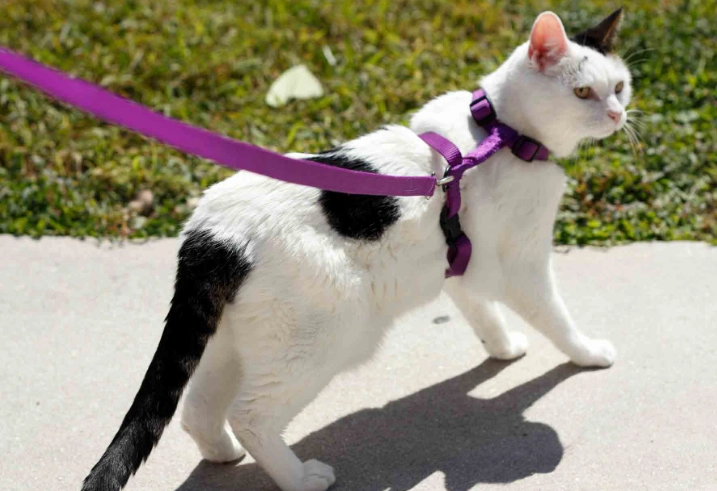
Look for these personality traits:
- Confident and Curious: Does your cat run to the door when someone knocks? Do they investigate new objects in the house without excessive hiding? This is your best bet.
- Social and Adaptable: Cats who adjust well to changes (like moving furniture or visitors) often handle new experiences like harnesses better.
- Playful and Energetic: A cat with a high play drive might see the outdoors as the ultimate game.
On the flip side, cats who are extremely shy, fearful of strangers, or easily spooked by normal household noises will probably find the outdoors overwhelming. Senior cats or those with health issues might also not be suitable. Always, and I mean always, consult your vet before starting any new activity with your cat, especially if they have pre-existing conditions. A resource like the International Cat Care website offers great general advice on understanding feline behavior, which is the foundation of any training.
Age can be a factor. Kittens and young cats are generally more adaptable. But I've successfully trained a five-year-old cat who had never worn a collar. It just took longer. Patience is the real key ingredient, more than age.
The Gear: Your Make-or-Break Equipment Choices
You cannot use a dog harness or a collar. Just don't. Cats have a unique anatomy and an incredible ability to escape and slip out of things. A regular collar is dangerous for leash walking because of their tendency to pull and twist; it puts pressure on their fragile throat and trachea. A dog harness often doesn't fit a cat's body shape properly.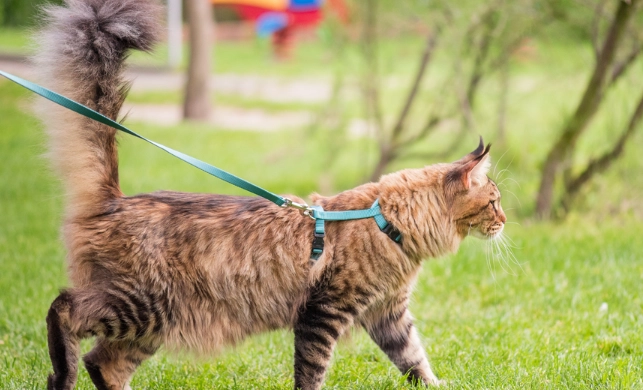
You need a properly fitted, escape-proof cat harness. There are two main types, and your choice depends a bit on your cat's build and your own paranoia level about escapes.
| Harness Type | How It Works | Pros | Cons | Best For |
|---|---|---|---|---|
| H-Style Harness | Two loops connected by a strap on the back. One loop goes around the neck, the other around the ribcage. | Classic design, often more comfortable for long-haired cats as it has less material. Usually easy to put on. | Can be easier for some Houdini-cats to back out of if not fitted perfectly snug. The neck strap can sometimes be fiddly. | Cats who are calm about having things put over their head. A good all-rounder to start with. |
| Vest-Style Harness | Fits more like a little vest or jacket, covering more of the chest and torso. Often closes with velcro or buckles. | Generally considered more secure and harder to escape from. Distributes pressure more evenly. Often feels more secure to the human. | Can be warmer. Some cats dislike the feeling of being "wrapped up." Velcro can be loud and startling. | Strong cats, escape artists, or those who might spook and pull. Cats who don't mind being handled. |
The fit is non-negotiable. You should be able to fit two fingers snugly between the harness and your cat's body at any point. It should not be loose, but it must not be tight or restrictive. Do the "squirm test" indoors: put the harness on, distract your cat with treats, and see if they can wriggle out. If they can, it's too loose or the wrong style.
For the leash, get a lightweight, thin leash (4-6 feet is ideal). Retractable leashes are controversial. I don't recommend them for beginners. They teach the cat that pulling creates more length, and they can be dangerous if the cord gets tangled or snaps. A simple, fixed-length leash gives you more control and clarity.
The Step-by-Step Training Process: Go Slower Than You Think
Rushing is the enemy. This process can take days, weeks, or even months. Let your cat set the pace. If they show signs of stress (hiding, hissing, flattened ears, refusing treats), go back a step.
Phase 1: Introduce the Harness Indoors (No Leash!)
Leave the harness near your cat's bed or food area for a few days so it smells familiar. Then, start associating it with amazing things. Hold it out, give a treat. Touch your cat with it gently, give a treat. The goal is to make the harness a predictor of chicken, not of restraint.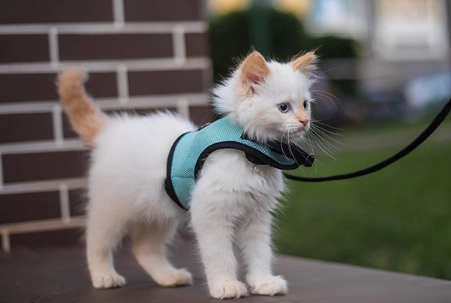
Next, try putting just the neck loop on (if it's an H-harness) or draping the vest over their back. Immediate treat. Take it off immediately. Keep sessions under a minute. Gradually work up to fastening one buckle, then both. Have a play session or a meal with the harness on. The cat should be distracted by good things, not focused on the weird thing on its body.
This phase ends when your cat can wear the harness indoors for 10-15 minutes without freezing, flopping over, or walking like a drunk robot.
Phase 2: Attach the Leash Indoors
Clip the leash on and just let it drag behind them (supervised, so it doesn't get caught). Let them drag it around during play. Pick up the end occasionally, apply the tiniest bit of gentle pressure, and if they move toward the pressure, reward heavily. Never pull or drag them.
Practice following them around your living room with the leash in hand. This gets them used to your presence connected to them.
Phase 3: The Great Outdoors (Start in a "Boring" Spot)
Your first outdoor session should not be at the park. It should be on a quiet porch, balcony, or even just outside your front door in a calm moment. Sit down with your cat in your lap or beside you. Let them observe. They might just sit and sniff the air for 10 minutes. That's perfect. Keep it to 5 minutes max the first time.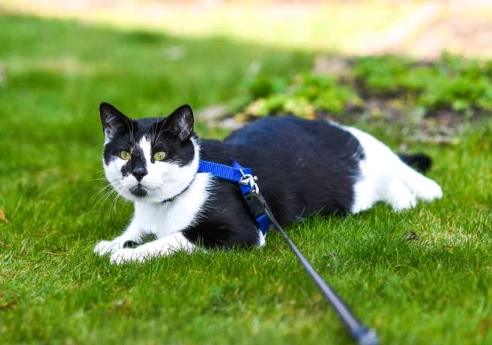
Pro Tip: Carry your cat to the "start spot," don't let them walk out the door on leash. This prevents them from associating the door with a mad dash to freedom and helps contain their excitement until you're in a controlled position.
Gradually, over many sessions, let them explore further from your safe spot. Always let them lead. If they want to go under a bush, and it's safe, let them (you'll get good at untangling leashes). If they want to climb a tree a few feet, let them. This is their exploration.
Common Problems (And How to Solve Them)
- The Flop: Cat puts harness on, immediately flops over and refuses to move. This is classic. It's not a sign of failure; it's a sign of confusion. Ignore the flop. Dangle a toy or toss a treat a few inches away. Be patient. They will get up when they're ready. Never drag a flopped cat.
- The Escape Artist: If your cat consistently slips out, you need a different harness style (likely a vest-style) and you must check the fit more carefully. Some cats are just contortionists.
- Spooking: A loud noise happens, and your cat panics. This is why you never hold the leash tightly wrapped around your hand. If they bolt, you could get rope burn, and they could get hurt. Hold the leash loosely, ready to let it slip through your fingers if a sudden, powerful pull happens. It's better for the leash to drop than for the cat to be jerked or to drag you. Practice remaining calm and speaking softly to reassure them.
- They Only Want to Eat Grass: That's okay! That's a valid outdoor activity. Just make sure the grass hasn't been treated with pesticides or herbicides.
Safety First: The Non-Negotiables
Can cats be trained to walk on a leash safely? Only if you follow these rules.
- Never Leave Them Tethered Unattended. Not for a second. They could get tangled, strangled, or attacked by another animal.
- Ensure Vaccinations & Parasite Prevention are Up-to-Date. The outdoors brings fleas, ticks, and exposure to other animals' germs. Your vet is your best resource here.
- Check the Weather. Avoid extreme heat or cold. Pavement can burn paws. Provide water on longer outings.
- Scan the Environment. Watch for loose dogs, toxic plants (like lilies), or hazards like broken glass.
- Identification is a Must. Even with a harness, your cat should wear a breakaway collar with an ID tag. A microchip is essential as a permanent backup. The American Veterinary Medical Association (AVMA) has clear information on the importance of microchipping.
Answering Your Burning Questions
So, can cats be trained to walk on a leash? The evidence says a resounding yes for many felines. But the real question is: can you be trained to think like a cat, to embrace patience over pace, and to become a guardian of their exploration rather than a director of their walk? If you can, you might just unlock a wonderful new dimension of your life together. It's not about the distance covered; it's about the shared moments of discovery, the slow sniff of a flower, the cautious paw on a new texture. That's the real reward of leash training a cat.
It's a commitment. It requires the right gear, immense patience, and a deep respect for your cat's autonomy. But for the right cat and the right human, it can transform a routine into an adventure, proving that the question "can cats be trained to walk on a leash" isn't just about control—it's about connection.





Leave a comment