Quick Navigation
- The Starting Point: A Cat's Uterus Before Pregnancy
- The Amazing Transformation: What Happens During Pregnancy
- Signs Your Cat's Uterus is Housing Kittens
- A Deeper Dive into Pregnant Cat Uterus Anatomy
- Caring for the Queen: Supporting Her Changing Body
- When Things Go Wrong: Uterine Complications
- After the Kittens Arrive: The Uterus Post-Partum
So your cat might be expecting. First off, congratulations! It's an exciting time, but let's be honest, it can also be a bit nerve-wracking. You're probably looking at her and wondering, "What exactly is going on in there?" I remember the first time my own cat, Mochi, was pregnant. I spent hours online trying to picture her cat uterus anatomy pregnant, worrying about every little twitch. Most information was either too vague or read like a medical textbook. Not super helpful when you just want to know if she's okay.
That's why we're going to break it all down here. We'll talk about the incredible transformation her uterus goes through, what's normal, what's a red flag, and how you can support her. This isn't just dry facts; it's about understanding the process so you can be the best cat midwife (or just a really informed spectator) possible.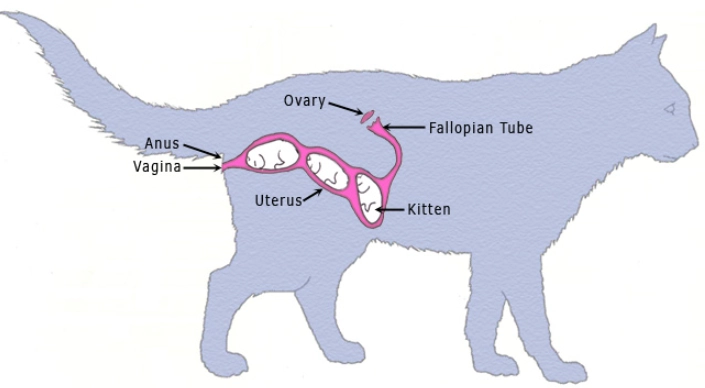
The Starting Point: A Cat's Uterus Before Pregnancy
To appreciate the change, you need to know the starting point. A non-pregnant cat's uterus isn't some big, central organ. It's actually quite small and shaped like a capital "Y." This design is key for understanding feline pregnancy anatomy.
The two top parts of the Y are called the uterine horns. These horns are long, slender, and flexible tubes. Why two? Evolution's clever design for a species that often has multiple offspring (kittens!). Each horn connects to an ovary via a fallopian tube. The bottom part of the Y is the uterine body, a shorter section that leads to the cervix, the gateway to the vagina.
Think of it like a quiet, empty pair of highways (the horns) connected to a short service road (the body) leading to a closed gate (the cervix). When not in use, it's inactive, with thin walls and a tiny internal space. The entire structure is tucked neatly within the abdominal cavity, taking up very little room. This compact, Y-shaped setup is the perfect blank canvas for what's to come.
Quick Anatomy Comparison: Cats vs. Humans
It's easy to assume it works like ours, but there are big differences. Humans have a single, pear-shaped uterus (a simplex uterus). We're typically built for one baby at a time. Cats have that bicornuate (two-horned) uterus, optimized for a litter. That's why understanding specific cat uterus anatomy pregnant is crucial—you can't always apply human pregnancy logic.
The Amazing Transformation: What Happens During Pregnancy
Okay, here's where it gets fascinating. Once fertilization happens, those tiny embryos travel down the fallopian tubes and into the uterine horns. They don't just plop down anywhere; they space themselves out along the length of each horn. This is nature's way of giving each developing kitten its own "room."
The first major change is implantation, which happens around two weeks after mating. The embryo attaches to the uterine wall, and a life-support system starts forming. This triggers a flood of hormones, primarily progesterone, which acts as the main command signal telling the uterus, "Okay, we're building a nursery now!"
And build it does. The uterine walls, once thin, begin to thicken with extra layers of muscle and tissue. But here's the catch—they don't just get thick and stay that way. As the kittens grow, the walls actually stretch and become thinner again, but now it's a strong, vascular, elastic thinness. The uterus itself increases massively in size, weight, and blood supply. We're talking about an organ that can increase in weight by 10 to 15 times by the end of pregnancy. It's arguably the most dramatic physiological change in her body.
By mid-pregnancy, those formerly slender uterine horns are now distinct, swollen compartments. You might feel them during a gentle abdominal palpation (best left to your vet, honestly) as firm, oblong lumps. Each lump is a fetus within its own section of the horn. The uterine body becomes more pronounced too, acting as a central corridor.
The blood vessels supplying the uterus become engorged and more numerous. All that extra blood is what gives a pregnant cat's nipples their characteristic pink, swollen appearance (called "pinking up") around week three. It's all part of the same process—ramping up resources for the growing pregnant cat uterus.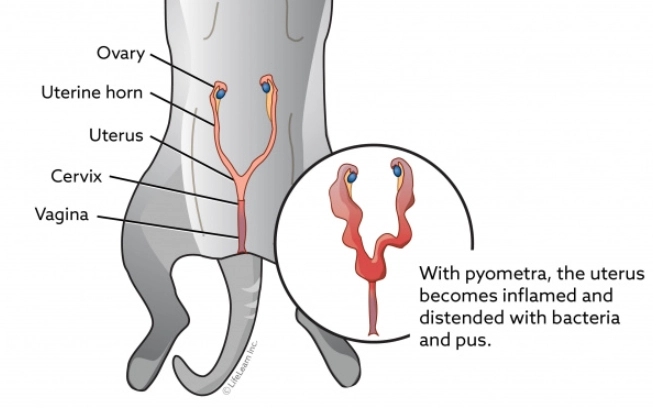
Signs Your Cat's Uterus is Housing Kittens
You're not an ultrasound machine, so how can you tell this internal remodeling is underway? The body gives you external clues linked directly to the internal cat uterus anatomy pregnant changes.
- Behavioral Shifts: She might become more affectionate or, conversely, seek solitude. Morning sickness (vomiting) can happen in the early weeks due to hormonal surges.
- The "Pinking Up": As mentioned, around day 18-21, her nipples become larger, rosier, and more prominent. This is often the first visual confirmation for owners.
- Weight Gain and Body Shape: Initial weight gain is subtle. By week 5, you'll notice a rounding of the lower abdomen. It's not a general fat gain; it's a distinct, firm swelling low on her belly. In the last two weeks, the sides of her abdomen may appear to "drop" and look pear-shaped as the uterus fills with more fluid and the kittens move into position for birth.
- Nesting: In the final week, the instinct to find a safe, quiet place to give birth kicks in. She's preparing for the grand finale of this uterine journey.
Let's be clear though. These signs are strong indicators, but they aren't foolproof. A condition called pseudopregnancy (false pregnancy) can cause similar signs like weight gain and mammary development. The only way to know for sure is a vet visit.
A Word of Caution: Don't Try This at Home
I see advice online about gently squeezing a cat's belly to feel for kittens. Please, don't. You can seriously hurt the developing kittens, cause a miscarriage, or distress the mother. Confirming pregnancy and checking on fetal well-being is a job for a professional who understands the delicate feline pregnancy anatomy. Your vet can use ultrasound (to see the fetuses and heartbeats) or gentle palpation at the right time. Your job is observation and providing care, not internal investigation.
A Deeper Dive into Pregnant Cat Uterus Anatomy
Let's get a bit more detailed for those who really want to picture it. Inside that expanding uterus, each kitten develops within its own separate, fluid-filled membrane called the amniotic sac. This sac is like a personal shock-absorbing bubble. Each kitten is connected to its own placenta, which is attached to the uterine wall. The placenta is the life-support hub—it's where oxygen and nutrients from the mother's blood are exchanged for waste from the kitten's blood.
In cats, the placentas are arranged in a row along each uterine horn. Interestingly, the placentas aren't evenly distributed sometimes; one horn might have more kittens than the other. The uterus is incredibly adaptable that way.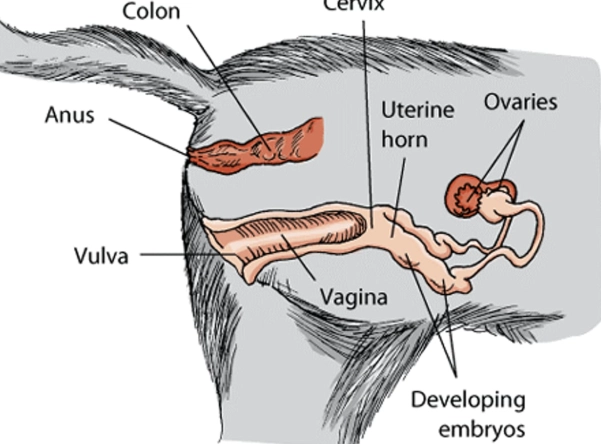
As term approaches, the cervix—that once tightly closed gate—begins to soften and relax (a process called ripening). This is in preparation for dilation during labor. The muscles of the uterine wall, which have been mostly quiet during gestation, will soon become the powerful engine of labor, contracting rhythmically to push the kittens down through the cervix and out into the world.
Caring for the Queen: Supporting Her Changing Body
Knowing about cat uterus anatomy pregnant isn't just academic. It directly informs how you should care for her. That stretched, hard-working uterus and its contents have specific needs.
Nutrition is Non-Negotiable. She's building multiple feline bodies from scratch. Around week 4 or 5, transition her to a high-quality, high-calorie kitten food. Kitten food is denser in calories, protein, and calcium—exactly what she needs. Don't just free-feed adult food; it won't have the nutrient profile she requires. The Cornell Feline Health Center has excellent resources on feline nutritional needs that underscore how critical diet is during reproduction.
Minimize Stress. A stressed queen can have complications. Provide quiet hiding spots and don't make major changes to her environment. Her world should be calm and predictable.
Vet Care is Paramount. A prenatal vet check is a must. Your vet can confirm the pregnancy, estimate the number of kittens (though counts can be off), check her overall health, and discuss deworming and vaccination schedules that are safe for pregnancy. This baseline is invaluable.
Prepare the Whelping Box. In the last two weeks, set up a simple, comfortable box in a dark, quiet corner. Line it with soft, washable blankets. Show it to her and let her get used to it. This gives her uterus a safe, designated endpoint for its work.
When Things Go Wrong: Uterine Complications
Most cat pregnancies are smooth, but problems can arise. Being aware of them is part of responsible ownership. Many complications are directly related to the pregnant cat uterus itself.
| Complication | What It Is | Signs to Watch For |
|---|---|---|
| Dystocia (Difficult Birth) | The uterus is unable to expel the kittens effectively. This can be due to a large or malpositioned kitten, a small birth canal, or weak contractions. | Strong straining for >30-60 mins with no kitten, >4 hrs between kittens, obvious distress, crying in pain, bloody discharge without a kitten. |
| Uterine Inertia | The uterine muscles fail to contract properly. It can be primary (never starting) or secondary (stopping mid-labor). | Labor doesn't start by day 70+, weak or infrequent contractions, exhaustion during labor. |
| Pyometra | A life-threatening bacterial infection of the uterus. It can occur in diestrus (after a heat cycle), but a pregnant uterus is not immune. | Fever, lethargy, loss of appetite, foul-smelling vaginal discharge, excessive drinking/urinating. This is an EMERGENCY. |
| Uterine Rupture or Torsion | Extremely rare but serious. Rupture is a tear in the uterine wall. Torsion is a twisting of the uterus, cutting off blood supply. | Sudden collapse, severe acute abdominal pain, pale gums, shock. These are immediate, life-threatening emergencies. |
If you notice any of the signs described in the table above, your immediate action should be to call your vet or an emergency animal hospital. Time is critical. I learned this the hard way with a foster cat who had a stuck kitten; waiting "to see what happens" is not a strategy.
The American Society for the Prevention of Cruelty to Animals (ASPCA) and the American Veterinary Medical Association (AVMA) are authoritative sources that stress the importance of emergency readiness for pet owners.
After the Kittens Arrive: The Uterus Post-Partum
The job isn't over once the last kitten is out. The uterus now enters the involution phase—it's basically shrinking back down to its non-pregnant size. This process takes several weeks. You'll notice a reddish-brown vaginal discharge, called lochia, for up to three weeks. This is normal as the uterus cleans itself out. It should not be foul-smelling or overly heavy (like frank bleeding).
The muscles continue to contract intermittently (you might see her flinch) to help with this shrinkage and to control bleeding. Nursing kittens actually helps this process along, as suckling triggers the release of oxytocin, which stimulates uterine contractions.
It's a full-circle journey.
Keep her and the kittens warm, clean, and well-fed. Monitor her closely for signs of metritis (a post-birth uterine infection), which includes fever, foul discharge, and lack of interest in her kittens.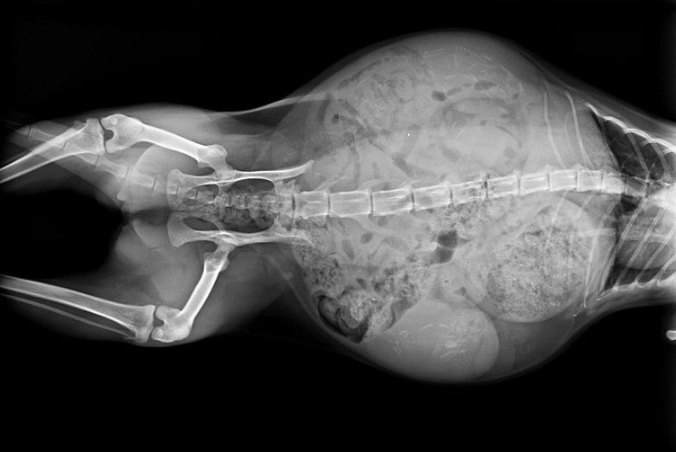
Your Cat Pregnancy Anatomy Questions, Answered
Wrapping this up, understanding your cat's pregnant cat uterus is about more than just biology. It connects you to the incredible process she's going through. It helps you provide better care, spot potential problems early, and ultimately, ensure a safer experience for her and her kittens. It turns worry into informed support.
Trust your instincts. If something feels off about her behavior or appearance during pregnancy, don't hesitate to contact your vet. They can translate what's happening inside that amazing, changing uterus into a plan to keep everyone healthy. Good luck!




Leave a comment