Figuring out the correct Benadryl dosage for your dog isn't a guessing game. Get it wrong, and you go from trying to help to causing harm. The safe dose hinges on one critical factor: your dog's exact weight in pounds. Forget the "one pill fits all" advice you might see online. Here's the straight truth: the standard veterinary dosage is 1 milligram of Benadryl (diphenhydramine) per pound of your dog's body weight, given 2-3 times a day. But that's just the starting point. Let's break down exactly how to apply it, when to use it, and the pitfalls most owners never see coming.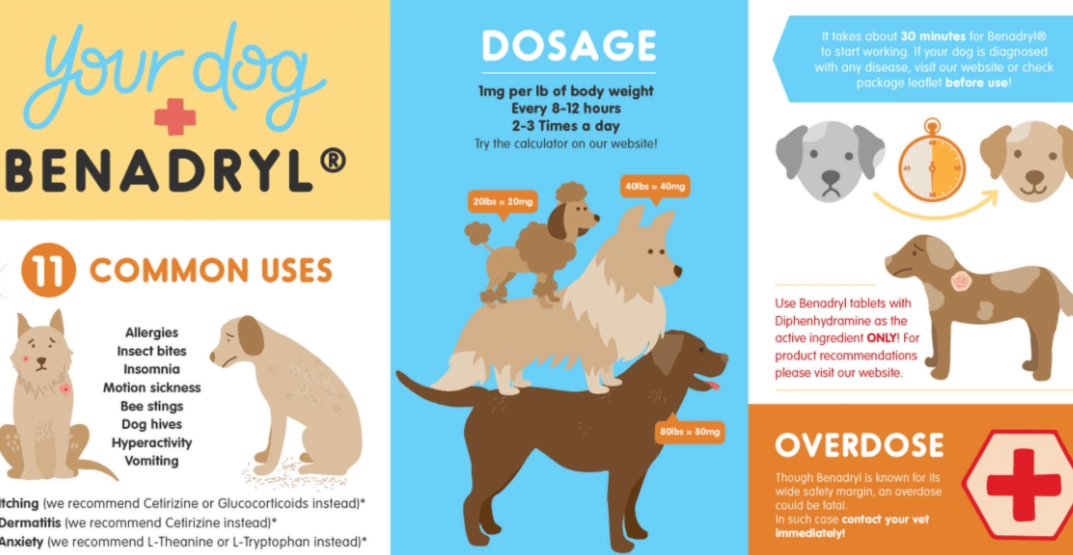
What You'll Find in This Guide
What is Benadryl and When Do Vets Use It for Dogs?
Benadryl is the common brand name for the antihistamine drug diphenhydramine. In humans, it fights allergies and works as a mild sleep aid. For dogs, veterinarians may recommend it for similar reasons, but it's strictly an "over-the-counter" option you should always discuss with your vet first.
Here are the most common scenarios where a vet might suggest Benadryl for your dog:
Mild Allergic Reactions: This is the big one. Think seasonal allergies (atopy) causing itchy skin, sneezing, or runny eyes. A bee sting or vaccine reaction that causes mild facial swelling or hives. Benadryl can help calm that histamine response.
Motion Sickness and Anxiety: Its sedative side effect can be useful for car rides or during thunderstorms for some dogs. I've had clients use it successfully for short flights. But it's not a primary anxiety medication—for severe cases, talk to your vet about prescription options.
As Part of a Mast Cell Tumor Protocol: This is a more specialized use. Mast cell tumors release histamine, and Benadryl is often prescribed alongside other medications before and after surgical removal to counteract this.
Let me be clear: Benadryl is a symptom manager, not a cure. If your dog is constantly itchy, you need to find the root cause (food, fleas, environment), not just mask it with pills.
The Exact Dog Benadryl Dosage Calculator by Weight
This is the part you bookmarked this page for. Accuracy is non-negotiable. You need a digital kitchen scale or a recent vet visit weight. Guessing your 65-pound Lab is "about 60 pounds" could lead to under-dosing. Thinking your chunky Chihuahua is "maybe 15 pounds" when it's actually 22 pounds is a fast track to an overdose.
The Standard Dosage Formula
The golden rule: 1 mg of diphenhydramine per pound of body weight.
Most over-the-counter Benadryl tablets in the US are 25 mg each. Children's liquid Benadryl is often 12.5 mg per 5 mL teaspoon. Use this to translate the mg dose into pills or liquid.
Here’s a quick-reference chart. This assumes standard 25 mg tablets.
| Dog Weight (lbs) | Dosage (mg of Diphenhydramine) | Approximate Dose (25 mg tablets) | Maximum Frequency |
|---|---|---|---|
| 5 lbs | 5 mg | 1/4 of a tablet | Every 8 hours |
| 10 lbs | 10 mg | 1/2 of a tablet | Every 8 hours |
| 20 lbs | 20 mg | 3/4 of a tablet | Every 8 hours |
| 30 lbs | 30 mg | 1 full tablet + 1/4 tablet | Every 8 hours |
| 50 lbs | 50 mg | 2 full tablets | Every 8 hours |
| 70 lbs | 70 mg | 2 full tablets + 3/4 tablet | Every 8 hours |
| 100 lbs | 100 mg | 4 full tablets | Every 8 hours |
Calculating Liquid Benadryl Dosage: This requires more math. If you have Children's Liquid Benadryl (12.5 mg/5 mL), the formula is: (Dog's Weight in lbs) / (5) = mL needed per dose.
Example: A 20 lb dog. 20 / 5 = 4 mL per dose. Use the syringe that comes with the medicine, not a kitchen spoon.
How to Give Benadryl to Your Dog Safely: A Step-by-Step Guide
Knowing the number is half the battle. The other half is execution. Here’s my field-tested protocol.
Step 1: The Pre-Check (Non-Negotiable)
Call your veterinarian. Confirm the dose and the reason. Disclose all other medications, supplements, or health issues (like glaucoma, heart disease, pregnancy). This call could prevent a disaster.
Step 2: Choosing the Right Product
You want ONLY diphenhydramine HCl as the active ingredient. Scrutinize the label. Avoid any product with added:
- Pseudoephedrine or phenylephrine (decongestants – highly toxic to dogs).
- Acetaminophen (Tylenol – fatal to dogs).
- Ibuprofen or naproxen (NSAIDs – cause ulcers/kidney failure).
- Alcohol (in some liquids).
- Xylitol (an artificial sweetener in some flavored liquids/chewables – extremely poisonous).
Plain, generic diphenhydramine is perfect and cheaper.
Step 3: Administration & Timing
Hide the pill in a small bit of peanut butter (xylitol-free!), pill pocket, or cheese. Give it with a small meal to minimize stomach upset. The effects usually start within 30-60 minutes. For allergy prevention (like before a known allergen exposure), give it about an hour ahead of time.
Side Effects, Overdose Signs, and When to Avoid Benadryl
Even at the correct dose, some dogs will experience side effects. The most common is sedation or drowsiness. Your dog might just want to sleep. Dry mouth, urinary retention, or mild digestive upset (vomiting/diarrhea) can also occur.
Signs of a Benadryl Overdose
This is what keeps vets up at night. If you see any of these, stop the medication and call your vet or animal poison control immediately:
- Extreme agitation or hyperactivity (paradoxical reaction).
- Rapid heartbeat, breathing difficulties.
- Severe drowsiness, inability to stand, stumbling.
- Dilated pupils.
- Seizures.
Dogs Who Should NOT Take Benadryl
Benadryl is dangerous for dogs with:
- Glaucoma
- Severe heart failure
- High blood pressure (unless specifically directed by a vet)
- Allergy to diphenhydramine
- Pregnant or nursing dogs
- Dogs on certain medications (like sedatives, seizure meds, or some antidepressants).
Brachycephalic breeds (like Bulldogs, Pugs) can be more sensitive to respiratory side effects. Proceed with extra caution.
Your Dog Benadryl Questions, Answered
 Let's wrap this up. Benadryl can be a useful tool in your dog-care kit for specific, minor issues. The key is precision: precise weight, precise product, precise timing. It's not a cure-all. When in doubt—and you will be—the safest button to press is the one that calls your veterinarian. They know your dog's full history. Use this guide to have an informed conversation with them, not to replace them. Your dog's safety is worth that extra step.


Leave a comment