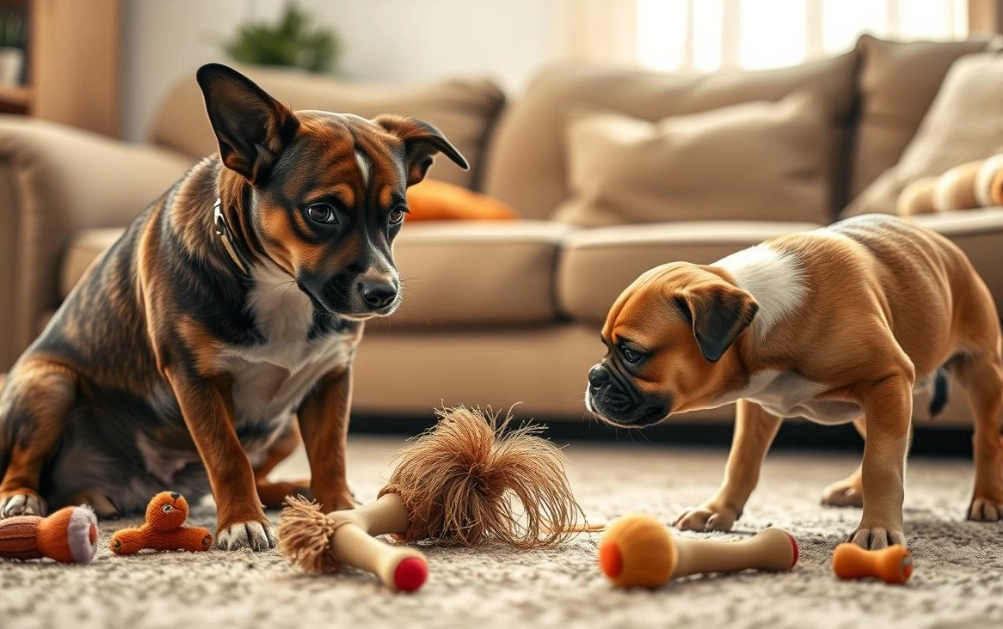
You hear a low growl from the corner. One dog is frozen over a chew toy, the other is stiff-legged, staring. The air feels thick. This isn't just sibling squabbling; it's resource guarding, and it can turn your peaceful home into a tense negotiation zone. If you're searching for how to stop resource guarding between dogs, you're likely past the "hope it goes away" phase. You need a clear, safe plan. The good news is that with patience and the right approach, you can absolutely manage and significantly reduce this behavior. It's less about dominance and more about teaching your dogs that good things happen when the other is around.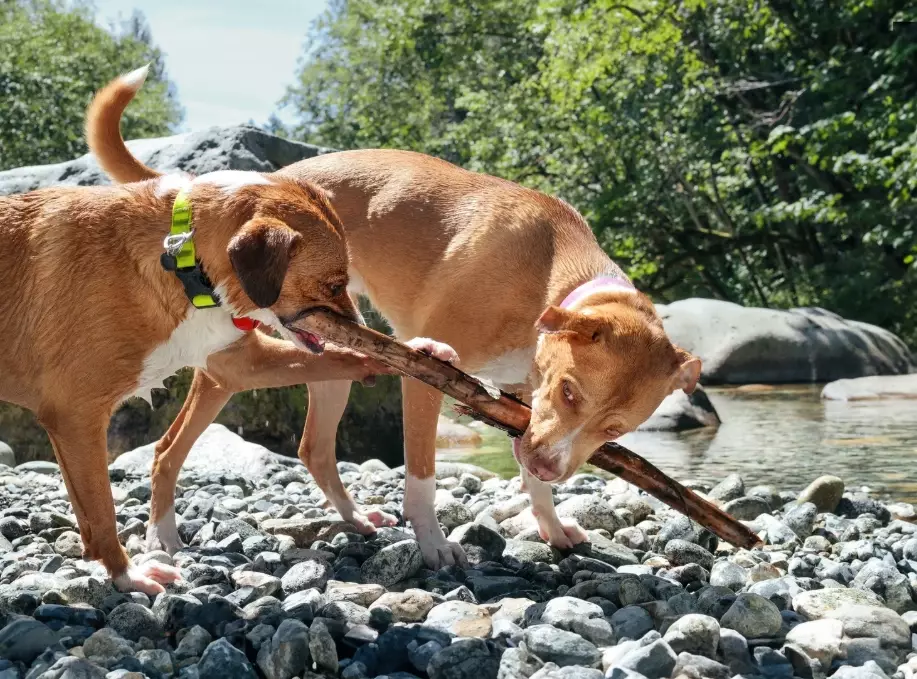
What You'll Learn Inside
What Is Resource Guarding (And What It Isn't)
Let's clear something up first. Resource guarding is a natural, survival-based behavior. In the wild, holding onto food, a safe spot, or a mate means survival. Your dog isn't being "bad" or "spiteful." They're communicating, "I value this, and I'm worried you'll take it." The "you" can be another dog, a human, or even a cat.
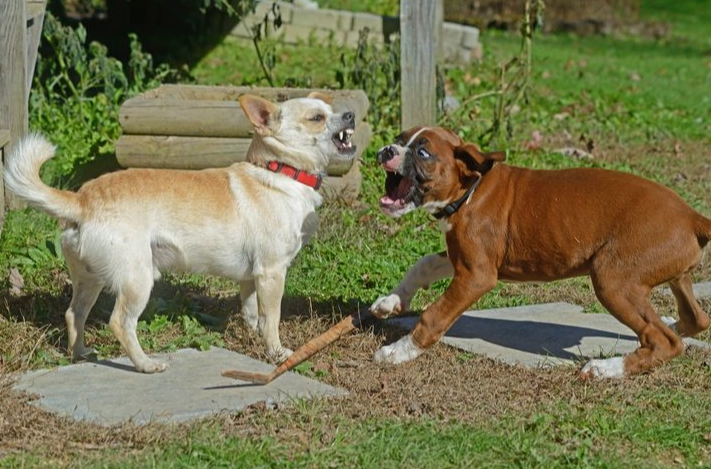
The problem starts when this normal anxiety escalates into threats or aggression in a domestic setting. It's crucial to distinguish guarding from general possessiveness. A dog who side-eyes another while eating might be possessive. A dog who lunges, snaps, or delivers a hard stare with a stiff, still body is guarding. The intensity matters.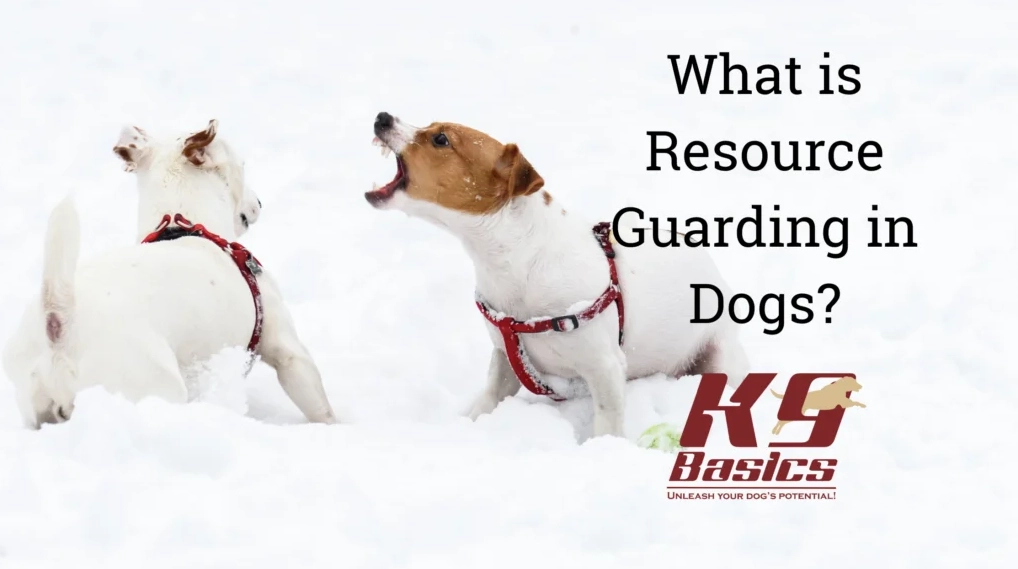
Key Insight: Many trainers miss that guarding often stems from predictability. If Dog A knows that Dog B always comes to steal his bone after finishing his own, the anxiety starts the moment the bones come out. Breaking this predictable pattern is half the battle.
How to Identify Resource Guarding Triggers
Guarding isn't just about food bowls. It can be anything a dog perceives as high-value. You need to play detective. Watch for subtle signs before a growl: a sudden pause in chewing, a whites-of-the-eyes glance, a body freeze, ears pinned back.
Common Guarded Resources
- Food & Treats: The most common. This includes bowls, food-dispensing toys (Kongs), scraps, and even the spot where feeding happens.
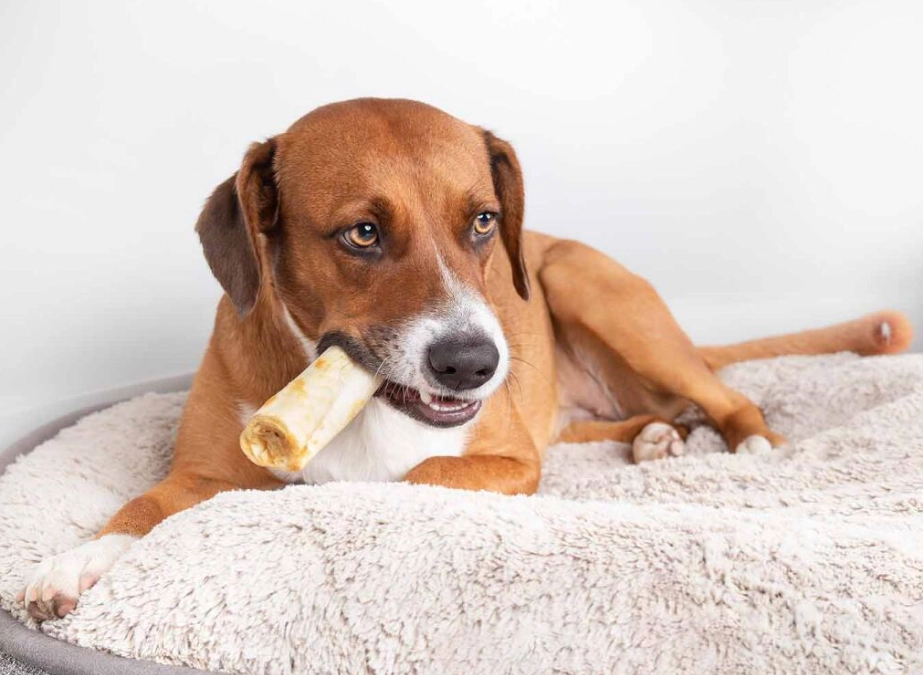
- Toys & Chews: Especially long-lasting ones like bully sticks, antlers, or plush toys with squeakers.
- Space & Furniture: A favorite bed, crate, couch corner, or even your lap. This is often called "location-based guarding."
- People: A dog may guard their primary human from the other dog, getting between you and them.
- Found Items: The random sock, tissue, or piece of trash they snatch becomes instant gold.
I once worked with a client whose dogs only fought over one specific, ratty tennis ball. Everything else was fine. Pinpointing that trigger saved them months of generic training.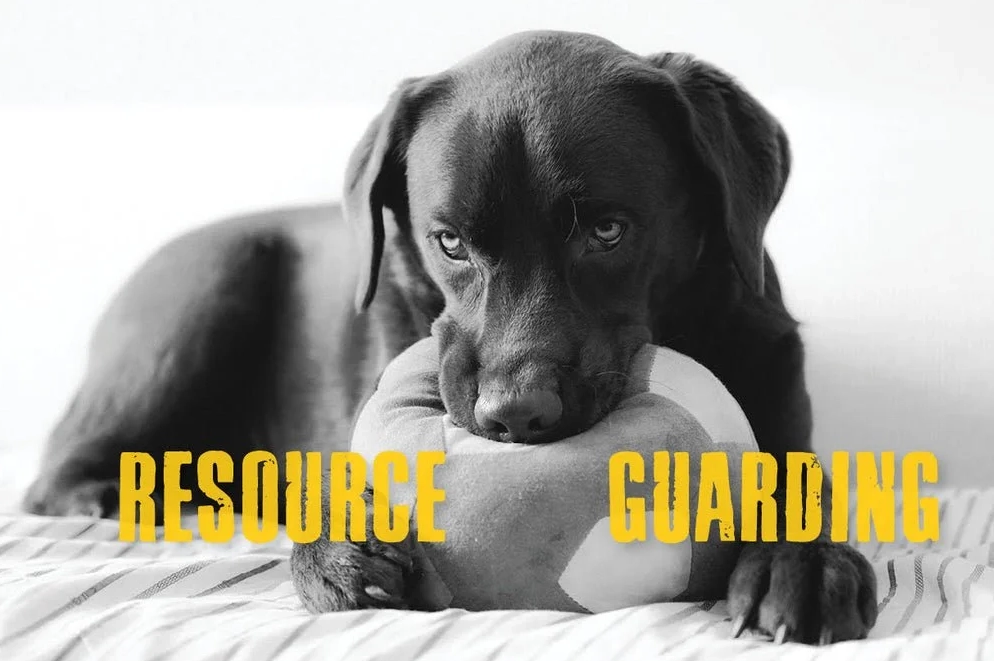
Immediate Safety Steps: What to Do Right Now
Before any training begins, you must manage the environment to prevent rehearsals of the aggressive behavior. Every incident reinforces the guarding dog's belief that aggression works.
Never punish a growl. The growl is a warning. If you punish it, you teach the dog to skip the warning and go straight to a bite next time. This is a critical mistake.
Management is your new best friend:
- Separate for High-Value Items: Feed dogs in separate rooms or crates. Give long-lasting chews and favorite toys only when dogs are physically separated by a baby gate or in their crates. This isn't forever, just for now.
- Pick Up Triggers: Become a neat freak. No toys left lying around. Pick up bowls immediately after meals.
- Supervise or Separate: If they can't be supervised with access to potential triggers, they should be separated. Use baby gates, crates, or rotate which dog has "free roam" time.
- Teach a "Leave It" Cue: This is a foundational skill. It doesn't solve guarding directly, but it gives you a communication tool for emergencies.
The Step-by-Step Training Protocol
This is the core of how to stop resource guarding between dogs. We use counter-conditioning and desensitization. The goal: change the guarding dog's emotional response from "Oh no, you're near my stuff!" to "Hey, you being near my stuff predicts awesome things for me!"
We'll use food bowls as the example, but the principle applies to any resource.
Phase 1: The Foundation (No Triggers Present)
Work with each dog individually first. Teach them that you approaching their bowl is wonderful. Start with an empty bowl. Walk toward it, toss an amazing treat (like chicken) into it, and walk away. Repeat. The dog learns: human approach = surprise premium snack. Do this until their tail wags when they see you coming.
Phase 2: Introducing the Other Dog (At a Distance)
This is where most people rush. You need massive distance to start. Have Dog A (the potential guarder) with a low-value item (a few kibble in a bowl) in one room. Have Dog B on leash with a helper, or in a crate or behind a gate, at the far end of another room or a long hallway. The distance should be so great that Dog A is completely relaxed.
- Dog A is eating kibble.
- Helper brings Dog B into view briefly at the far distance.
- Instantly, you walk up and drop a piece of chicken or cheese into Dog A's bowl.
- Helper removes Dog B from view.
You're pairing the sight of the other dog with a fantastic treat. If Dog A stiffens or looks worried, you've moved too close too fast. Increase the distance. The American College of Veterinary Behaviorists notes the importance of this "sub-threshold" starting point.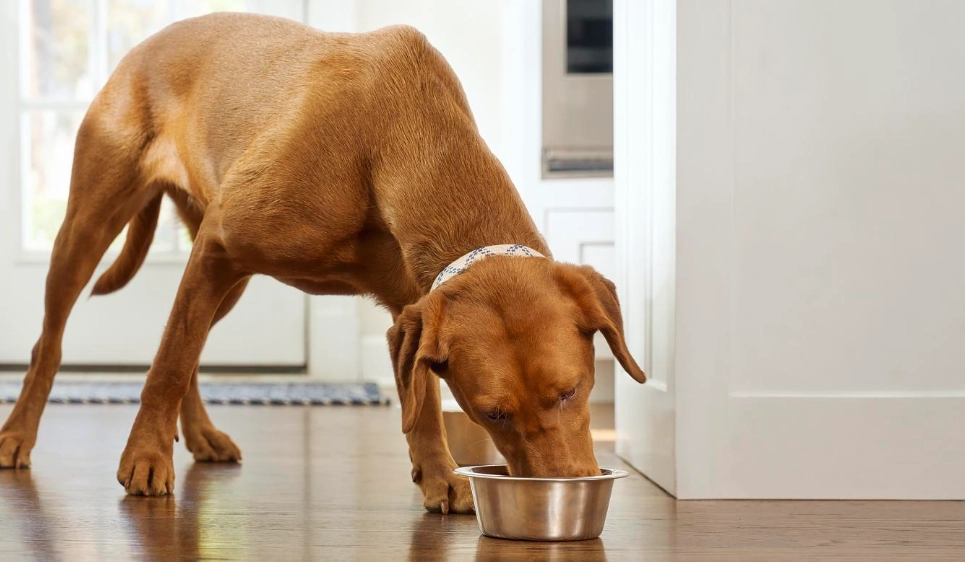
Phase 3: Gradually Decreasing Distance
Over many sessions, slowly decrease the distance between Dog B and Dog A's resource. Move an inch closer, then a foot, over days or weeks. The moment Dog A shows any sign of discomfort (freezing, side-eye), you've gone too far. Back up to the previous successful distance.
The table below outlines a simplified progression. Your actual pace will be dictated by your dog's comfort.
| Stage | Dog B's Position | Dog A's Resource | Your Action | Goal Response |
|---|---|---|---|---|
| 1 | Behind closed door in another room | Empty bowl | Drop high-value treat in bowl as Dog B makes noise | Dog A looks to you for treat, not at door. |
| 2 | On leash, 30 feet away, static | Bowl with dry kibble | Drop high-value treat as Dog B comes into view | Dog A continues eating, tail relaxed. |
| 3 | On leash, 15 feet away, moving parallel | Bowl with better food | Drop high-value treat as Dog B passes by | Dog A glances at Dog B, then back to bowl for treat. |
| 4 | On leash, 8 feet away, eating own (lesser) treat | High-value chew | Periodically add to Dog A's chew | Both dogs are content with their own items. |
Common Mistakes That Make Guarding Worse
I've seen well-intentioned owners accidentally reinforce guarding. Avoid these pitfalls:
- Taking the Item Away to "Teach a Lesson": This confirms the dog's worst fear. Now they know they do need to guard more fiercely next time. Instead, trade up for something better.
- Forcing "Sharing": Making dogs take turns with a coveted toy while the other watches is torture for them. It heightens anxiety and competition.
- Using Aversives like Shock or Spray Collars: These suppress the warning growl but do nothing to address the underlying anxiety. The dog becomes a ticking time bomb, more likely to bite "out of nowhere." Organizations like the Pet Professional Guild advocate for force-free methods for a reason.
- Assuming It's a "Pack Order" Issue: The outdated dominance theory has been largely debunked in behavioral science. You're not dealing with an alpha; you're dealing with anxiety over resources.
Your Resource Guarding Questions Answered
 The path to stopping resource guarding between dogs is built on consistency, patience, and a shift in perspective. You're not fighting your dog's nature; you're teaching them that in your home, resources are abundant, and the presence of their canine sibling is a predictor of good things, not loss. Start with management to keep everyone safe, then build positive associations slowly. It's work, but the reward—a quiet home where both dogs can relax—is worth every step.
Leave a comment