In This Guide
- Forget One-Size-Fits-All: The 5 Key Factors That Change The Answer
- The Practical Method: How to Calculate Your Cat's Daily Dry Food
- A Handy Dry Cat Food Feeding Chart (For a Typical 300-350 kcal/cup Food)
- Putting It Into Practice: Feeding Routines and Red Flags
- Special Scenarios and Common Questions
- Beyond the Scoop: The Quality of the Kibble Matters
- Wrapping It Up: Your Action Plan
You're standing there, bag of kibble in one hand, your cat's bowl in the other, and that question pops into your head for the hundredth time: how much dry food to feed a cat per day? Is it a half cup? A full cup? Just eyeball it until the bowl looks good? If you've ever felt a pang of guilt or confusion about your cat's portions, you're definitely not alone. I've been there too—watching my cat, Milo, stare at his empty bowl with profound disappointment five minutes after eating, and wondering if I was starving him or just dealing with a master manipulator.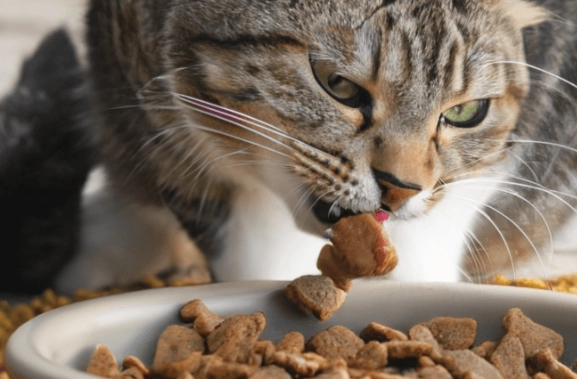
The truth is, that number on the back of the bag is a starting point, not a gospel. It's a guideline meant for an "average" cat, which, let's be honest, doesn't really exist. Your cat is an individual, and figuring out their perfect daily dry food amount is less about following a strict rule and more about understanding a few key principles. It's a mix of science, observation, and sometimes, a bit of trial and error.
So, let's ditch the guesswork. This guide is here to walk you through everything you need to know to confidently answer how much dry food to feed a cat per day, specifically for your cat.
The Big Picture: Getting the daily dry food amount right is the single most important thing you can do for your cat's long-term health. Underfeeding leads to nutrient deficiencies and weight loss. Overfeeding, which is far more common, leads directly to obesity, which the American Animal Hospital Association (AAHA) considers a major disease that shortens lifespans and increases risks for diabetes, arthritis, and urinary issues. It's worth getting right.
Forget One-Size-Fits-All: The 5 Key Factors That Change The Answer
Asking for a single number is like asking how much gas a car needs without knowing if it's a compact or a truck, or if it's driving across town or across the country. The amount of dry food your cat needs per day depends on a combination of these factors, and you need to consider them all.
1. Your Cat's Weight (And Ideal Weight)
This is the most obvious factor, but it's tricky. You need to know your cat's current weight, but more importantly, you need to know their ideal weight. Is your 15-pound cat a muscular Maine Coon (ideal) or a pudgy Domestic Shorthair (needs to lose weight)? Your vet can help you determine this using a Body Condition Score (BCS). The feeding goal is to maintain the ideal weight, not the current one if it's off.
I made the mistake of feeding Milo based on his chunky 14-pound frame. The vet said his ideal was 11 pounds. We had to recalculate everything!
2. Your Cat's Age and Life Stage
A growing kitten, an active adult, and a sedentary senior have wildly different calorie needs. Kittens are little calorie-burning machines for growth and play. Adults need maintenance calories. Seniors often need fewer calories but sometimes more specific nutrients. Always choose a food formulated for their life stage—the calorie density is designed for it.
3. Your Cat's Activity Level
This is the big variable. Is your cat a couch potato who moves only for meals and bathroom breaks? Or are they a zoomy, tree-climbing, toy-chasing athlete? An indoor-only cat typically needs fewer calories than an indoor/outdoor cat. My friend's cat, who has a catio and runs around like a maniac, eats nearly 30% more than Milo, who considers a stroll to the sunbeam strenuous exercise.
4. The Calorie Content of YOUR Specific Food
This is where most generic advice falls apart. Not all dry foods are created equal. A cup of one brand can have 300 calories, while a cup of another has 450. That's a massive difference! You must check the kcal/cup or kcal/kg on the bag or the manufacturer's website. The feeding guide on the back is based on this number. Ignoring it is the fastest way to over or underfeed.
Watch Out: "Grain-free," "natural," or "premium" doesn't automatically mean lower calorie. In fact, some high-protein, high-fat premium foods are more calorie-dense. You're feeding for calories, not volume.
5. Neutered/Spayed Status
It's a fact: after being neutered or spayed, a cat's metabolism can slow down, and their energy requirements can drop by as much as 20-30%. If you keep feeding the same amount as you did pre-surgery, weight gain is almost guaranteed. This is a critical adjustment point that many owners miss.
The Practical Method: How to Calculate Your Cat's Daily Dry Food
Let's get down to the actual math. Don't worry, it's simple. You're essentially finding your cat's daily calorie need, then translating that into cups or grams of your food.
Step 1: Find the Resting Energy Requirement (RER)
This is the calories needed for basic bodily functions at rest. The formula is: RER = 30 x (Your Cat's Ideal Weight in kilograms) + 70. First, convert pounds to kg by dividing by 2.2. For a 10 lb (4.5 kg) cat: RER = 30 x 4.5 + 70 = 205 calories per day.
Step 2: Apply a Multiplier to Get Daily Calorie Needs (DER)
Multiply the RER by a factor based on your cat's life stage and activity. This gives you the Daily Energy Requirement (DER).
| Cat Profile | Multiplier | Example: 10 lb (4.5kg) Cat's Daily Calories |
|---|---|---|
| Kitten (up to 6 months) | 2.5 x RER | ~513 kcal |
| Kitten (6-12 months) | 2.0 x RER | ~410 kcal |
| Neutered Adult (typical indoor, low activity) | 1.2 x RER | ~246 kcal |
| Intact Adult | 1.4 x RER | ~287 kcal |
| Active/Outdoor Adult | 1.6 x RER | ~328 kcal |
| Weight Loss | 0.8 x RER for *ideal* weight | ~164 kcal |
| Senior (less active) | 1.0 x RER | ~205 kcal |
See how the range is huge? From 164 to 513 calories for the same weight cat!
Step 3: Convert Calories to Amount of Your Food
Let's say your 10 lb, neutered, couch-loving cat needs about 246 calories a day. You check your bag of dry food and it says: "3,600 kcal/kg" or "305 kcal per cup."
- Using kcal/cup: 246 ÷ 305 = 0.8 cups per day.
- Using kcal/kg: 246 ÷ 3600 = 0.068 kg, which is about 68 grams per day.
That's your target. This is the core answer to how much dry food to feed a cat per day for your specific situation.
Pro Tip: Weighing food with a small kitchen scale (in grams) is infinitely more accurate than using a measuring cup. Kibble size varies, and how you "scoop" can easily add or subtract 20% of the food. A scale costs $10 and is the best investment for precise feeding.
A Handy Dry Cat Food Feeding Chart (For a Typical 300-350 kcal/cup Food)
Because we all need a quick reference, here's a general chart. Remember, this assumes a typical calorie density. You must adjust based on your food's actual calories.
| Cat's Ideal Weight | Low Activity (Neutered Indoor) | Average Activity | Weight Loss Portion* |
|---|---|---|---|
| 5 lbs (2.3 kg) | ~1/4 to 1/3 cup | ~1/3 cup | ~1/4 cup |
| 8 lbs (3.6 kg) | ~1/2 cup | ~5/8 cup | ~3/8 cup |
| 10 lbs (4.5 kg) | ~2/3 to 3/4 cup | ~3/4 to 7/8 cup | ~1/2 cup |
| 12 lbs (5.4 kg) | ~3/4 to 7/8 cup | ~1 cup | ~5/8 cup |
| 15 lbs (6.8 kg) | ~1 cup | ~1 1/4 cups | ~3/4 cup |
*Weight loss portions should always be set under veterinary guidance to ensure nutritional adequacy.
Putting It Into Practice: Feeding Routines and Red Flags
Okay, you have a daily total. Now what? Do you dump it all in one bowl in the morning?
Please, don't. Free-feeding (leaving food out all day) is a primary driver of obesity in cats. It removes all portion control and can lead to boredom eating. I tried it for a week with Milo. The food was gone by noon, and he was begging by 2 PM. It didn't work for his appetite or my sanity.
Structured Meal Feeding is Best
Split the daily total into at least two, preferably three or even four, smaller meals. This mimics a cat's natural grazing behavior, keeps their metabolism steady, prevents hunger-induced meowing, and helps with energy levels. An automatic feeder can be a lifesaver for consistent morning or midday meals.
How to Tell If You're Feeding the Right Amount
The scale and your eyes don't lie. Weigh your cat monthly (a baby scale works great). They should maintain their ideal weight.
- You're feeding too much if: You can't easily feel their ribs under a slight fat covering, they have no visible waist when viewed from above, or they have a saggy belly (though a primordial pouch is normal).
- You're feeding too little if: Ribs, spine, and hip bones are very prominent and easy to see, there's severe waist tuck, or they seem lethargic and food-obsessed.
Use a resource like the WSAVA Body Condition Score chart for a visual guide. Aim for a score of 5 out of 9.
My vet told me to think of it like this: You should be able to feel your cat's ribs as easily as you can feel the bones on the back of your hand—present under a thin layer. That mental image finally made it click for me.
Special Scenarios and Common Questions
My cat is always hungry! Does that mean I'm not feeding enough dry food per day?
Not necessarily. Cats can beg for food out of boredom, habit, or because they're eating too many empty calories (low-quality food). First, ensure you're meeting their calorie needs using the calculation above. If you are, try tactics like using puzzle feeders to slow them down, increasing meal frequency, or discussing a higher-protein/fiber food with your vet to increase satiety. Medical issues like parasites or diabetes can also cause increased appetite, so a vet check is wise if it's a new behavior.
Can I mix wet and dry food? How does that change the daily dry food amount?
Absolutely, and it's often encouraged for hydration. You need to do calorie math. If your cat needs 250 kcal daily and you give them one 3oz can of wet food worth 80 kcal, then they only need 170 kcal from dry food for the rest of the day. Recalculate the dry portion accordingly. This is the only accurate way to do it.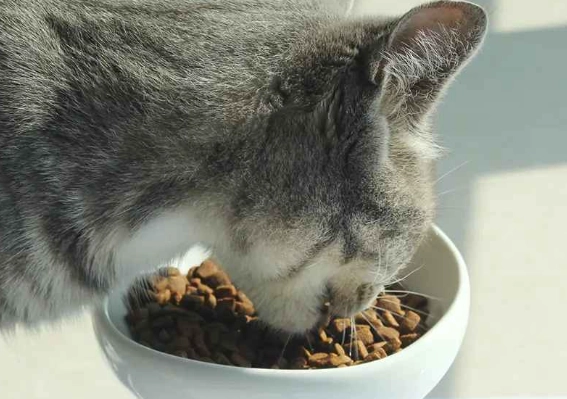
How much dry food to feed a kitten per day?
Kittens need a lot relative to their size, and they need kitten-formula food. They should be free-fed high-quality kitten kibble for the first 6 months to allow for constant growth. After 6 months, you can transition to 3-4 scheduled meals using the "Kitten" multiplier from the table. Their needs peak around 4-5 months old.
My cat is overweight. How do I start reducing their dry food per day?
SLOWLY. Crash dieting can cause a dangerous liver condition called hepatic lipidosis. Reduce their daily total by no more than 10-20% initially, using the "Weight Loss" multiplier (0.8 x RER for ideal weight) as your ultimate goal. Get a vet's plan. Increase exercise with play. The journey from 15 lbs to 12 lbs might take 6-9 months, and that's okay.
Beyond the Scoop: The Quality of the Kibble Matters
Figuring out how much dry food to feed a cat per day is half the battle. The other half is what's in that food. A cat fed a high-quality, species-appropriate food might need slightly less volume because the nutrients are more bioavailable and satisfying.
Look for foods that list a named animal protein (like chicken, salmon) as the first ingredient, and that meet the nutritional standards set by the Association of American Feed Control Officials (AAFCO) for your cat's life stage. This ensures it's complete and balanced.
Honestly, some of the big grocery store brands are mostly fillers. Your cat might eat a full cup but still be hungry because they're not getting the protein they need. I noticed a huge difference in Milo's appetite and coat when I switched to a better brand, even though the daily calorie amount stayed similar.
Wrapping It Up: Your Action Plan
Let's be honest, that's a lot of information. Here’s your simple checklist to find your cat's perfect amount today:
- Weigh your cat and determine their ideal body weight with your vet's help.
- Find the calories in your specific dry food (look on the bag or website).
- Calculate their Daily Calorie Need (DER) using the RER formula and multiplier.
- Do the math to convert that calorie target into cups or, better yet, grams of food.
- Split that total into 2-4 meals, and ditch the free-feeding bowl.
- Monitor their weight and body condition monthly, and adjust slightly up or down as needed.
The question of how much dry food to feed a cat per day doesn't have a magic number, but it does have a logical, personalized answer. It's not about being perfect every single day; it's about being consistently in the right range. Your cat's health, energy, and longevity are directly tied to this one daily habit. Take the time to figure it out—they're counting on you.
And if you get it wrong sometimes? Don't stress. Just like us, their needs can change. The fact that you're researching this deeply shows you're a great cat parent. Now go grab that bag, check the calories, and maybe even dig out the kitchen scale. You've got this.




Leave a comment