Your dog stiffens, lets out a low growl, and positions itself between you and another dog. You might think, "How loyal!" I've seen this countless times in my work. Let's be clear: this isn't loyalty. It's resource guarding. Your dog sees you as a prized possession to be defended, and it's a stressful, dangerous behavior that ruins walks and social outings. The good news? It's fixable with the right approach. This guide cuts through the myths and gives you the exact steps to change this behavior, based on modern, force-free methods.
What You'll Learn in This Guide
- What Dog Resource Guarding Really Is (It's Not What You Think)
- The Real Reasons Dogs Start Guarding Their Owners
- Resource Guarding vs. Normal Protection: Spot the Difference
- Early Warning Signs: The Body Language You're Missing
- The Step-by-Step Training Plan to Stop the Guarding
- 3 Training Mistakes That Make Guarding Worse
- Your Top Questions on Dog Guarding Behavior, Answered
What Is Dog Resource Guarding?
In simple terms, resource guarding is a dog's use of aggressive or defensive behaviors to maintain control over something they value. That "something" is usually food, a toy, or a bed. But for many dogs, the ultimate resource is their human.
Think of it from the dog's perspective. You provide food, safety, affection, and fun. You are the source of all good things. In a dog's mind, another dog approaching might mean competition for this vital resource. The guarding isn't about protecting you from harm; it's about protecting their access to you. This is a crucial distinction most owners miss.
Key Insight: The American College of Veterinary Behaviorists (ACVB) classifies resource guarding as a form of possessive aggression. It's a survival-based behavior, not a moral failing in your dog. Punishing it often increases anxiety and makes the problem worse.
Why Does My Dog Guard Me From Other Dogs?
It's rarely one single cause. It's usually a perfect storm of factors.
- Genetics and Breed Tendency: Some breeds were historically selected for guarding livestock or property. That instinct can sometimes redirect towards people. But any dog can develop this behavior.
- Past Negative Experiences: A single bad interaction with another dog while near you can plant the seed. Maybe another dog bullied them at the park while you were watching.
- Unintentional Reinforcement: This is the big one. Your dog growls, you pull them closer, pet them, and say "it's okay." The dog learns: growling makes my human give me attention and create distance from the threat. Reward secured.
- Lack of Socialization: Dogs not exposed to calm, positive interactions with other dogs in various contexts may see all canine approaches as a threat to their world (which includes you).
- Underlying Anxiety or Insecurity: A generally nervous dog is more likely to guard resources, including people, as a coping mechanism.
I worked with a client's dog, a Shepherd mix named Max. Max would lose it when another dog came within 20 feet on leash. The owner thought Max was "just protective." After digging in, we found the trigger: years prior, an off-leash dog had charged them. The owner had scooped Max up, heart racing, and run inside. Max's brain linked "dog approaching" with "my human panics, so this is a real emergency." His guarding was fueled by his owner's past fear, not his own.
Resource Guarding vs. Normal Protective Behavior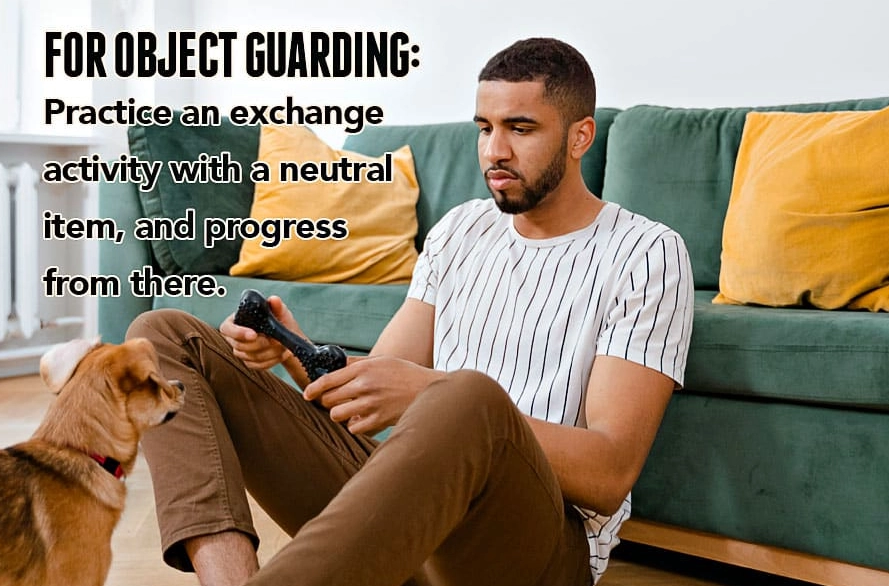
How do you tell the difference? Normal canine protection is rare, context-specific, and proportional. True protection would occur in a genuinely threatening situation. Guarding happens in non-threatening, everyday scenarios.
| Scenario | Resource Guarding of Owner | Normal Canine Behavior |
|---|---|---|
| At the Dog Park | Dog stays glued to your side, snarls at any dog that comes near you, even during calm play. | Dog may check in with you periodically but freely interacts with other dogs and people. |
| On a Leashed Walk | Dog lunges, barks, or stares fixedly at another dog passing across the street. | Dog may glance at the other dog, might be curious or slightly alert, but remains focused on the walk. |
| When You're Petting Another Dog | Your dog pushes in, nudges your hand, or shows tension when you give attention elsewhere. | Your dog might come over for pets too, but in a relaxed, non-demanding manner. |
| The Underlying Emotion | Anxiety, insecurity, possession. "That's mine!" | Confidence, discernment. Assessment without panic. |
The Body Language of a Guarding Dog
Long before the growl or snap, your dog is sending signals. Missing these is the first mistake.
- The Hard Stare: A fixed, unwavering look at the approaching dog. The body is still.
- Body Blocking: Subtly shifting position to physically get between you and the other dog.
- Freezing: All movement stops. This is a major red flag that often precedes a reaction.
- Lip Licking or Yawning: In a tense context, these are stress signals, not signs of tiredness.
- Ears Forward, Tail Stiff/High: A posture of high alert and readiness.
If you see these, your dog is over threshold. The training window for that moment has closed. Your job now is to calmly increase distance.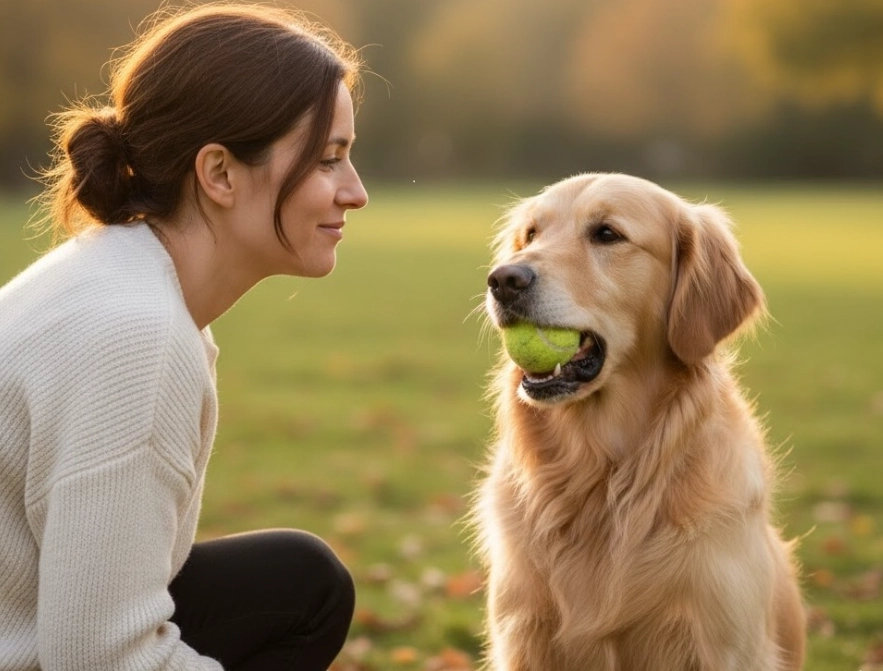
How to Stop Your Dog From Guarding You: A Step-by-Step Plan
This plan is based on counter-conditioning and desensitization (CC&D). We change your dog's emotional response from "Oh no, a dog! Must defend!" to "Oh, a dog! That means good things happen from my human."
The Core Principle: Create Distance First
Never force your dog to "face their fear." Work at a distance where your dog notices the other dog but is still able to look at you and take a treat. This is called the sub-threshold distance. If they're barking, they're over threshold. Move further away.
Phase 1: Foundation Work (No Other Dogs Present)
- Teach a Rock-Solid "Watch Me" or "Look" Cue: This is your most important tool. Practice until your dog whips their head to look at you the instant you say it, anywhere, with mild distractions.
- Build Value for Disengaging: Randomly reward your dog for choosing to look at you instead of something else in the environment.
Phase 2: Controlled Setups (The Real Work)
- Recruit a Helper: You need a friend with a calm, neutral dog. This is non-negotiable. You cannot do this properly with random, unpredictable dogs.
- Find Your Starting Distance: Start far apart—maybe across a large field or parking lot. Your dog should see the other dog but not react.
- The Game: The helper dog appears (or stands still). Before your dog shows any tension, say your "Look!" cue. When they look at you, feed a high-value treat (chicken, cheese, hot dog). Helper dog disappears. Repeat.
- The Pattern: Dog appears → You cue "Look!" → Dog looks at you → Treat → Dog disappears. You are building a new association: Other Dog = I look at my human = I get amazing food.
- Gradually Decrease Distance: Over many sessions, if your dog remains calm and successful, the helper dog can take a few steps closer. Inches matter. If your dog reacts, you moved too fast. Go back to a easier distance.
Phase 3: Adding Duration and Movement
Once your dog is comfortable at a closer distance, have the helper dog walk parallel at a distance. Use your "Look" cue and treat for engagement. Gradually work towards calm, brief parallel walks, always rewarding your dog for checking in with you.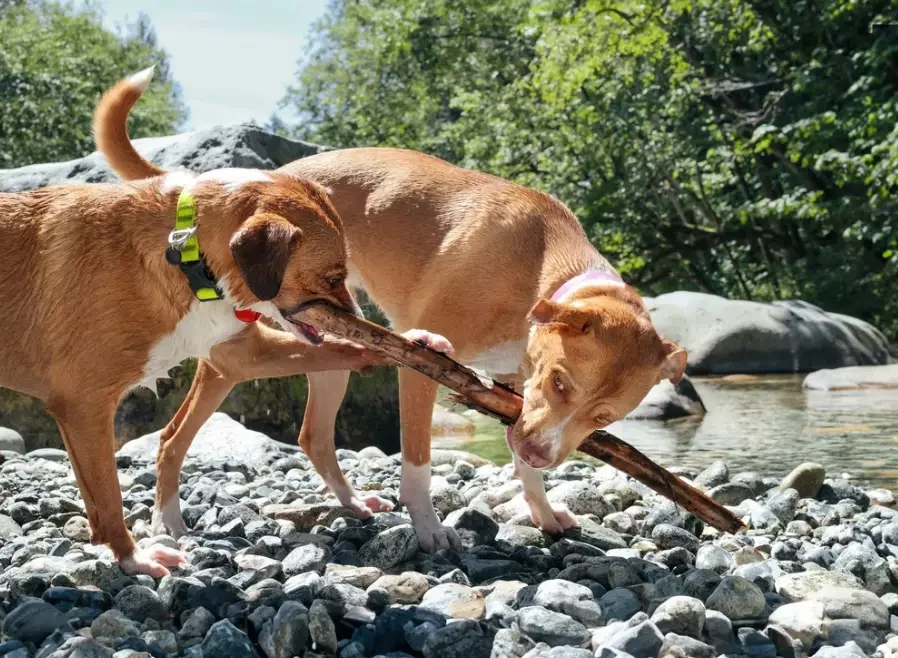
Applying the Training in Real-Life Scenarios
At Your Front Door/Window: If your dog guards you from dogs they see outside, manage the environment first (close blinds, use window film). Then, you can use the sight of a dog outside (at a distance) as your training trigger for the "Look & Treat" game.
On Leashed Walks: See a dog far away. Cue "Look!" and treat before your dog fixates. Create distance by casually changing direction. You are not avoiding; you are strategically managing the environment to set your dog up for success.
3 Common Mistakes That Make Guarding Behavior Worse
- Punishing the Growl: The growl is a warning. If you punish it, you teach your dog to skip the warning and go straight to a bite. Listen to the growl—it's information telling you your dog is uncomfortable.
-
- Using Aversive Tools: Prong collars, e-collars, or yelling during a reaction increase stress and anxiety. They may suppress the behavior temporarily, but they do not change the underlying emotion, often creating a more volatile, "ticking bomb" dog.
- Using Aversive Tools: Prong collars, e-collars, or yelling during a reaction increase stress and anxiety. They may suppress the behavior temporarily, but they do not change the underlying emotion, often creating a more volatile, "ticking bomb" dog.
Safety First: If your dog's guarding behavior includes bites or intense attacks, stop trying to fix this yourself. Consult a qualified professional, such as a veterinarian behaviorist (DACVB) or a certified fear-free trainer. The American Society for the Prevention of Cruelty to Animals (ASPCA) has resources for finding qualified help.
Frequently Asked Questions on Dog Guarding Owners
 I have multiple dogs, and one guards me from the others in the house. How do I handle this?

Leave a comment