Quick Guide
Let's be honest. You probably brought that bromeliad home because it looked like a fiery alien spacecraft landed in a sea of green, right? Those dazzling colors, that architectural form—it's impossible to resist. But then, a few weeks or months in, the doubts creep in. The flower starts to fade. A leaf tip turns brown. You're left holding your watering can, wondering, "What now?"
I've been there. My first bromeliad was a gorgeous Guzmania with a scarlet spike that screamed for attention. I killed it with kindness, mostly by drowning its central cup. It was a soggy, sad lesson. But that failure sent me down a rabbit hole, talking to growers, reading old horticulture journals (yes, really), and filling my home with what my friends now call "the bromeliad jungle."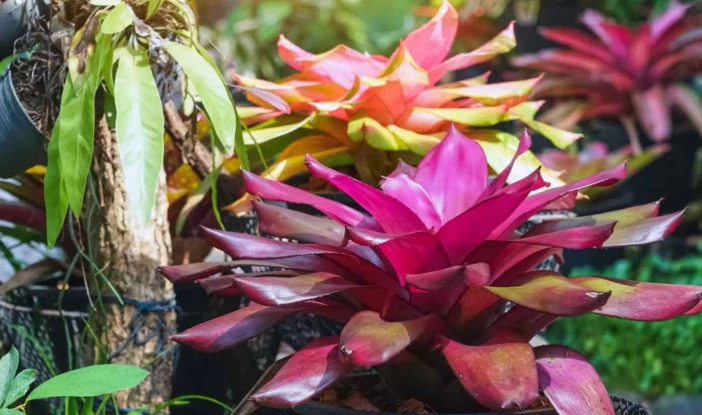
So, if you're looking for a dry, textbook list of bromeliad care facts, you might find those elsewhere. This is more of a chat between plant lovers. We'll talk about what these plants really need, why they do the weird things they do, and how you can keep them happy long after that first spectacular bloom.
Getting to Know Your Bromeliad: It's Not Just One Plant
This is where most generic advice falls short. Saying "bromeliad care" is like saying "dog care"—a Siberian Husky and a Chihuahua have different needs! The Bromeliaceae family is massive, with over 3,000 species. The care for a silvery-gray Tillandsia (air plant) is worlds apart from a terrestrial Dyckia with its spiky, succulent leaves.
For our purposes, let's focus on the most common houseplant types: the tank bromeliads like Guzmania, Vriesea, Aechmea, and Neoregelia. These are the ones with that iconic central "vase" or "cup" formed by their leaves. This cup is the heart of their survival strategy. In the rainforest canopy, it catches rainwater, dew, leaf litter, and even the occasional unlucky insect, creating a tiny ecosystem. Your bromeliad plant care revolves around replicating this ingenious system.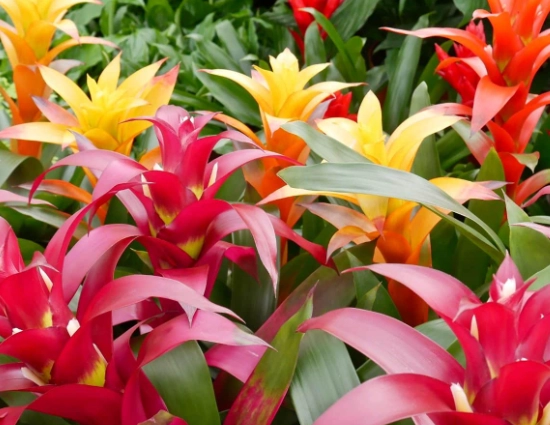
Then you have the air plants (Tillandsia), which absorb moisture and nutrients through feathery structures on their leaves called trichomes. And the more terrestrial, sun-loving types like some Billbergia or the aforementioned Dyckia. See what I mean? Different lifestyles.
So, how do you even know what kind you have?
Look at the leaves. Does it have a tight, central rosette that holds water? Tank bromeliad. Are the leaves thin, gray, and fuzzy? Likely a xeric air plant. Are they thick, stiff, and spiny, growing more like an agave? Probably a terrestrial, sun-loving type. Identifying this is your first, most crucial step in proper bromeliad care.
Light: The Make-or-Break Factor for Color & Health
Light is everything. Get this wrong, and nothing else will work. But the "bright, indirect light" advice is so vague it's almost useless.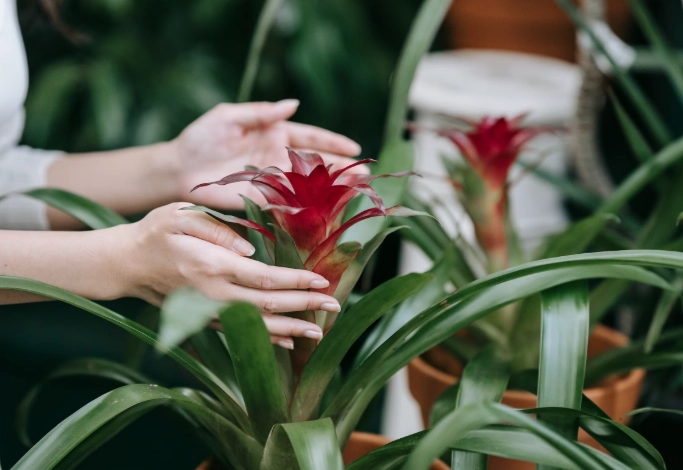
Think of it in terms of what the plant is trying to do. A bromeliad with a brightly colored inflorescence (that's the flower spike, though the actual flowers are often tiny—the colorful parts are usually modified leaves called bracts) needs good light to produce and maintain that color. A Neoregelia with stripes or spots needs light to "blush" and show its full patterning.
My rule of thumb? For most common tank bromeliads (Guzmania, Vriesea, Aechmea), an east-facing window is perfect. It gets them a few hours of gentle morning sun without the harsh afternoon rays that can scorch their leaves. A north window might be too dim, leading to a faded, stretched-out plant. A south or west window needs a sheer curtain as a buffer.
Air plants (Tillandsia) can often handle more light, especially the gray ones. And the terrestrial, spiky guys (Dyckia, Hechtia) are full sun addicts. It's all about matching the light to the leaf type. Thicker, stiffer, spikier leaves usually mean "more sun, please."
What about artificial light? Absolutely. A good quality LED grow light placed about a foot above the plant for 10-12 hours a day can work wonders, especially in darker homes. I've kept Neoregelias blushing beautifully under lights alone.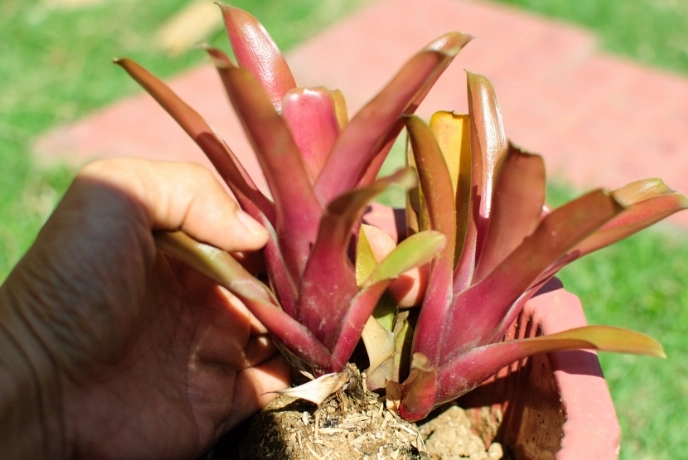
Watering: The Art of the Cup (And Why Tap Water is a Problem)
This is the part that terrifies people. And for good reason—it's different from watering any other plant you own.
For tank bromeliads, you water the central cup. Let me say that again. You fill the central vase formed by the leaves. Keep it about 1/4 to 1/3 full of water. Then, every 3-4 weeks, tip the plant over and flush out the old water to prevent stagnation and mosquito larvae. Refill with fresh water. This mimics the natural cycle of rain filling their cup in the wild.
But what kind of water?
Here's a controversial opinion: tap water is often the silent killer in bromeliad care. Many bromeliads are sensitive to the minerals (like fluoride and chlorine) and the high pH of tap water. It can cause ugly brown leaf tips ("tip burn") and damage the delicate scale structures on the leaves.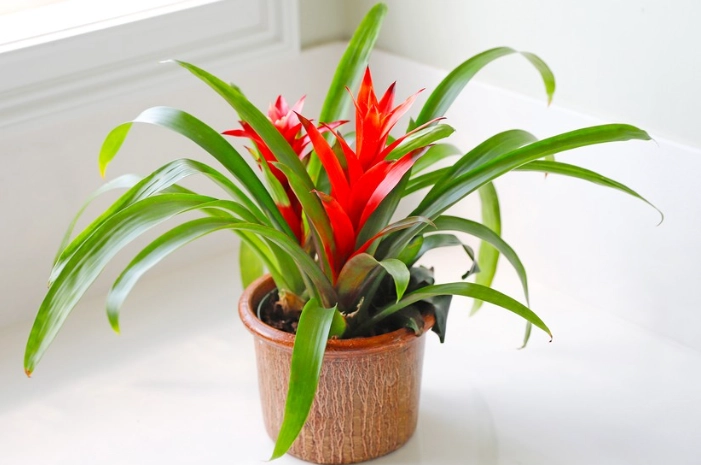
I use one of three things: rainwater (collected in a barrel, it's like a superfood for them), distilled water from the grocery store, or tap water that's been left out overnight to let some chlorine evaporate (this doesn't remove fluoride, though). The difference in plant health is noticeable. The leaves stay glossier, the colors richer.
What about the soil? The potting mix should be moistened occasionally, but it should never be soggy. Their roots are primarily for anchorage, not for heavy drinking. Overwatering the soil is the fastest way to induce root rot.
For air plants (Tillandsia), forget the cup. They need soaking. I dunk mine in a bowl of water (again, rainwater or distilled is best) for 20-30 minutes once a week. After soaking, shake them vigorously upside-down to get water out of the base. This is critical! Water trapped in the crown of an air plant will rot it from the inside out. Then let them dry completely in good air circulation before putting them back in their display.
Misting? It's pretty useless for hydration. It might raise humidity for a minute, but it doesn't provide enough water for the plant to absorb. A good soak is far more effective.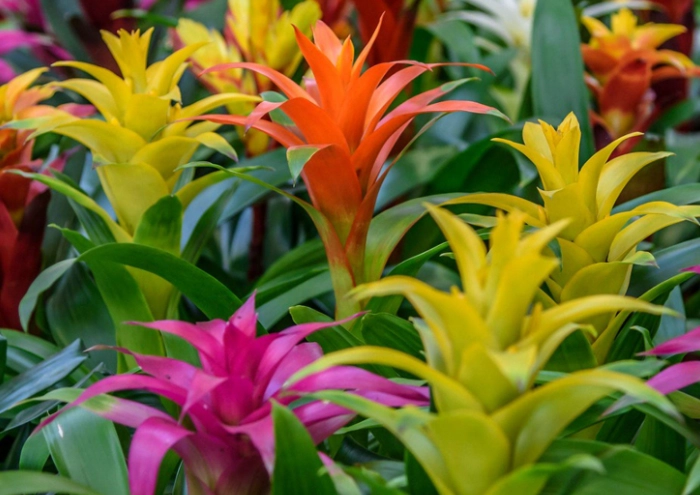
Soil & Potting: They Hate Wet Feet
You cannot use regular potting soil for a bromeliad. It holds too much moisture and will suffocate and rot the roots. Remember the epiphyte lifestyle? They need air around their roots.
The perfect bromeliad potting mix is chunky, fast-draining, and barely holds nutrients. Here's a simple recipe I've used for years:
- 50% Orchid bark (medium grade)
- 30% Coarse perlite or horticultural pumice
- 20% Coconut coir or a small amount of peat moss (just to hold a tiny bit of moisture)
You can also buy a pre-made orchid mix and add extra perlite. The goal is a mix that you can water and see it drain immediately out the bottom.
Pots are important too. Always use a pot with a drainage hole. Terracotta pots are excellent because they wick away excess moisture from the mix. The pot should be relatively small—just big enough to anchor the plant. Bromeliads have small root systems and don't need, or like, a lot of soil.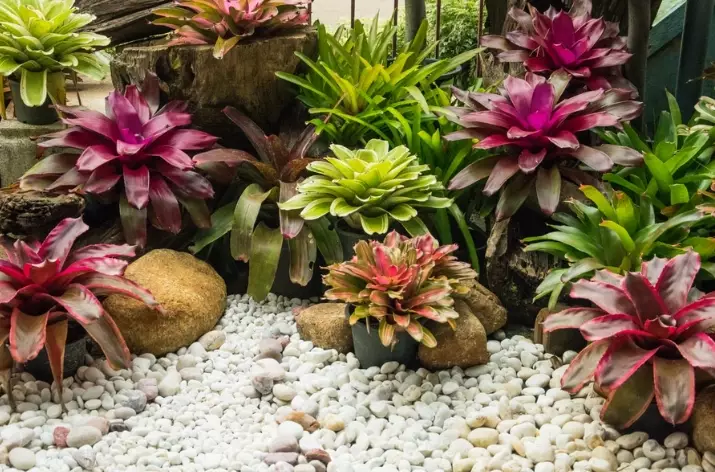
Temperature, Humidity & Airflow: Creating a Microclimate
Most common bromeliads are tropical. They don't like the cold. Period. Keep them in rooms that stay above 60°F (15°C), ideally between 70-80°F (21-27°C). Keep them away from cold drafts, air conditioning vents, and frosty windows in winter.
Humidity is where things get interesting. Yes, they appreciate higher humidity (50-60% is great), but tank bromeliads are surprisingly adaptable to average home humidity (around 40%) because they create their own humid microclimate in their water-filled cup. The air plant care routine is more humidity-dependent.
If your air is very dry (common with central heating), you can group plants together, use a humidifier, or set the pot on a pebble tray filled with water (ensure the pot sits on the pebbles, not in the water).
Airflow is the unsung hero. Stagnant, still air encourages fungal growth and rot. A gentle breeze from a ceiling fan or an occasional open window does wonders. It mimics their natural, airy canopy home.
Feeding: Less is More
Bromeliads are not heavy feeders. In fact, over-fertilizing is a common mistake. It can burn leaf tips, cause distorted growth, and even inhibit flowering.
They get minimal nutrients in the wild from decaying matter in their cup. So, we feed them weakly. Use a balanced, water-soluble fertilizer (like a 10-10-10 or 20-20-20) but dilute it to 1/4 or 1/2 the recommended strength.
Here's the key: apply the diluted fertilizer solution to the central cup, not the soil. This is how they're designed to eat. Do this once a month during the active growing season (spring and summer). In fall and winter, stop feeding entirely.
Some experts, like those at the Royal Horticultural Society, recommend using a fertilizer higher in nitrogen for foliage growth before flowering, and one higher in potassium to encourage blooming. But for most casual growers, a balanced, weak feed is perfectly fine and much simpler.
The Big Event: The Bloom and What Happens After
This is the emotional rollercoaster of bromeliad care. That stunning bloom you bought the plant for? It's a one-time show. A bromeliad flowers once in its lifetime. The process can last for months (3-6 months is common, some even longer!), which is amazing.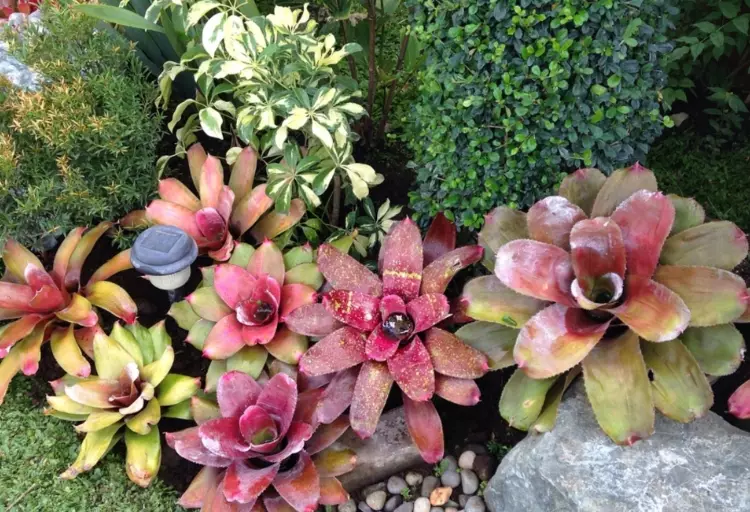
But as the bloom finally fades, the mother plant, called the "pup," begins to die. Don't panic! This is natural. It's not your fault. The plant's energy shifts to producing offspring—little clones called "pups" or "offsets" that grow from the base.
So what do you do when the flower dies?
First, cut off the spent flower stalk down near its base with clean shears. This tidies up the plant and redirects energy. Then, focus your care on the mother plant as it produces pups. Keep watering the cup, providing light, and feeding weakly.
Propagating Pups: Your Free Bromeliad Factory
Once the pups are about one-third to one-half the size of the mother plant and have developed their own roots (you can gently brush away soil to check), they're ready to be separated. This is usually 3-6 months after flowering.
Use a sharp, clean knife to cut the pup away from the mother, trying to include as many of the pup's roots as possible. Let the cut end callous over for a day. Then, pot the pup in your small, chunky bromeliad mix. Care for it as you would a mature plant. It may take 1-3 years for the pup to mature and bloom itself.
You can also choose not to separate them. Leaving the pups attached creates a beautiful, multi-generational clump that will eventually fill the pot. The mother plant will slowly brown and can be cut away once completely dead.
Troubleshooting: Reading the Leaves
Bromeliads communicate through their leaves. Here’s a quick translator:
| Symptom | Likely Cause | Quick Fix |
|---|---|---|
| Brown, crispy leaf tips | Low humidity, fluoride/chlorine in tap water, or under-watering of the cup. | Switch to rainwater/distilled water. Ensure cup has water. Trim brown tip off. |
| Soft, mushy base or leaves | Root rot from overwatered soil or crown rot from stagnant water in cup. | Stop watering soil. Flush cup more frequently. May be too late to save. |
| Faded, washed-out leaf color; plant stretching | Insufficient light. | Move to a brighter location (indirect light). |
| Bleached, scorched patches on leaves | Too much direct sun. | Move to a spot with filtered light. |
| No pups after flowering | Not enough light or nutrients to support reproduction. | Ensure good light and continue weak feeding. Be patient. |
| Green, lackluster color on variegated types | Not enough light to develop full coloration ("blushing"). | Increase light levels gradually. |
Beyond the Basics: Pests and Special Cases
Bromeliads are generally pest-resistant, but they can get scale or mealybugs, especially in the tight leaf axils. A strong jet of water can dislodge them. For stubborn cases, dab insects with a cotton swab dipped in rubbing alcohol. Avoid oily sprays, as they can clog the plant's pores.
A unique issue is the bromeliad tank mosquito. If you leave water stagnant for weeks, mosquitoes can breed in it. The simple fix is the monthly flush I mentioned earlier.
For the true enthusiasts, there's the world of Cryptanthus (Earth Stars), which are terrestrial and love humidity, or the giant Puya that can grow outdoors in mild climates. The core principles remain the same: match the care to the plant's natural adaptation. The Bromeliad Society International website is a fantastic resource for diving deeper into specific genera.
Your Bromeliad Care Quick-Start Checklist
Feeling overwhelmed? Let's boil it down for a common tank bromeliad you just brought home:
- Identify it: Tank type? Air plant? Spiky terrestrial?
- Light: East window or bright, filtered light. No harsh afternoon sun.
- Water: Keep central cup 1/4-1/3 full. Use rainwater/distilled if possible. Flush monthly.
- Soil: Chunky orchid mix. Small pot with drainage hole.
- Food: 1/4 strength balanced fertilizer in the cup, once a month in spring/summer.
- Post-Bloom: Cut flower stalk. Care for mother as she makes pups. Separate pups when big enough.
They're not difficult plants. They're just different. And different is what makes them so captivating. With these insights, you're not just keeping a plant alive; you're hosting a tiny, spectacular piece of the rainforest in your living room. Enjoy the show.





Leave a comment